WWF’s green headquarters
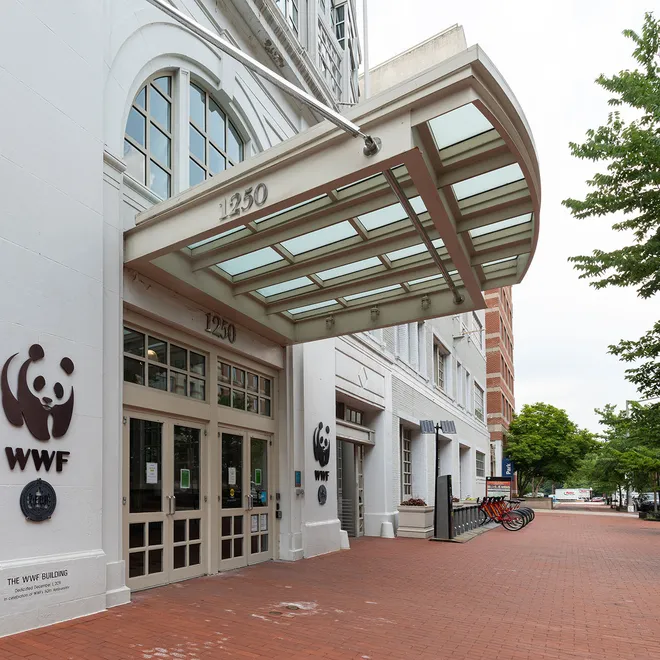
The headquarters of the World Wildlife Fund (WWF) was crafted with the goals of conserving resources, minimizing waste and pollution, protecting the environment, and ensuring the prudent use of donated funds.
© Keith Arnold/WWF-US
Building features
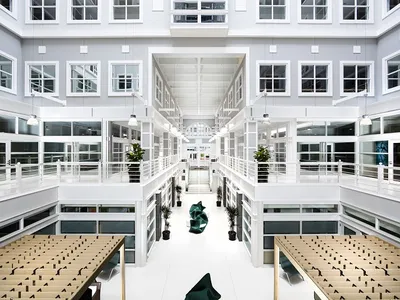
The building spans over 250,000 square feet and is designed to be an exemplary work environment. This LEED Platinum-certified building boasts a striking eight-story atrium illuminated by natural light, as well as a green roof.

© WWF-US/Keith Arnold
LEED certified
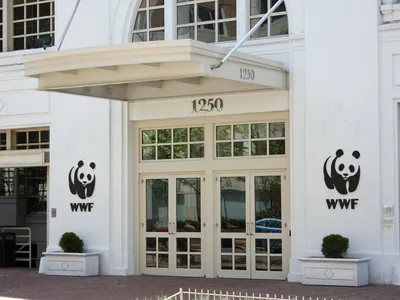
WWF’s headquarters has been a LEED Platinum-certified building since 2011, undergoing recertification every three years.
© WWF
Energy rating
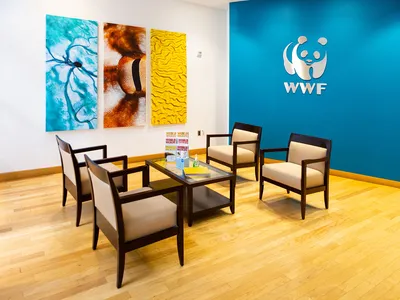
The building has an ENERGY STAR certification and annually achieves an average ENERGY STAR rating of 95 out of 100.
© Keith Arnold/WWF-US
Air quality
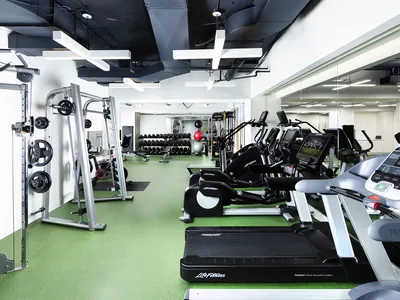
WWF uses MERV 13 HVAC air filters in the building that produce better indoor air quality and feature a low pressure drop, which translates to a more efficient use of energy.
© David Madison Photography/WWF-US
Composting
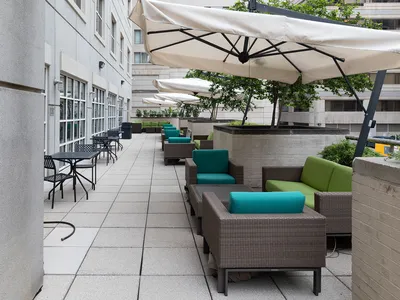
Composting is available to all our tenants and plays a vital role in reducing waste and promoting environmental sustainability. By diverting biodegradable materials such as food scraps and coffee grounds from landfills, WWF helps lower greenhouse gas emissions, particularly methane, which is produced when food waste decomposes without oxygen in landfills.
© Keith Arnold/WWF-US
Skylit atrium
The WWF headquarters features an impressive eight-story atrium that is equipped with skylights which enhance natural lighting, reduce energy loss, and promote efficient ventilation. Additionally, the atrium includes a lichen green wall that absorbs sound and humidity, creating a quiet and comfortable environment within the atrium.
© David Madison Photography/WWF-US
Green roof
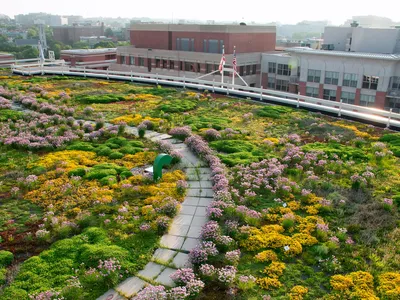
The green roof spans 27,750 square feet and is covered by 53,568 plants, landing our roof in the top 10%, by size, of green roofs in the District. It features 11 sedum species, specially formulated soil, and a retention mat, reducing stormwater runoff by 50% (677,000 gallons/year). This helps decrease contaminants, downstream flooding, and erosion, while also reducing heat due to its reflective surface.
© Scott Fearheiley/WWF-US
Additional green features
Recycling
The building offers a robust recycling program and diverts paper, cardboard, glass, plastics, metals, batteries, electronics, and fluorescent light bulbs from landfills.
Saving power
- Motion sensor lighting: All offices and common area restrooms are equipped with motion sensor lighting which reduces the building's total energy usage by 10%.
- Wind power: Renewable energy credits are purchased to cover 100% of the electricity used in the building.
Saving water
Water-saving fixtures: Water usage is reduced by over 20% through the installation of low-flow fixtures such as faucets, shower heads, and dual flush toilets.
Commuter benefits
- Bicycle racks: The building features a secure bike area in the garage. Additionally, there is a Capital Bikeshare docking station in front of the building.
- Preferred parking: Reserved parking spaces are provided in the garage for tenants who carpool or drive hybrid/alternative fuel vehicles.
- EV charging stations: Complimentary charging stations are available on both levels in the parking garage for employees and visitors.