Publications
-
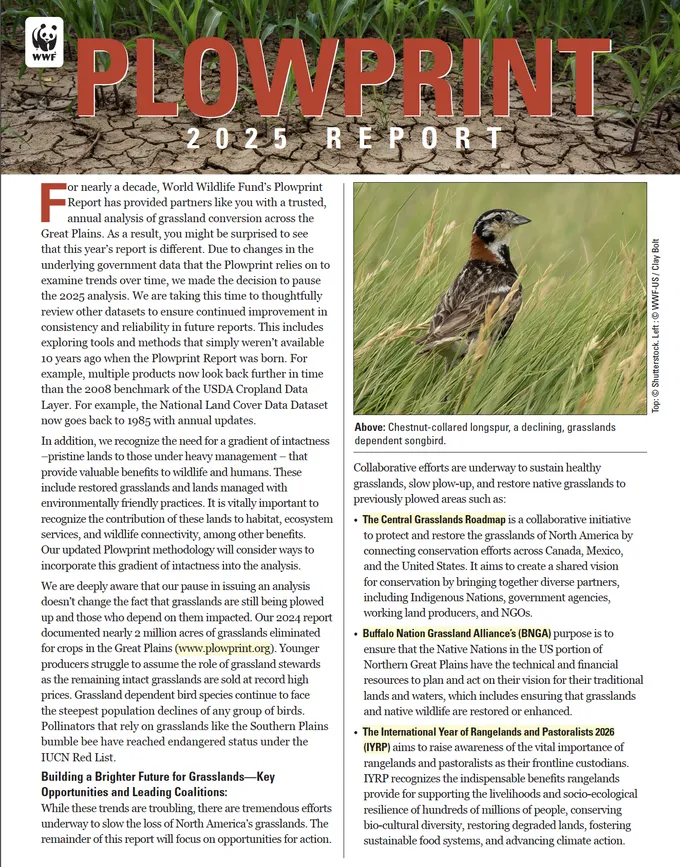
WWF's Plowprint Report monitors grasslands plow-up across the Great Plains, assesses agricultural impacts on biodiversity, and guides sustainable land use planning.
Due to changes in the underlying government data that the Plowprint relies on to examine trends over time, we made the decision to pause the 2025 analysis. We are taking this time to thoughtfully review other datasets to ensure continued improvement in consistency and reliability in future reports. This includes exploring tools and methods that simply weren’t available 10 years ago when the Plowprint Report was born.
-
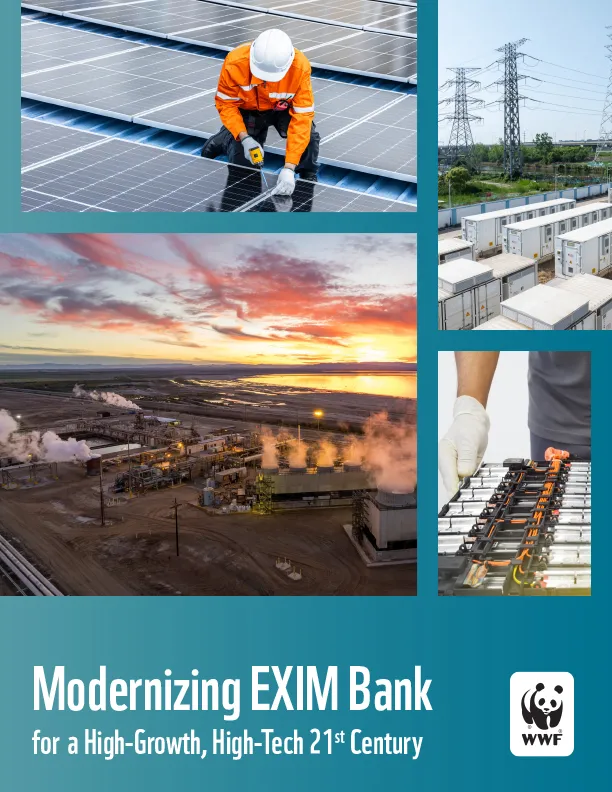
The United States Export-Import Bank (EXIM) has needed to adapt to change in global economic and political power dynamics across the decades to keep the US economy competitive and thriving. The global energy transition’s confluence with rapidly evolving high tech sectors introduce an emerging global economic dynamic that places EXIM at another inflection point. This inflection point intersects with the US Congress needing to reauthorize EXIM through new legislation by the end of 2026, creating a key moment of obligation and an opportunity to address EXIM’s current challenges.
According to the latest global energy production and consumption data released in late 2025: since the start of the year, global energy demand has increased by 2.6%, or 369 terrawatt hours, with that rise in demand met thus far exclusively by the deployment of new renewable energy generation. The International Energy Agency (IEA) predicts that tens of millions of jobs will shift globally and be transferred from legacy energy industries to newer, more efficient, and cleaner sectors. For example, roughly 20% to 40% of upstream oil and gas roles globally - or two million to four million jobs -- could be repurposed for geothermal development under a high-growth scenario, especially if next-generation geothermal technologies scale rapidly. Meanwhile, China maintains an early lead in supporting jobs in these sectors, by making close to half of the total global investments in these sectors and surpassing the US, UK, and EU’s investments combined.
Modernizing EXIM is crucial to ensuring that US emerging advanced energy and clean tech industrial sectors are competitive in the global economy, particularly in emerging and high demand sectors like energy storage, support services, and energy transmission, and will dictate whether the millions of jobs available in these sectors employ US workers or workers abroad.
This report examines prospective export markets for emerging advanced energy industries, explains some of the business challenges and finance needs of emerging tech industries, argues that global demand for advanced energy is strong and growing, and competition to meet these demands is fierce. Lastly, the report describes some of the policies and export credit finance products that EXIM’s foreign competitors use to bolster their countries’ emerging tech sectors, while offering recommendations for what EXIM can do to surpass US rivals.
This report was authored by Joshua Klein, with contributions from Benjamin Hunt (WWF-US).
-
-
-
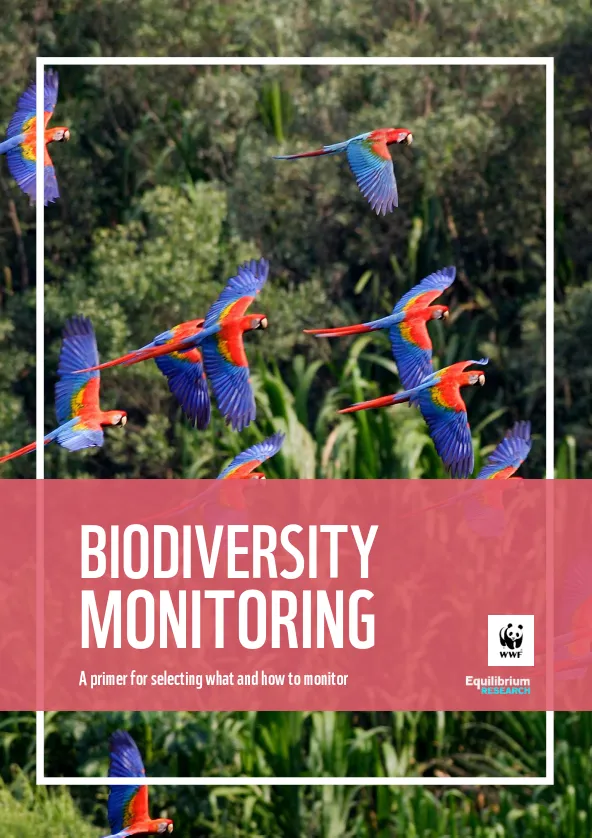
A primer for selecting what and how to monitor
This guide provides a practical, step-by-step framework for designing and implementing biodiversity monitoring within conservation projects. Aimed at project managers and practitioners who are not biodiversity specialists, it explains how to determine what to monitor based on your project type, select appropriate biodiversity indicators, choose effective methods to collect data, and determine who conducts monitoring and when.
-
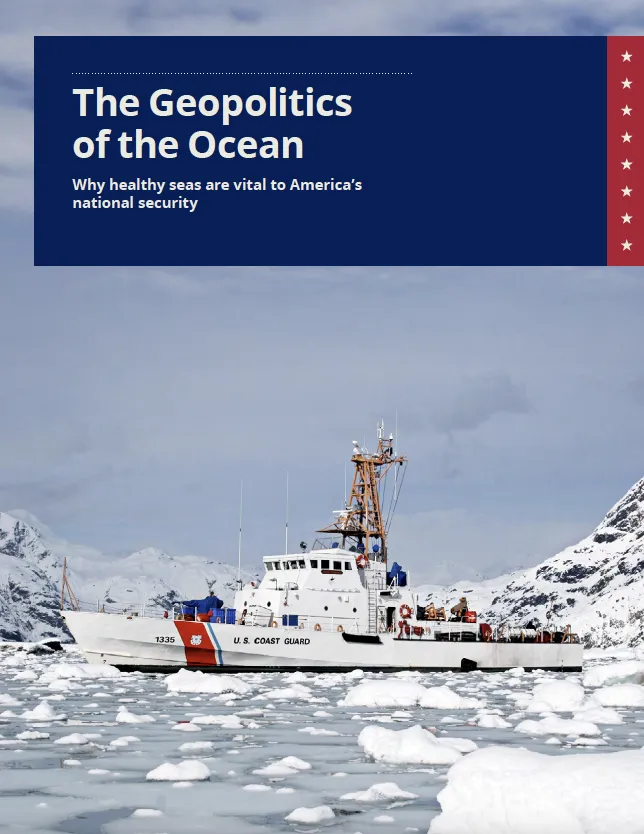
The United States is a maritime nation. Forward-thinking and well-managed ocean governance is an essential pillar of the country’s prosperity, security, and global influence. But overexploitation, environmental degradation, poor or insufficient governance, and illegal activities are eroding this foundation—creating risks of conflict, fueling organized crime, and threatening American economic competitiveness.
Shaped by advisors from the military, security, and development sectors, this report reframes ocean health as a geopolitical and national security priority. It outlines strategic shifts needed to secure peace, strengthen U.S. resilience, and bolster long-term security and prosperity for the American people:
- Renew maritime leadership by integrating ocean policy into national security strategies.
- Strengthen global partnerships to counter IUU fishing and enforce maritime law.
- Expand public-private collaboration to finance sustainable ocean solutions.
This report was convened by WWF and The International Conservation Caucus Foundation (ICCF).
-
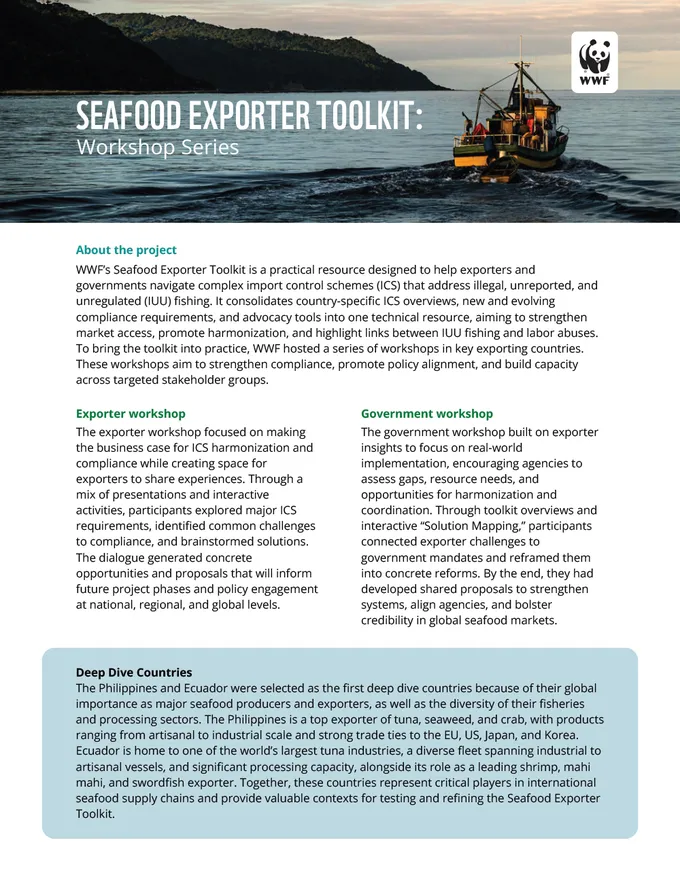
WWF convened two complementary workshops in Ecuador & The Philippines as part of the Seafood Exporter Toolkit project: one with exporters and industry representatives, and another with government and enforcement agencies.
Read the Seafood Exporter Toolkit.
-
WWF Announces Recipients of the 2025 WWF Russell E. Train Education for Nature Fellowships

-
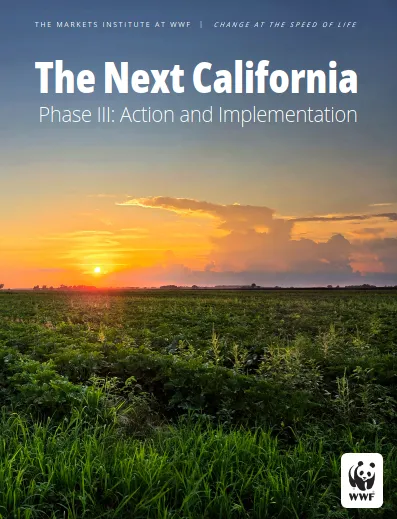
WWF’s Next California initiative aims to transition 3% of mid-Mississippi Delta farmland from commodity row crops to specialty food crops by 2034, boosting local revenue, food security, and environmental sustainability. Phase III focuses on implementation through farmer-led innovation, infrastructure, agtech, and investment opportunities.
To learn more, visit our Next California project page.
Previous reports:
Next California Phase I: Investigating Potential in the mid-Mississippi Delta River Region (2020)
-
This series of briefs illustrates some major interconnected gaps and barriers that hinder enhanced integration of NbS in climate change adaptation policies and practice. Each brief identifies key questions to stimulate discussion in a series of regional technical dialogues among stakeholders. Participants in these dialogues will include government decision makers, practitioners and civil society representatives working on NbS and climate change adaptation. These participants will be requested to validate and add to findings from the analysis. They will also jointly identify context-appropriate solutions that can help address the gaps and barriers. They will inform efforts to develop a platform that supports mainstreaming and enhances use of NbS for climate change adaptation.