Stories
-
Translocated rhinos give birth in Indian national park
March 26, 2013Two translocated rhinos gave birth in the Manas National Park in India, indicating that the translocated species is breeding successfully and adapting to the new environment. The arrival of the calves comes as a welcomed affair amid a recent spurt in the poaching of rhinos in the northeast Indian state of Assam.
-
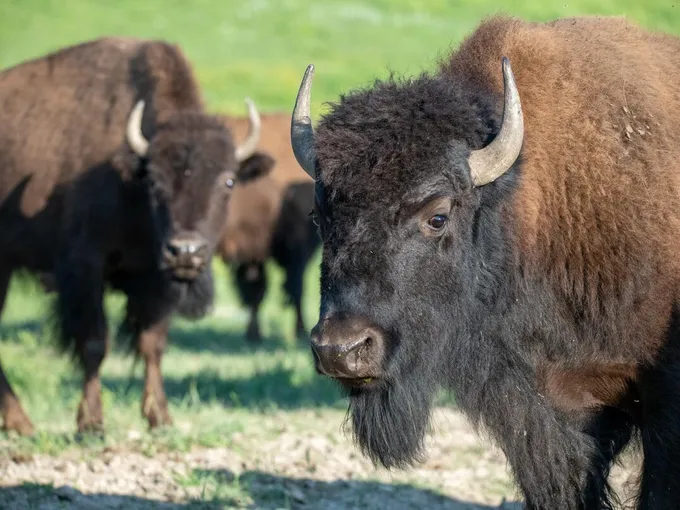
Returning the American bison to the Northern Great Plains
March 25, 2013WWF is successfully maneuvering some of the roughest of landscapes and most complex of cultures, making significant gains toward buffalo conservation in the Northern Great Plains. Working among a culture thick with pride, history and sacrifice, WWF has found its role guiding this dream of bison restoration into reality.
-
Ushering in a future of cooperation and water security
March 22, 2013Karin Krchnak, director of WWF's Freshwater Program, journeyed by canoe down the Rio Grande through Big Bend National Park, witnessing firsthand the power of partnership in finding a solution to maintaining abundant sources of clean water.
-
Working together for responsible forest management
March 21, 2013Kerry Cesareo, WWF's Managing Director of Forests, discusses how forest stewardship can help protect vulnerable forests from illegal logging, encroachment and conversion to farmland.
-
San Francisco Named Earth Hour Capital
March 19, 2013In recognition of San Francisco's comprehensive efforts to promote renewable energy and prepare its residents for extreme weather and other consequences of climate change, an internationl jury has named the city U.S. Earth Hour Capital for 2013.
-
Arctic Drilling Assessment Released
March 14, 2013A new government assessment of offshore oil and gas development in the Arctic in 2012 falls short of acknowledging that offshore drilling cannot currently be conducted safely in the Arctic and should not be allowed.
-
Monarch Butterfly Survey Indicates Lowest Numbers in 20 Years
March 14, 2013The percentage of forest occupied by monarch butterflies in Mexico, used as an indicator of the number of butterflies that arrive to that country each winter, reached its lowest level in two decades.
-
Global Action to Fight Wildlife Crime
March 14, 2013This month in Bangkok, where 178 nations have convened to discuss global wildlife trade, many of the country delegates are publicly expressing urgency and seriousness of the crisis. As poaching rates for African elephants and rhinos soar to catastrophic heights, member nations of the UN Convention on International Trade in Endangered Species (CITES) took action.
-
Buddhist Teachers Deliver Powerful Message Against Illegal Ivory Trade
March 14, 2013Under a setting sun, four of Thailand's most revered Buddhist teachers came together to deliver a powerful message against the illegal trade of ivory in Thailand.
-
Protection for Asian Elephants and Help for Rangers
March 13, 2013On a recent trip to Thailand, WWF's Leigh Henry saw elephants for the first time and reminds us why our successful conservation work benefits both species and people.
-
A Chorus of Hope for Elephants
March 12, 2013Last week, that rare moment happened with 1.5 million voices from 227 countries and territories coming together in a call to end the ivory trade in Thailand, home to one of the biggest unregulated ivory markets in the world. Their shared vision: to save the world's elephants.
-
Tigers Reduced to Skin and Bones for Wildlife Crime
March 07, 2013The skin, bones, teeth, claws and skulls of more than 1,400 tigers were confiscated between 2000 and 2012, according to a new report. With wild tiger numbers at an all-time low, the report stresses the crisis of wildlife crime.
-
Gray Whales' Remarkable Migration
March 05, 2013Gray whales migrate more than 10,000 miles roundtrip each year—the longest for any mammal on Earth. Each winter and spring, their spectacular migration between northern feeding grounds and southern nursery areas offers amazing opportunities for whale watchers along the west coast. The Arctic feeding grounds of the gray whale are critical to their survival, as they must eat enough to sustain them until they return the next year.
-
Thai prime minister announces end to ivory trade
March 03, 2013Thai Prime Minister Yingluck Shinawatra pledged to start a legislative process to end ivory trade in Thailand, seizing a key opportunity to stem global wildlife trafficking at the opening of the Convention on the International Trade in Endangered Species of Fauna and Flora (CITES) in Bangkok.
-
Leonardo DiCaprio and WWF's Carter Roberts Urge Action on Thai Ivory Ban
March 03, 2013Leonardo DiCaprio and WWF's Carter Roberts remind Thailand that the world will be watching as Bangkok hosts CITES delegates from 177 nations who stand in solidarity with an international chorus calling for a ban of the nation's domestic ivory trade.
-
Protecting Monarch Butterflies and Their Forests
February 28, 2013Every year, monarch butterflies mirgrate between 1,200 to 2,800 miles, leaving their summer breeding areas in Canada and the United States to return to hibernation colonies in the forests of central Mexico. To help local communities keep the forest intact, WWF helps establish alternative income-generating ventures, including sustainable mushroom and tree nurseries.
-
WWF Submits Half a Million Petition Signatures for Thai Ivory Ban
February 27, 2013WWF handed over a global petition with more than half a million initial signatures from around the world demanding an end to Thailand's ivory trade. The petition was delivered personally to Prime Minister Shinawatra today in Bangkok.
-
Shell Announces No Drilling this Year in Alaska’s Beaufort and Chukchi Seas
February 27, 2013Royal Dutch Shell today announced today that it will forgo its plans to drill for oil and gas in Alaska’s Beaufort and Chukchi seas in 2013 so it can be more prepared to drill in the future. The decision by Shell comes on the heels of the company’s 2012 drilling season in Alaska, which was fraught with challenges, including the near-grounding of one of its drill rigs, a fire later on the same rig, the failure of its oil spill containment dome, and, ultimately, the grounding of a drilling rig on a pristine, wildlife-rich island in Alaska in late December.
-
A Hotline for Salmon Sustainability
February 26, 2013
-
Sustainability Runs Deep in Richmond
February 21, 2013Today Richmond is one of 29 participating cities in WWF's Earth Hour City Challenge. But in the 1970s and 1980s the situation was far different. Pollution from tobacco plantations and chemicals plants had sullied the river to the point where fishing in the James River was banned in 1975.
-
What Governments Must Do to Fight Wildlife Trade
February 07, 2013As governements convene at CITES, they must recognize the impact that escalating wildlife crime has not only on wildlife but also on people, economies and regional security. We can’t afford to turn a blind eye and treat this crisis lightly. Leniency will only allow this dangerous crime to flourish unchecked.
-
Polar Bear Patrol
February 06, 2013WWF works with Arctic communities to protect people and polar bears from avoidable cases of conflict
-
WWF Welcomes APP Announcement to Halt Clearing, Urges Paper Buyers to Wait for Proof
February 05, 2013Asia Pulp and Paper (APP) announced that it has ceased tropical forest clearance pending assessment of conservation values and carbon stocks. In effect, APP has accepted calls that WWF has been making on the company for many years. WWF welcomes the announcement but will remain vigilant through independent monitoring and through the Eyes on the Forest coalition.
-
World's Largest Wetland Declared
February 02, 2013The world's lartest wetland site was declared by the Ramsar Convention on Wetlands of International Importance. The site, known as Llanos de Moxos, is located in the South American country of Bolivia. At more than 17 million acres, the wetland is roughly equal in size to the US state of North Dakota.