© Frida
Artificial intelligence and conservation
Harnessing the power of technology to protect nature
Artificial intelligence (AI) is transforming how we understand and protect life on Earth. At WWF, we are applying AI tools to help solve some of the most pressing environmental challenges faster, smarter, and at a greater scale.
From identifying wildlife in millions of camera trap images to predicting deforestation before it happens, AI enables us to generate insights from vast and complex data. These insights help scientists, governments, and communities make informed decisions to conserve species and habitats more effectively.
AI doesn't replace traditional conservation—it strengthens it. By combining decades of ecological knowledge with new technology, we can better monitor ecosystems, anticipate threats, and take timely action to protect people and the planet.

© WWF-US / James Morgan
Why it matters
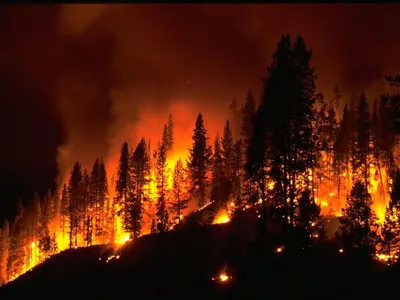
AI helps us predict environmental risks, such as wildfires or illegal logging, before they escalate.
© NOAA
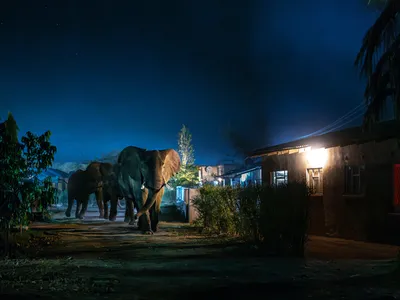
AI helps us support communities with tools that enable faster decision-making and resource protection.
© Jasper Doest / WWF
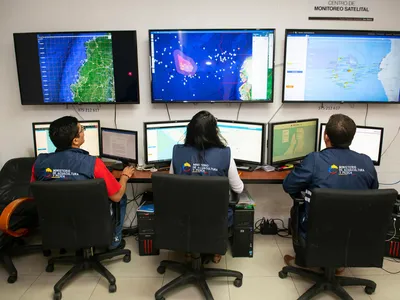
AI helps us accelerate conservation by processing data that would take years for humans to analyze alone.
© Antonio Busiello / WWF-US
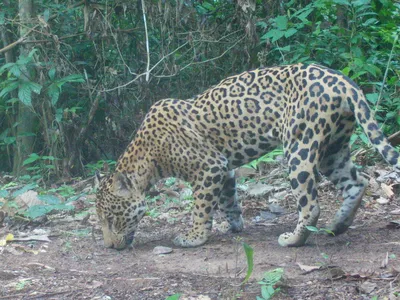
AI helps us detect and track species in real time from camera traps, acoustic recordings, and satellite imagery.
© WWF Peru
What WWF is doing

© Marizilda Cruppe / WWF-UK
By integrating AI into our work, WWF is helping build a more resilient future for people and nature.
WWF is pioneering AI-driven solutions across multiple conservation landscapes. We work with tech companies, local partners, Indigenous peoples, and academic institutions to ensure our tools are grounded in science, equity, and real-world impact. Through innovation and collaboration, WWF is:
Protecting important places
Healthy ecosystems play a critical role in reducing the impacts of climate change. WWF is using AI to protect and restore key ecosystems like mangroves and forests.
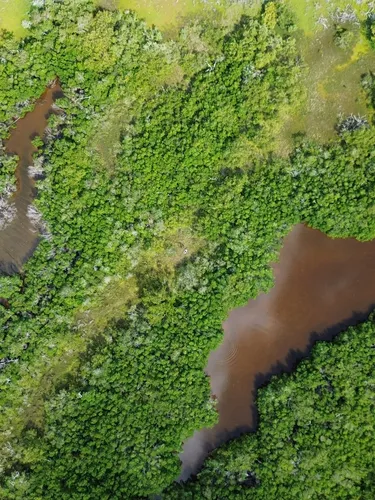
Through ManglarIA, “AI for Mangroves” in Spanish, an innovative project supported by Google.org, we’re working to better understand how mangrove ecosystems and their contributions to communities are affected by climate change. We can then use this information to better manage and conserve the long-term viability of mangroves as a nature-based solution for climate change.
Forest Foresight is a WWF initiative that harnesses AI and satellite imagery to detect early warning signs of deforestation and forest degradation. By analyzing patterns in forest health, land use, and human activity, Forest Foresight helps conservationists, governments, and communities act before irreversible damage occurs. This predictive approach enables smarter, faster interventions.
Advancing the responsible use of AI
With decades of experience leading global efforts to protect nature, WWF experts bring a deep understanding of ecosystems, data, and field realities that help guide the responsible application of AI tools. As a trusted partner to governments, Indigenous peoples, local communities, academic institutions, and the private sector, WWF helps ensure that AI innovations are not only technically robust but also grounded in equity, ethics, and real-world impact. This includes considering who has access to and control over data, supporting efforts to uphold Indigenous data rights, and examining the environmental footprint of emerging technologies. WWF is actively working to understand and reduce its own impact, with the goal of using AI in ways that benefit both people and the planet.
Identifying and monitoring wildlife
Monitoring the planet’s most at-risk species is critical to their protection. Each year, WWF staff deploy thousands of camera traps—cameras triggered by infrared motion sensors—offering an unprecedented view of wildlife populations and habitat.
However, sorting and analyzing millions of camera trap photos can take months, delaying the delivery of crucial information to decision-makers. That’s why WWF has partnered with leading conservation organizations and Google to develop Wildlife Insights. This innovative platform allows NGOs, governments, and citizen scientists to upload, analyze, and share camera trap data across the conservation community. Powered by advanced AI, Wildlife Insights can automatically identify thousands of species in minutes and allows users to quickly analyze the data to understand where and why wildlife populations are changing.
With easy access to reliable and timely wildlife data on any device, whether in the office or field, Wildlife Insights helps us collaborate more effectively and make more informed and efficient conservation decisions. The Wildlife Insights AI model, called SpeciesNet, is freely available online for anyone to use and improve on.
Stopping wildlife crime
Since 2016, WWF and Teledyne FLIR have collaborated to deploy FLIR thermal cameras to stop rhino poaching in some of Kenya’s highest-priority wildlife reserves. The cameras are equipped with night vision and AI that can detect human, wildlife, or vehicle movements within the coverage area in the dark. The system then sends an alert, in real-time, to the operator of the camera system, triggering the appropriate response.
FLIR cameras have greatly increased the effectiveness of nighttime patrols and improved ranger safety. Currently, 11 rhino sites in Kenya are using FLIR cameras and equipment in some capacity, significantly reducing—and in some areas, completely halting—wildlife poaching.
Fighting wildlife trafficking at ports
Wildlife traffickers often exploit air and sea transport to smuggle illegal wildlife and their products, concealing them within large volumes of legitimate baggage and cargo. International airports already use advanced scanning technologies to screen for security threats such as weapons or explosives. Now, WWF and partners are working to deploy similar automated systems to combat wildlife trafficking at key transport hubs.
These wildlife autodetection systems are equipped with sophisticated machine learning algorithms that can automatically identify and flag illegal wildlife products, helping to ensure that nothing is overlooked and that no bad actor can look the other way. By enhancing detection accuracy, reducing the burden on human inspectors, and increasing screening
Convening a community of practice
The AI for Conservation group on WILDLABS, the global conservation technology network, serves as a vibrant hub for conservation practitioners and researchers to share tools, crowdsource answers, find collaborators, discover events, and more. With over 1,000 active members, the group offers a community of support and a network of resources to anyone who uses or is interested in using AI for their conservation work. Whether you’re capturing camera trap images, deploying remote sensors, or building machine-learning tools for biodiversity monitoring, this community provides peer support, expert advice, and collaborative opportunities to harness AI responsibly and effectively for conservation impact.
Keeping on top of news
The news and other regularly updated internet-based information sources regularly provide insights into events that may impact WWF’s work. AI can help identify these sources of information to enable quicker responses to potential threats and feedback on public sentiment. For example, the NewsPanda project provides WWF-India and WWF-Nepal with information about infrastructure construction projects that may impact WWF’s areas of interest.
WWF is also developing and piloting SQUID, a low-cost media analysis tool that combines human expertise with AI to monitor sentiment around key conservation issues. By processing insights from news and media sources, SQUID helps track how public perceptions are evolving over time. This can support more responsive and informed strategies across WWF’s work.
News and stories
-
Now open source, the SpeciesNet model saves time and saves wildlife

Experts
-

Crawford Allan
Vice President, Wildlife Crime and Policy, Wildlife Conservation
-
Eric Becker
Conservation Engineer, Wildlife Conservation Program
-

Abby Hehmeyer
Senior Program Officer, Wildlife Conservation
-
Colby Loucks
Vice President and Deputy Lead, Wildlife Program
-
Arnaud Lyet
Lead Specialist, Wildlife Conservation
-
Dave Thau
Global Data and Technology Lead Scientist, Global Science