Endangered species threatened by unsustainable palm oil production
The world’s most popular vegetable oil—palm oil—is produced in tropical rainforests everywhere. While it can be produced sustainably, palm oil made with conventional production methods can lead to unchecked agricultural expansion that threatens forests and wildlife.
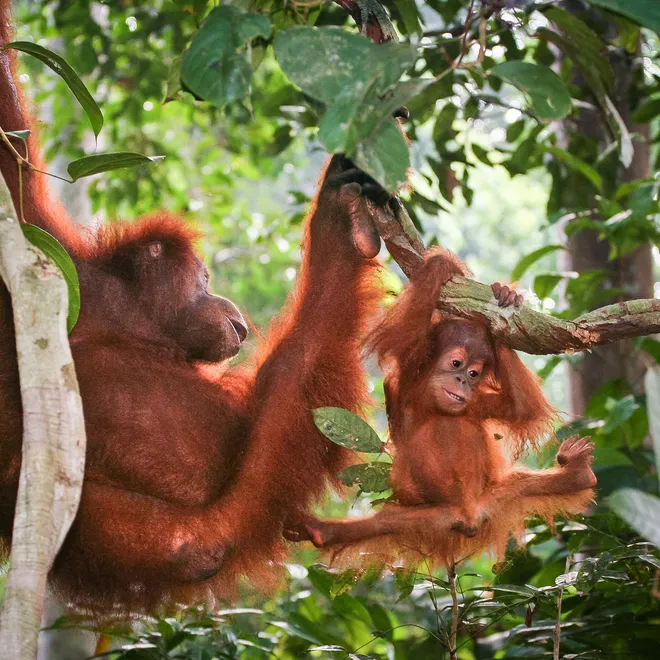
© The Orangutan Project
Orangutan
Bornean Orangutan, Endangered | Sumatran Orangutan, Critically Endangered
Indonesia and Malaysia produce more than 85% of the world’s palm oil and are the only remaining homes to orangutans. Fewer than 80,000 of these animals survive today, their habitats under constant threat of deforestation.
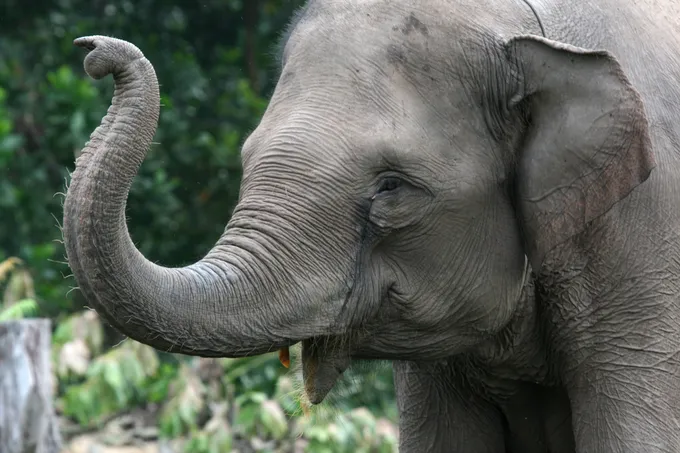
© WWF-Indonesia / Samsul Komar

© Cede Prudente / WWF
Sumatran elephant
Critically Endangered
While Sumatra is home to several of the country’s largest national parks, many areas in these parks are destroyed—illegally—to produce palm oil. The elephant population across the island is crashing, with far fewer than 3,000 surviving, as herds are left homeless, harassed, and killed due to intense conflict with people over shrinking habitat.
Bornean pygmy elephant
Endangered
The smallest in size of Asian elephant subspecies, only 1,500 or so of these pachyderms live on Borneo, an island where palm oil production continues to encroach on their habitat.
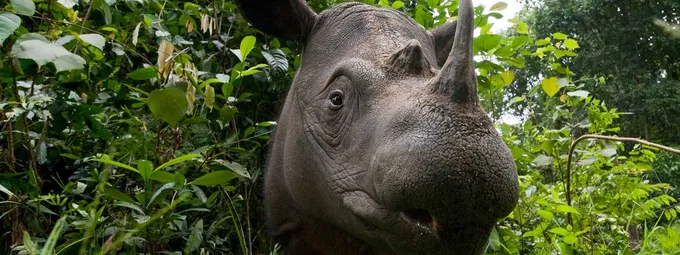
© naturepl.com / Mark Carwardine / WWF

© Howard Buffett / WWF-US
Sumatran rhino
(Critically Endangered)
These smallest rhinos are also the closest living relatives to the now-extinct woolly rhinos. Their population is unstable, threatened by poaching as well as the destruction of their habitat by unsustainable palm oil production.
We’re making progress—and you can help
WWF is a founding member of the Roundtable for Sustainable Palm Oil (RSPO), which creates standards for sustainable palm oil production and certifies qualified growers and processors. About 20 percent of the world’s palm oil is certified sustainable by RSPO. When you shop for food, buy products with the RSPO logo to support companies using certified sustainable palm oil.