History
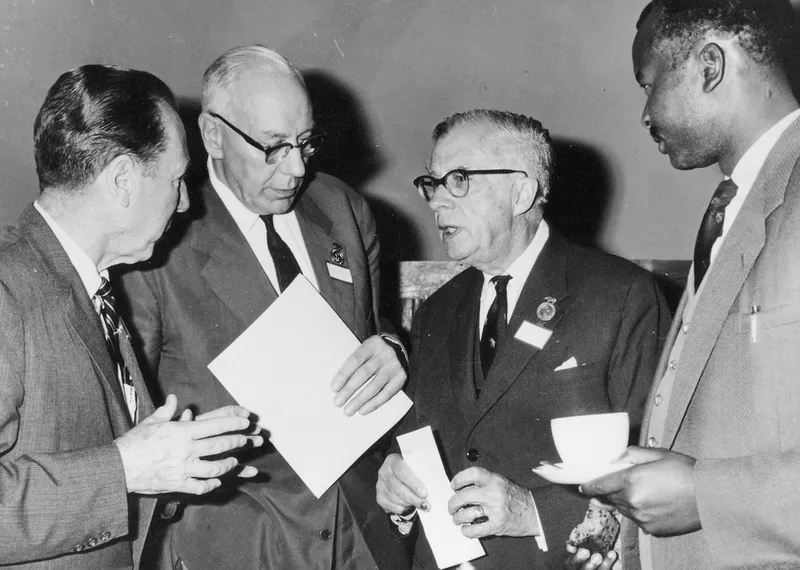
WWF was established in 1961 by a group of passionate and committed individuals who sought to secure the funding necessary to protect places and species that were threatened by human development.
Inspired by a series of articles in a UK newspaper written by Sir Julian Huxley about the destruction of habitat and wildlife in East Africa, businessman Victor Stolan pointed out the urgent need for an international organization to raise funds for conservation. The idea was then shared with Max Nicholson, Director General of British government agency Nature Conservancy, who enthusiastically took up the challenge.
Nicholson was motivated in part by the financial difficulties facing the International Union for Conservation of Nature (IUCN), and felt that a new fundraising initiative might help IUCN and other conservation groups carry out their mission. He drafted a plan in April 1961 that served as a basis for WWF’s founding, which was then endorsed by the executive board of IUCN in a document known as the Morges Manifesto.
Nicholson and approximately two dozen other individuals –including Sir Peter Scott, a member of IUCN’s executive board who had signed the Morges Manifesto and later became WWF’s first vice president – hammered out the details of the new organization in a series of meetings over the following months. This included choosing the name World Wildlife Fund and adopting the now-famous panda logo.
The first three “national appeals” (now called national organizations) were also established in 1961 in the United Kingdom, Switzerland, and the United States. Since then, WWF-US has grown to include over 1 million supporters and has helped lead conservation projects in Alaska, the Northern Great Plains, and around the world.
Explore our history
© WWF Intl. / WWF
1960s
1961
World Wildlife Fund was conceived in April, 1961, and set up shop in September, 1961, at in Morges, Switzerland. H.R.H. Prince Bernhard of the Netherlands became the organization's first president.
World Wildlife Fund, Inc. (WWF)—the U.S. appeal—became the second national organization (after the UK appeal) to be formed in 1961. The giant panda becomes the logo for WWF.
In its first year, the WWF Board approves five projects totaling $33,500, including work with the bald eagle, the Hawaiian sea bird, the giant grebe of Guatemala, the Tule goose in Canada, and the red wolf in the southern United States.
WWF also finances Ambassador Philip K. Crowe's 1961 mission to Central America and Mexico, during which the ambassador meets with government officials to build support for conservation.
Another project in 1961 helps Colombian conservationists establish a small nature reserve. These efforts supplement WWF support for the conservation programs of IUCN, the International Council for Bird Preservation (ICBP) and WWF-International.
When incorporated in Washington, D.C. on December 1, 1961, Ira N. Gabrielson and Russell E. Train are the first president and vice president, respectively, of WWF-US and Dwight D. Eisenhower is named its President of Honor.
1962
A WWF grant helps establish the Charles Darwin Foundation Research Station in the Galapagos Islands.
1963
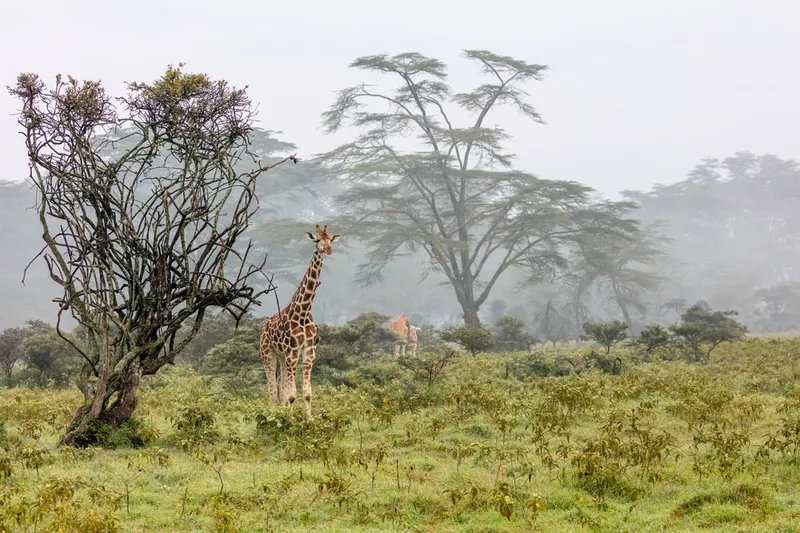
The College of African Wildlife Management is established in Tanzania with grant funding from WWF.
© Harish Segar / WWF
1970s
1973
WWF hires its first scientist, Dr. Thomas E. Lovejoy, as a project administrator, in 1973.
WWF grants $38,000 to the Smithsonian Institution to study the tiger population of the Chitwan Sanctuary in Nepal, allowing scientists to successfully use radio tracking devices for the first time in 1973.
WWF purchases 37,000 acres adjacent to Kenya's Lake Nakuru. Nearly 30 bird species depend on the lake, including a million flamingoes for which the lake is the principle feeding ground in 1973.
The Convention on International Trade in Endangered Species of Wild Fauna & Flora (CITES) is negotiated in 1973, with Russell E. Train leading the U.S. government delegation. To date, CITES has been signed by more than 170 nations working together to ensure wild plant and animal species are not threatened with extinction
WWF starts to focus not only on species-related conservation projects, but also on protecting habitat by establishing national parks and nature reserves.
1974
WWF begins awarding the annual $50,000 Getty Prize for outstanding contributions to wildlife conservation in 1974. The Prize increases to $100,000 in 1999 and focuses on the education of future conservationists.
1975
WWF in 1975 helps create Corcovado National Park, located on Costa Rica's Osa Peninsula. Corcovado contains 13 major habitat types and is the best example of a Central American tropical forest now under protection.
WWF and IUCN in 1976 create TRAFFIC, a wildlife trade monitoring network that works to ensure trade in wild plants and animals is not a threat to the conservation of nature.
© WWF-US / McDonald Mirabile
1980s
1983
WWF establishes the Primate Action Fund in 1983 to support conservation work in tropical countries where primates originate. This same year, WWF’s long-established support of projects in Africa is strenthened by the creation of an Africa Program.
1984
In a New York Times editorial in 1984, WWF vice president Dr. Thomas E. Lovejoy sets forth the concept of using "debt for nature" swaps, through which WWF will convert portions of national debts into Funds for Conservation.
1985
In 1985, WWF launches Wildlands & Human Needs program, demonstrating the economic circumstances of rural people who share their land with wild animals can improve without degrading the natural habitats. WWF also expands conservation programs in Asia and Africa, including the new Annapurna National Park in Nepal and strengthened projects to protect mountain gorillas in Rwanda.
1986
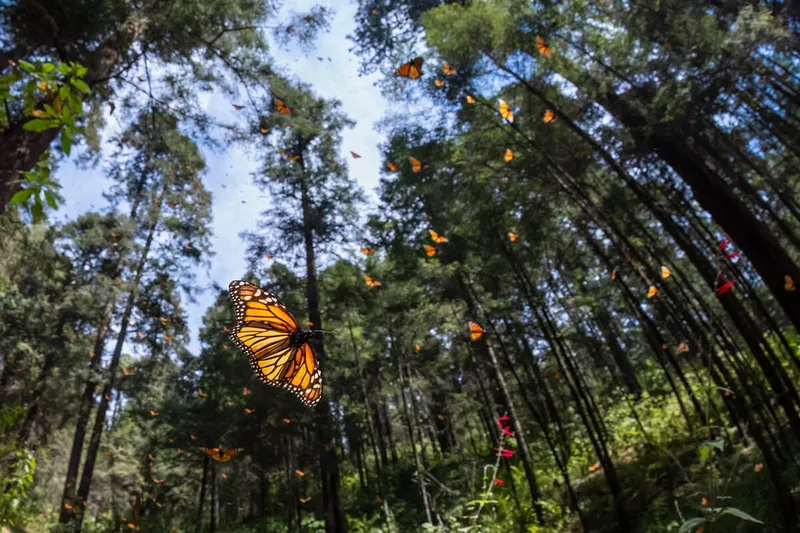
In 1986, the Mexican government protects as an ecological reserve the area where 100 million Monarch butterflies converge each winter, representing a tremendous victory for Monarca, an organization created by local citizens and supported by WWF.
The greater bamboo lemur - thought to be extinct since 1972 - is re-discovered by WWF-sponsored researchers in Madagascar in 1986. This same year, WWF also helps reintroduce the Golden Lion Tamarin to Brazil's Atlantic Forest and create the first national park in Bhutan.
1987
In 1987, WWF is instrumental in creating the Cockscomb Jaguar Preserve, protecting one of the largest jaguar populations in Central America, as well as the endangered scarlet macaw. The same year, WWF and the Malawi government collaborate to help villagers in Lake Malawi National Park secure sustainable livelihoods.
1988
WWF collaborates with Cultural Survival in 1988 to help Ecuador's Awndians gain title to their homeland and to manage their tropical forests productively. WWF also arranges a $3 million debt-for-nature swap in Costa Rica in 1988, as well as additional swaps in the Philippines for $2 million and Ecuador for $1 million. One year later, a $2.1 million dept for nature swap in Madagascar is the first done with US government support.
WWF's innovative Lumparda Elephant Project in 1988 leads to a sharp decline in poaching of elephants and black rhinos in Zambia, through an established buffer zone for economic activities and local people employed as scouts to protect wildlife. One year later, WWF’s campaign to save the African elephant plays an important part in the decision by CITES to enact a ban on the ivory trade.
© Jürgen Freund / WWF
1990s
1990
WWF convenes the Cooperative Working Group on Bird Trade in 1990. The group recommends that the U.S. end the import of most wild-caught birds for sale as pets. This same year, with support from WWF, TRAFFIC opens an office covering eastern and southern Africa—the heart of elephant country.
1992
In 1992, WWF begins creating "conservation trust funds" for a number of high-priority conservation areas. These trusts act as foundations, providing stable, long-term funding that can meet a country's recurrent environmental costs.
1993
In 1993, WWF completes a $19 million debt-for-nature swap in the Philippines, the largest such swap ever undertaken by a nongovernmental organization.
WWF in 1993 helps create the Forest Stewardship Council (FSC) to find solutions which promote responsible stewardship of the world's forests. FSC grows to a global network of more than 40 offices in the United States and around the world.
1994
WWF launches the Russell E. Train Education for Nature (EFN) Program in 1994 to build capacity for conservation in Africa, Asia, and Latin America by supporting academic and mid-career training. To date, EFN has awarded over 1000 scholarships and grants
1996
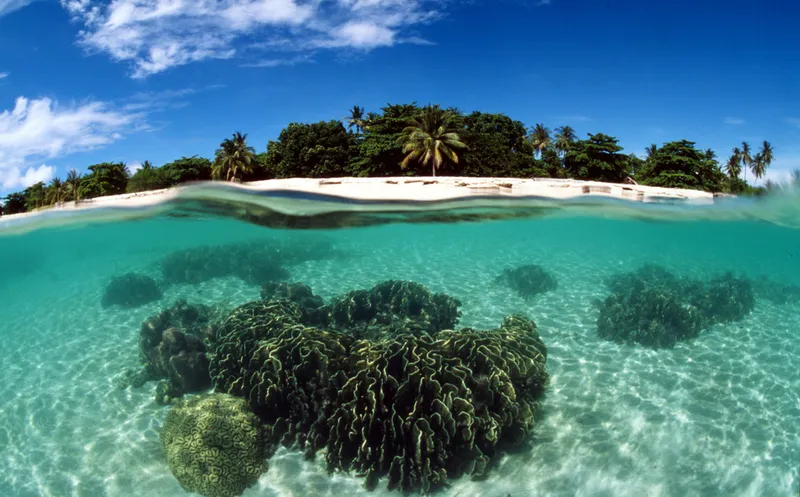
WWF in 1996 works with Malaysia and the Philippines to establish the Turtle Islands Heritage Protected Area, the world's first transborder marine protected area for sea turtles. The same year, WWF negotiates a debt-for-nature swap in Madagascar worth $3.2 million.
1997
WWF in 1997 launches the Living Planet Campaign, a new vision for preserving Earth's biodiversity. The centerpiece of the campaign is the Global 200, a framework of more than 200 terrestrial, marine and freshwater ecoregions.
The World Bank introduces a partnership with WWF to bring 500 million acres of forest under independent certification as sustainably managed by 2005, and to establish an additional 50 million acres of new protected forest.
The Marine Stewardship Council is established in 1997 by WWF and Unilever to assure the long-term sustainability of global fish stocks and the integrity of marine ecosystems. The Council becomes a fully independent orgainzation two years later.
1998
In a pledge developed through the WWF-World Bank Alliance in 1998, Brazil commits to provide legal protection for 10 percent of the Brazilian rain forest, an area greater than all of the national parks in the contiguous United States combined.
WWF plays a key role in persuading Ecuador to enact a sweeping new law to protect the Galapagos Islands in 1998. The law creates a marine sanctuary around the islands and ensures tourist revenues support conservation.
Namibia establishes the Communal Area Conservancies Program, designating four communally-run nature conservancies covering 4.2 million acres of critical wildlife habitat in 1998. The conservancies are the first stage in the creation of a broader network of conservancies under a WWF-cosponsored conservation initiative.
1999
WWF in 1999 helps craft and secure support from the fishing industry for a proposal to establish a 186-square-nautical-mile no-fishing zone in the Dry Tortugas within the Florida Keys National Marine Sanctuary
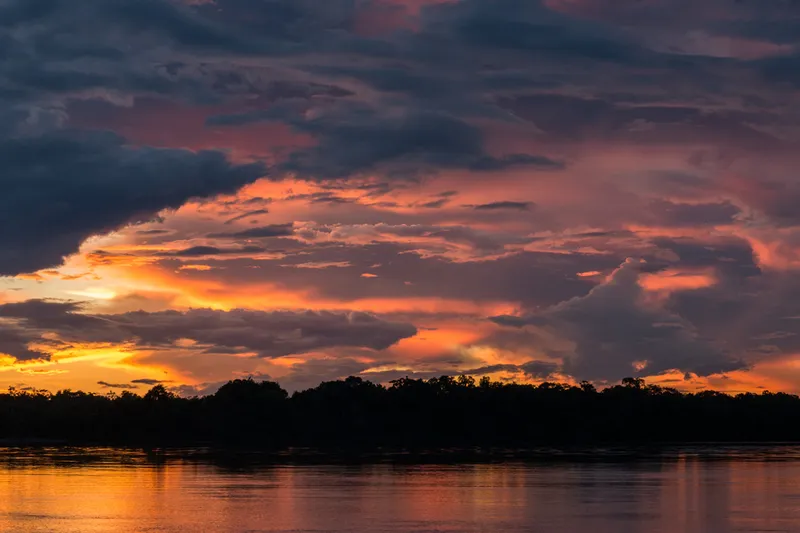
WWF in 1999 convenes the Yaounde Forest Summit in Yaounde, Cameroon. At the Summit, six African heads of state jointly announce plans to create 12 million acres of new cross-border forest protected areas in the Congo Basin.
WWF establishes Climate Savers, partnering with leading corporations to help them reduce their greenhouse gas emissions.
WWF and Fundacion Vida Silvestre Argentina in 1999 are instrumental in winning passage of legislation to protect a 2.5 million-acre forest corridor connecting existing reserves in Argentina's Misiones Province and neighboring Brazil.
© Zig Koch / WWF
2000s
2000
The President of Brazil pledges to an additional 30 million acres of protected areas in the Amazon on top of the 70 million pledged two years prior.
2001
In 2001, in the Terai Arc of the Eastern Himalayan lowlands, WWF spurs progress toward a goal of creating wildlife corridors linking 11 protected areas between Nepal and India.
2002
The Amazon Region Protected Areas (ARPA) program launches in 2002. The initiative of the Brazilian government, spearheaded by WWF, will triple the Amazon protected areas system over the next decade.
The Brazilian government creates Tumucumaque National Park—the largest tropical park in the world—in the Amazon, with WWF committing $1 million for its management. In the Peruvian Amazon, a debt-for-nature swap will provide $10.6 million for the conservation of more than 27 million acres in the Peruvian Amazon, with funding from WWF, Conservation International, The Nature Conservancy and the U.S. government.
2003
WWF secures a $53 million commitment from the U.S. government for the new Congo Basin Forest Partnership in 2003. Working with six African governments, science-based priorities are defined for protecting species and habitats in the region.
The Global Environment Facility endorses WWF's Africa Stockpiles Program with a $25 million commitment to clean up and safely dispose of more than 50,000 metric tons of pesticide waste stockpiled throughout Africa. Facility
2004
Negotiations by WWF and partners in 2004 culminate in funding to protect nearly 11 million acres of tropical forest in Colombia through a $10 million debt-for-nature swap and $15 million from the Global Environment Facility.
WWF and the Chinese government release the most comprehensive study ever done of pandas in the wild, showing nearly 50 percent more pandas than previously thought.
In Africa, a new census shows WWF’s efforts to protect rhinos are paying off: with 3,600 black rhino numbers up 50% from the 1990s and 11,000 white rhinos, up from fewer than 100 a century ago.
2005
WWF's Board of Directors in 2005 adopts a 10-year goal: to measurably conserve 15 to 20 of the world's most important ecoregions, and in so doing, transform markets, policies, and institutions in order to reduce threats to these places and the diversity of life on Earth.
In the Americas in 2005, WWF establishes the Mesoamerican Reef Trust Fund, benefiting Belize, Honduras, Guatemala and Mexico. WWF also supports the American Prairie Foundation’s acquisition of 31,320 acres of land in Montana for wildlife restoration, in conjunction with a continent-wide effort to save the American bison.
In the wake of the 2004 Indian Ocean tsunami, WWF develops Green Reconstruction Policy Guidelines in 2005 to be used by the American Red Cross as a blueprint for reconstruction efforts.
WWF defeats a proposal for the world's largest oil palm plantation, which threatens to destroy the last remaining intact forests of Borneo in 2006. Governments of Malaysia, Indonesia and Brunei commit to the Heart of Borneo declaration to conserve and sustainably manage the forests.
WWF in 2006 engages with Wal-Mart on sustainability efforts focused on its supply chain, including MSC certification of all fisheries, participation in the Global Forest & Trade Network, Mining Certification Guidelines, Better Cotton Initiative and other agriculture-related issues.
2007
WWF and The Coca-Cola Company in 2007 announce a $20 million partnership, focusing on seven important river basins, global supply chain, and water use efficiency. With Google, IBM, Intel, and others, WWF forms the Climate Savers Computing Inititative to reduce greenhouse gases.
WWF organizes the first Earth Hour in Sydney, Australia in 2007. One year later, Earth Hour goes global, becoming the world’s largest environmental activism event.
2008
The largest debt-for-nature swap in Madagascar's history is agreed to by the governments of Madagascar and France in 2008. The swap allocates roughly $20 million over five years, and is part of a global effort led by WWF.
In direct response to a WWF-led campaign, Staples, the largest office products company in the U.S., ends its relationship with Asia Pulp & Paper (APP) because of its poor environmental practices.
WWF helps Bhutan create Wangchuck Centennial Park, the second-largest park in the country. With the creation of this park, 49 percent of Bhutan's land cover is protected.
Governors of Sumatra's 10 provinces sign an agreement pledging to restore critical ecosystems in Sumatra and protect areas with high conservation values. WWF will help implement this political commitment.
2009
The 10-year Regional Coral Triangle Initiative (CTI) Plan of Action, which sets steps to address growing threats to the region's wildlife and habitat, is agreed to at the CTI Leaders' Summit in Indonesia. WWF was intimately involved in the development of the plan.
© Suyash Keshari / WWF-Australia
2010s
2010
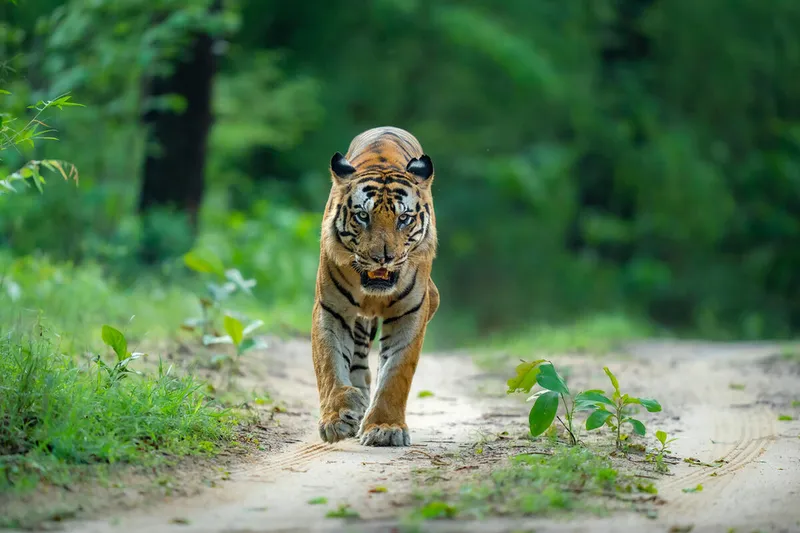
Year of the Tiger: TX2: The Year of the Tiger campaign, WWF’s first species specific global campaign in more than 20 years, launches with the goal to double the number of tigers by 2022
2012
Thai Prime Minister pledges to end domestic ivory trade in Thailand, the world’s largest unregulated ivory market, marking a major win in WWF’s efforts to stop wildlife crime.
2013
ARPA (Amazon Region Protected Areas), the largest tropical forest conservation project in history, receives funding to protect 150 million acres of the Brazilian Amazon rainforest.
2014
WWF and Apple announce groundbreaking project to boost responsible forestry management and increase FSC-certified forestlands within China.
2015
WWF embarks on a bold new plan to protect Sumatra’s rain forest, in a key area known as Thirty Hills.
More than one million people sign a WWF petition to stop the slaughter of elephants. One year later, the US fish and Wildlife Service announce a near total ban on elephant ivory trade in the US.
2016
WWF and the Global Tiger Forum announce that the number of wild tigers has increased for the first time in more than 100 years.
2017
WWF and Walmart began working together to cut carbon pollution and curb some of the worst impacts of climate change to protect people and wildlife at risk with Project Gigaton.
For the first time,WWF and research partners track tagged river dolphins in the Amazon using satellite technology.
WWF teams with Conservation International, the International Union for Conservation of Nature, and the Nature Conservancy to form the Global Mangrove Alliance.
2018
With WWF’s support, ministers from Bolivia, Brazil, and Paraguay signed a tri-national declaration to protect the Pantanal, the world’s largest tropical wetland.
2019
More than 1 million acres of forest land in China is now managed responsibly or under improved forest management, thanks to a joint initiative by WWF and Apple.
For the first time ever, WWF and partners mapped the location and extend of the planet’s last remaining free-flowing rivers.
© Sarah Mosquera / WWF-US
2020s
2020
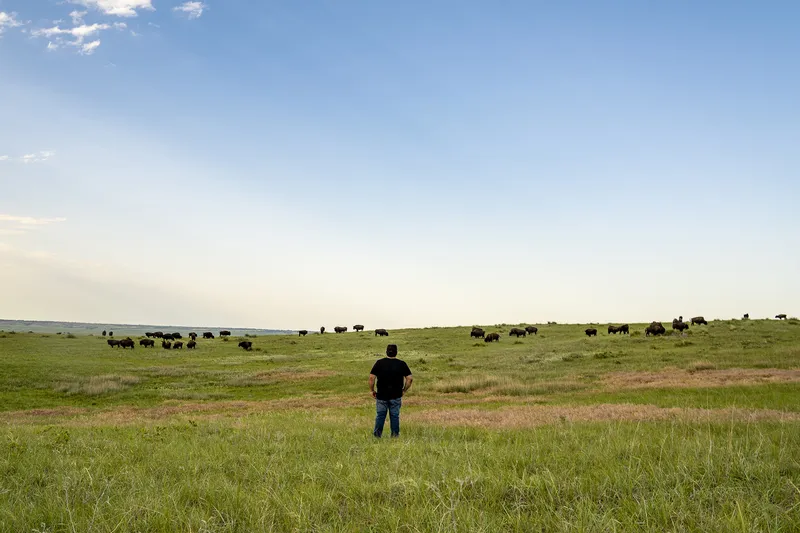
WWF partners with the Rosebud Sioux Tribe; their economic arm Siċaŋġu Company to welcome 100 bison to the 28,000 acrea Wolakota Buffalo Range, what will become North America’s largest Native-owned and managed bison herd with more than 1,000 bison by 2025.
2021
WWF launches Forests Forward, a program to help major companies reach their sustainability goals while protecting forests and the rights of forests communities. Months later, HP announces an $80 million expansion of its forest conservation partnership with WWF to conserve 1 million acres of forest around the world by 2030
The Coalition to End Wildlife Trafficking Online, co-founded by WWF, announces that 47 tech companies have removed or blocked 11.6 million listings for prohibited wildlife and wildlife products.
2022
The Herencia Colombia Project for Permanence, with help from WWF, secures lasting conservation of 79 million acres of Colombian landscapes and seascapes.
2023
The EPA blocks the catastrophic Pebble Mine project in Bristol Bay, Alaska. More than 650,000 WWF supporters signed petitions to block the mine in a decades-long fight to protect the region’s resources and wildlife.
2024
WWF and other members of the Tiger Conservation Coalition commit to helping tiger range countries realize a new, long-term vision for protecting tigers. The coalition joined the Royal Government of Bhutan in hosting the Sustainable Finance for Tiger Landscapes Conference, catalyzing efforts to target $1 billion in additional tiger landscape conservation funding over the next decade.
2025
An impressive 2.4 million acres of mangroves are restored or protected over the past five years by WWF and partners, exceeding the total goals of the Mangroves for Community and Climate project. Launched in 2020, the project was designed to protect, conserve, and restore 7% of these powerhouse ecosystems while supporting sustainable livelihoods for more than 300,000 people annually. In Fiji, more than 54,000 acres—nearly half the archipelago’s mangroves—have now been conserved.