Camera traps
In landscapes around the world WWF scientists and field staff are using cameras equipped with infrared triggers, called camera traps, to obtain critical data about wildlife and their habitats. Now you can access the same pictures used by our scientists to study wildlife and their habitats and make important decisions about conservation.
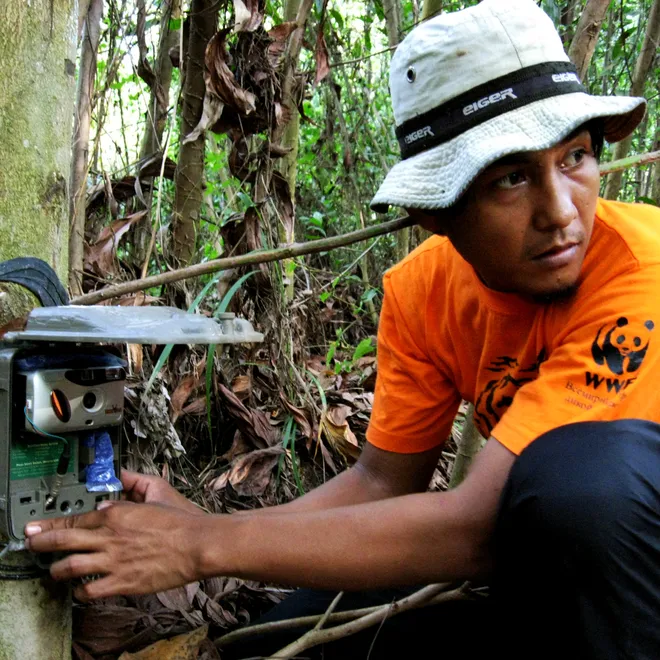
© WWF-Indonesia/Tiger Survey Team
How WWF uses camera traps

© BRIT / WWF-AREAS_Amazonia
While a "camera trap" might sound menacing, it actually does no harm at all to wildlife. The name is derived from the manner in which it "captures" wildlife - on film!
Camera traps are not the intricate and elaborate devices you might imagine; these innovative conservation tools are in fact nothing more than everyday cameras, armed with infrared sensors that take a picture whenever they sense movement in the forest.
While the device itself is not complicated, getting the film developed is. Because the cameras are placed in such remote locations, it often takes a full day to hike to each. Cameras also must be moved occasionally because their flashes often alert animals to their presence, causing those animals to avoid the area in the future.
Due to the moist, hot climate of many of the forest locations WWF is working in, the cameras often malfunction, so scientists will be lucky if two-thirds of the pictures are of any animals at all. Scientists can get that rate of return in a dense forest only because they do significant research before placing the cameras in order to determine the most efficient and productive locations. Although infrared sensors allow camera traps to take pictures on their own, WWF scientists and field staff can claim full credit for the amazing images produced by camera traps.
Protect nature now
Nature needs your urgent help. Donate to WWF today and protect the beauty of nature for generations to come.
© Guy Edwardes/naturepl.com/WWF