© WWF-Indonesia / Mubariq Ahmad
Borneo and Sumatra
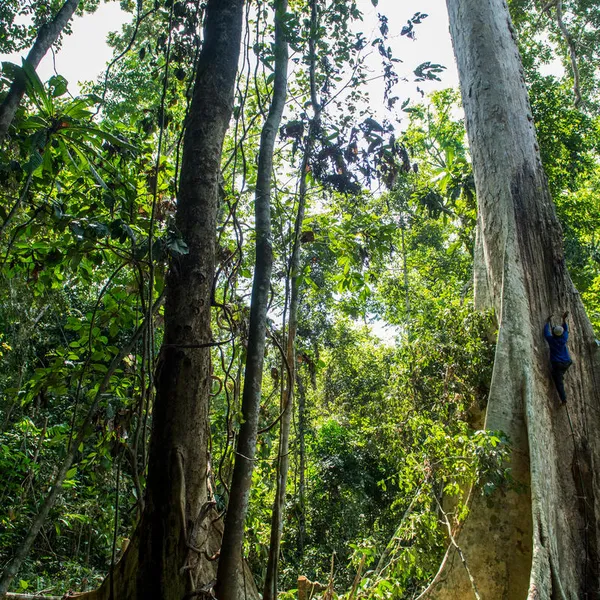
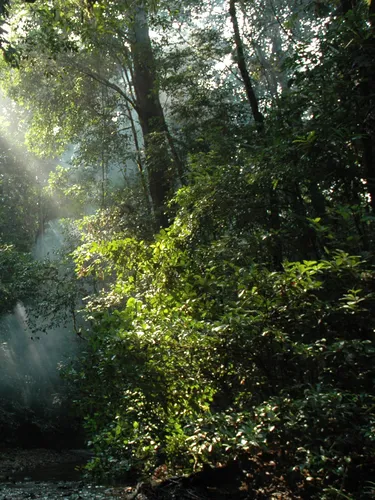
The Southeast Asian islands of Borneo and Sumatra, located on the Equator, are among the most biologically diverse habitats on Earth, possessing some of the world’s richest rain forests with staggeringly high numbers of unique plants and animals, including some of Southeast Asia’s last intact rain forests. In addition to the marvelous biodiversity, these beautiful islands host a number of Indigenous, native, and local communities.
Borneo is the world’s third largest island, covering an area slightly larger than Texas. Sumatra is the world’s sixth largest island. The islands’ tropical climate and diverse ecoregions have created habitats that house thousands of unique species. These include critically endangered species like Sumatran tigers, all three of the world’s orangutan species, Bornean and Sumatran elephants, and Sumatran rhinos. Massive rivers cut across the landscape. These are the islands’ lifelines, offering transport and providing the freshwater needs for the islands’ people.
Wildlife of Borneo and Sumatra

© A. Christy Williams / WWF-Canon
The forests of Borneo and Sumatra are both home to marvelous creatures like the proboscis monkey, sun bear, clouded leopard, and flying fox bat, as well as endangered animals like the Sumatran tiger, Sumatran rhino, and Bornean and Sumatran elephants. Sumatra is the only place on Earth where tigers, rhinos, orangutans, and elephants are all found in the same landscapes.
There are more than 15,000 known plants here, with many more species yet to be discovered. Since 1995, more than 400 species of plants and animals have been identified on the islands, with more than 50 of these species completely new to science.
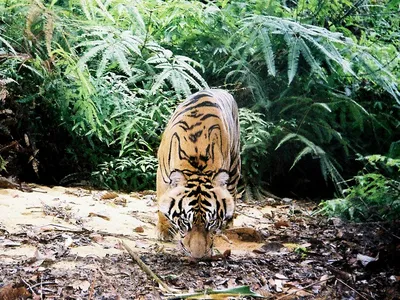
Sunda tigers
This subspecies was once found across several parts of the Sunda islands in Indonesia. Today, all remaining Sunda tigers are found only in Sumatra, now that tigers in Java and Bali are extinct.
© WWF-Indonesia / Tiger Survey Team
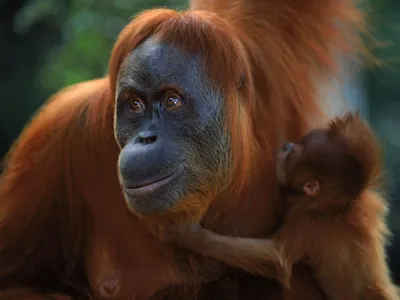
Sumatran orangutans
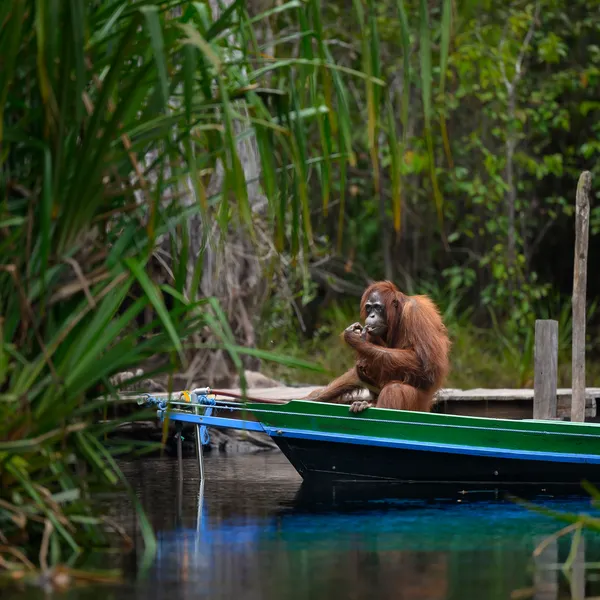
Derived from the Malay words for “person of the forest," Sumatran orangutans are critically endangered.
© naturepl.com /Anup Shah / WWF
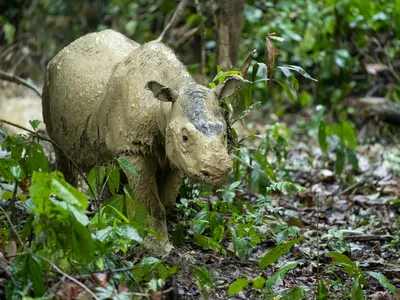
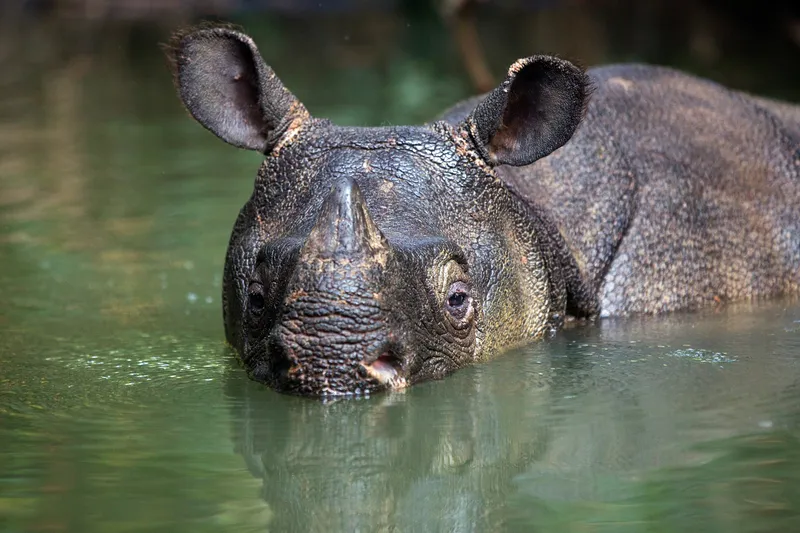
Sumatran rhinos
Sumatran rhinos are the smallest of the living rhinoceroses and the only Asian rhino with two horns.
© Kaisa Siren
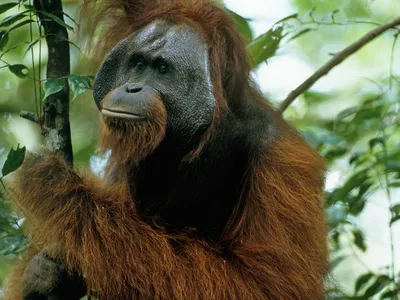
Bornean orangutans
Bornean orangutan populations have declined by more than 50% over the past 60 years, and the species' habitat has been reduced by at least 55% over the past 20 years.
© naturepl.com / Tim Laman / WWF-Canon
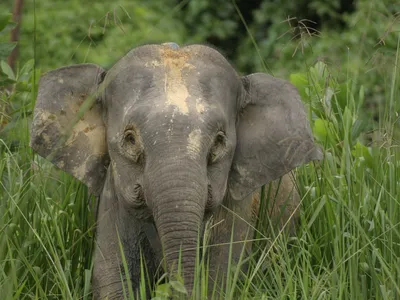
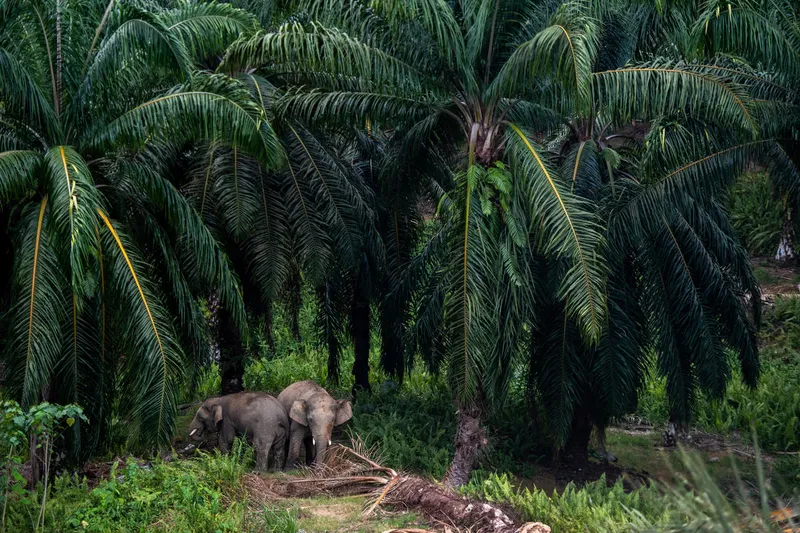
Bornean elephants
The smallest Asian elephant subspecies, Bornean elephants are distinctly smaller than their mainland cousins.
© A. Christy Williams / WWF-Canon
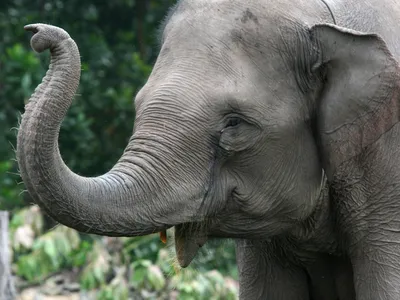
Sumatran elephants
Sumatran elephants feed on a variety of plants and deposit seeds wherever they go, contributing to a healthy forest ecosystem.
© WWF-Indonesia / Samsul Komar
People and communities of Borneo and Sumatra

© WWF-Indonesia / Jimmy Syahirsyah
The cultural diversity of Borneo and Sumatra is as distinct and varied as its plant life. More than 80 million people live on these two islands. They are a mix of Indigenous peoples and immigrants from other islands in Indonesia, such as Java, as well as other Asian countries. The current population of Borneo is estimated at 23 million. Sumatra is home to 60 million people and is the world's fourth most populous island.
Borneo's native cultures are usually referred to collectively as "Dayak," a term that covers a multitude of ethnic groups. Sumatra is also home to a variety of ethnic groups, including the Batak, Minangkabau, Krui, and Pelalawan-Petalangan.
Rapid economic changes have brought shifts in population and threaten the way of life for communities who have traditionally relied on forests for their livelihoods.
Borneo and Sumatra under threat
In Borneo and Sumatra, the vast wealth of natural resources has attracted large-scale international financing focused on extractive industries, from precious hardwoods and minerals to palm oil, rubber, and coal. Global demand for these products fuels massive levels of deforestation.

© WWF-Indonesia / Samsul Komar
Illegal wildlife trade
Illegal wildlife trade is a major problem in this region, adding pressure to already endangered animals. Rampant poaching, facilitated by the growing number of roads and logging trails, poses a grave threat to Borneo and Sumatra's endangered species, like tigers and rhinos. These animals are sought after as symbols of wealth, and some cultures value rhino horn for medicinal purposes, though it has not been proven to possess any.
Unsustainable agriculture
Palm oil production and coffee cultivation in Sumatra are encroaching on landscapes crucial to species conservation. Expanding oil palm plantations are major threats to biodiversity, driving deforestation, habitat fragmentation, soil erosion, pollution, and exacerbating the effects of climate change. The negative effects of palm oil production can significantly affect charismatic species like orangutans, elephants, and tigers that rely on forests to survive. Palm oil is found in a wide array of products from food products to personal care items to cosmetics, and demand for its production continues to grow.
Deforestation
Indonesia is home to approximately three percent of the world's forests. Yet deforestation in this region generates over a third of the total global carbon emissions from deforestation and land degradation. Over a third of the world’s carbon-rich tropical peatlands are in Indonesia. The production of commodities like pulp and paper, oil palm and rubber, along with mining for coal and mineral resources, contributes to the outright conversion of peatlands and other forest types on the islands. Heavy demand for plywood, hardwoods, and other wood products leads to both legal and illegal logging.
Human-wildlife conflict
Escalating habitat loss and fragmentation in this region, as well as other human activities, which are then compounded by ecological shifts, such as wildlife movements and behavior in response to climate change, are leading to increasing encounters between people and wildlife, which are often negative. Such human-wildlife conflicts result in the loss of people’s crops, livestock, and property, as well as injury and death, and can lead to the retaliatory killing of wildlife in turn.
WWF is taking action to protect Borneo and Sumatra
In Borneo and Sumatra, WWF works with business interests, local communities, and governments to address the relentless forces that are destroying these last strongholds for tigers, elephants, orangutans, and other species.
© Stephen Belcher Photography / WWF
Safeguarding Sumatra’s species
WWF has embarked on a 60-year initiative to safeguard one of the last substantial tracts of rain forest on the Indonesian island of Sumatra, called Thirty Hills. In August 2015, WWF-Indonesia acquired licenses to manage 100,000 acres of forests bordering Bukit Tigapuluh National Park, which had previously been designated for logging.
In partnership with the Frankfurt Zoological Society and The Orangutan Project, the team is working through a jointly established company, PT Alam Bukit Tigapuluh, to restore deforested areas within the concession, set aside portions for sustainable economic activities with local and Indigenous communities, and protect the majority of the forest to support both environmental conservation and human well-being.
This is an ambitious approach to a problem driven by global demand for commodities such as palm oil, rubber, and timber. If successful, this collaborative effort has the potential to safeguard some of the world's most biologically significant and carbon-rich forests, along with the wildlife and Indigenous communities that call them home.
© WWF-Indonesia / Jimmy Syahirsah
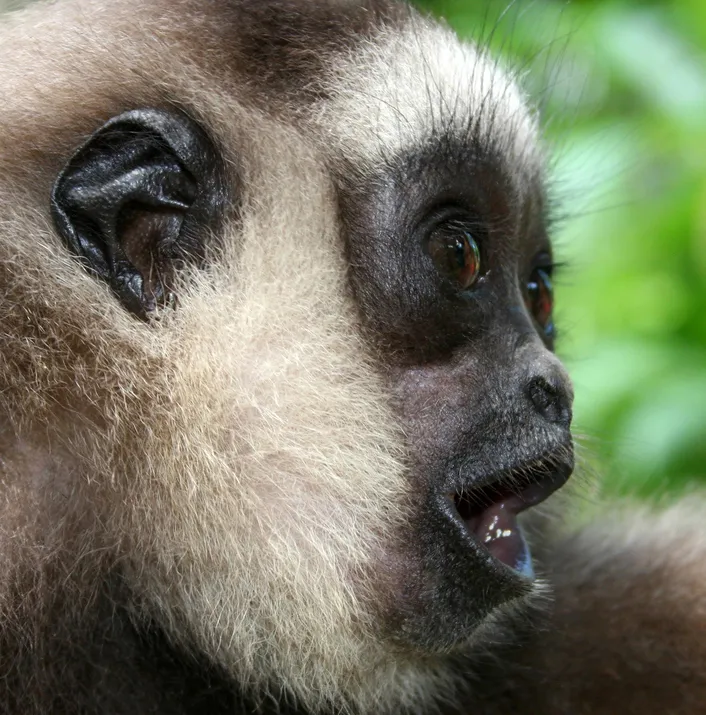
Protecting orangutans and gibbons in Borneo
The Ketapang District of Borneo’s Arabela-Schwaner Landscape is a critical landscape and home to one of the largest concentrations of endangered Bornean orangutans and Bornean white-bearded gibbons. However, Arabela-Schwaner faces threats from habitat loss, wildlife poaching, and human-wildlife conflict.
The key to protecting these apes lies in effectively safeguarding their habitats against these threats. WWF is working alongside business interests to scale-up sustainable forest production and incorporate best management practices for wildlife protection into their conservation management plans. Habitat reforestation efforts are underway to provide apes and other species with critical fruit trees needed to thrive as well as help connect fragmented habitats.
In order to monitor and protect ape populations and other key wildlife, WWF is supporting local community anti-poaching patrols or “PAMWIL.” These local patrollers conduct field assessments to help estimate orangutan populations and identify hotspots of illegal activities, including logging or poaching. WWF has provided PAMWIL with training to more efficiently and effectively collect data during field assessments and patrols using the Spatial Monitoring and Reporting Tool (SMART).
Supporting local communities is essential to the success of conservation efforts, and WWF is also working with local communities to develop sustainable business models for agricultural opportunities, like coffee agroforestry, rubber extraction, and honey production. These diversified opportunities provide additional economic opportunities for local communities so that they are less reliant on extracting natural resources.
© Chris J Ratcliffe / WWF-UK
Protecting Bornean elephants
WWF’s Elly Allies initiative strives to reverse the downward trajectory of elephant populations in Southeast Asia and China and promote a future in which key populations of elephants are thriving, habitat loss and fragmentation are reduced, and people and elephants live side by side in a sustainable way. In partnership with governments, private companies, and communities living in close proximity to wild elephant populations, this initiative seeks to build significant momentum for elephant conservation in this region. Indonesia and Malaysia are two of the eight Asian elephant range countries under this initiative.
WWF engages in Bornean and Sumatran elephant conservation through research, forest management guidance, and ongoing monitoring. One key aspect of WWF’s work is advocating for sustainable logging practices, which allow elephants to thrive in selectively harvested forests.
In Sabah, Malaysia, 60% of elephant habitat has been converted to other land uses, primarily agriculture, over the last 40 years. Elephants move through or live in plantations due to the resulting habitat loss and fragmentation. As they move from one fragmented forest into another, they can damage the crops within plantations and experience conflict with plantation workers.
WWF collaborates with plantation operators to establish wildlife corridors and build strategic fencing to connect forest patches through plantations. This facilitates elephant and other wildlife movement between natural forest areas while minimizing crop damage—and therefore financial loss—to plantations. These efforts help reduce human-elephant conflict, which provides benefits to both plantation operations and endangered species like Bornean elephants.
Enabling responsible forestry
Over half of Indonesia’s timber is thought to be illegally harvested. WWF educates consumers, assists buyers, producers, and traders, and works with partners to enable responsible forestry through more robust sourcing policies, transparency in supply chains, monitoring hotspots for illegal logging, and investing in local communities.
Practicing sustainable agriculture
Palm oil originating in Borneo and Sumatra accounts for more than half of all palm oil produced in the world. WWF works with companies and producers to adopt responsible practices that safeguard against deforestation and restore previously deforested or degraded areas essential for wildlife movements and benefits to people.
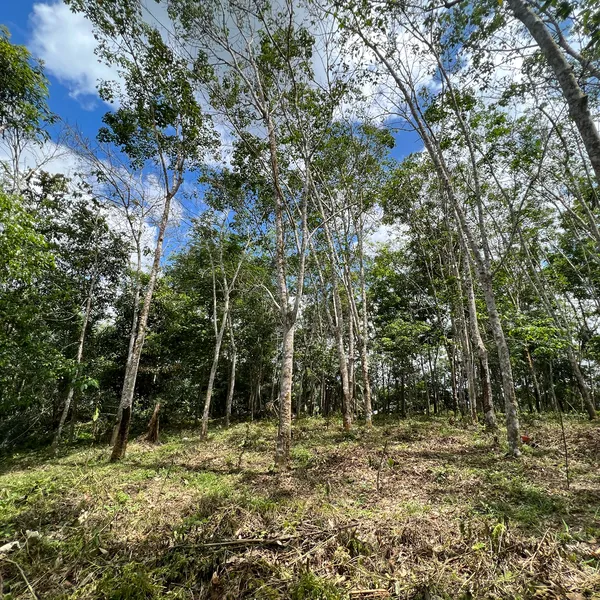
WWF also supports small-scale farmers to participate in more sustainable markets through building capacity for more efficient, nature-friendly production practices. In the PT Alam Bukit Tigapuluh ecosystem restoration concession in Thirty Hills, WWF is working with rubber farmers to use a traceability tool that maps rubber farms and can provide assurance to downstream buyers that their rubber is deforestation-, conversion-, and exploitation-free, an increasingly common requirement to access global markets.
Providing Transparency
Deforestation in Indonesia is often driven by indiscriminate land-grabbing, corruption, and a lack of law enforcement. WWF co-founded Eyes on the Forest—an alliance with local civil society groups—to monitor the status of the remaining natural forests in central Sumatra and publish reports worldwide to empower those working to protect critical habitat.
Addressing the illegal wildlife trade
WWF supports government efforts to combat illegal orangutan trade, tiger poaching, and the poaching of Bornean elephants and Sumatran elephants for their tusks. We work through long-standing cooperative partnerships with governments, enforcement agencies, local communities, and conservation organizations to provide tools, monitoring, training, incentives, and innovative actions to protect wildlife and their habitats while benefiting local people. WWF also aids in the rescue of illegally held orangutans, working with authorities and specialized groups. These rescued primates are often placed in rehabilitation centers, with the ultimate goal of returning them to their natural habitat. To disrupt the global trade of protected species from the region, WWF continues to work with e-commerce, social media, and technology companies around the world through the Coalition to End Wildlife Trafficking Online.
Experts
-

Kerry Cesareo
Senior Vice President, Forests and Freshwater
-

Nilanga Jayasinghe
Director, Asia Wildlife, Wildlife Conservation
-
Arnaud Lyet
Lead Specialist, Wildlife Conservation
-

Annika Terrana
Director, Forests
-

Jan Vertefeuille
Senior Advisor, Advocacy, Wildlife Conservation
-
Linda K. Walker
Senior Advisor, Forests