© Michel Terrettaz / WWF-Canon
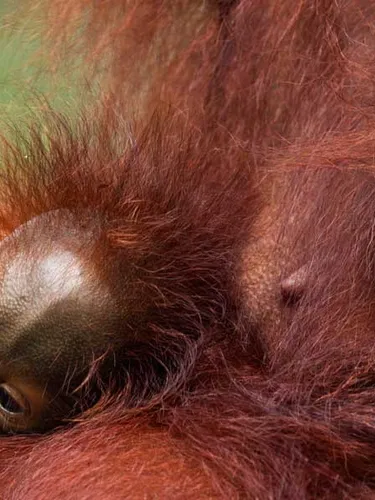
Bornean orangutans
Bornean orangutan populations have declined by more than 50% over the past 60 years, and the species' habitat has been reduced by at least 55% over the past 20 years.
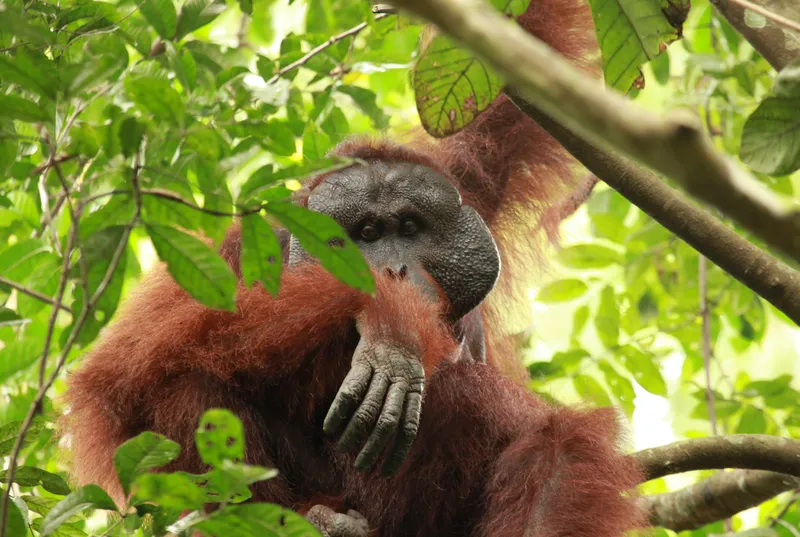
The Bornean orangutan differs in appearance from the Sumatran orangutan, with a broader face and shorter beard and also slightly darker in color. Three subspecies are recognized, each localized to different parts of the island:
- Northwest Bornean orangutans are the most threatened subspecies. Its habitat has been seriously affected by logging and hunting, and a mere 1,500 individuals or so remain. Many habitat patches in the area are small and fragmented.
- Northeast Bornean orangutans are the smallest in size and found in Sabah and eastern Kalimantan as far as the Mahakam River.
- Central Bornean orangutans are the subspecies with the most animals, with at least 35,000 individuals.
Bornean orangutan facts
- Status Learn more about endangered status categories and explanation
- Critically endangered
- Population
- About 104,700
- Scientific name
- Pongo pygmaeus
- Weight
- 66–220 pounds
- Height
- 3.3–4.6 feet
- Habitats
- Lowland rainforests and tropical, swamp and mountain forests
News and stories
-
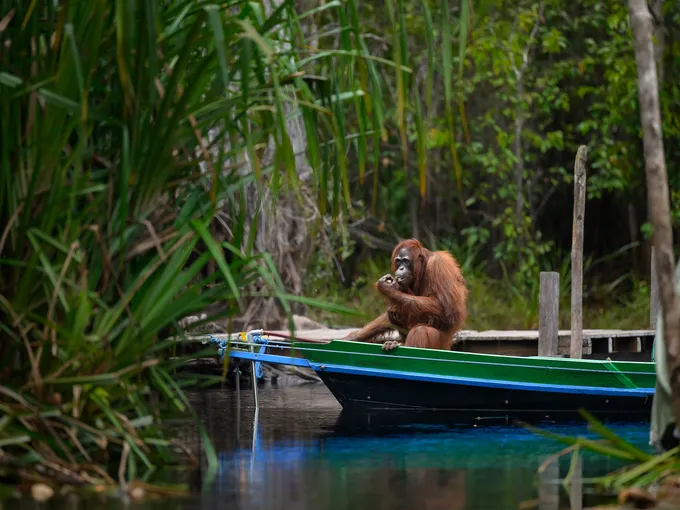
A remarkable orangutan encounter in Borneo highlights the challenges of human-wildlife coexistence as forests continue to disappear.
Why Bornean orangutans matter
© WWF Malaysia / David James
Orangutans play a critical role in seed dispersal, keeping forests healthy. Over 500 plant species have been recorded in their diet.
The majority of wild orangutan populations are located outside of protected areas, in forests that are exploited for timber production or in the process of being converted to agriculture. An estimated 300 million trees have been cut down in Borneo since 1994.
Orangutans have an extremely low reproductive rate because they have a long interbirth interval, single offspring, and take a long time to reach sexual maturity.
Threats to Bornean orangutans

© Tantyo Bangun / WWF-Canon
Orangutan numbers and distribution have declined rapidly since the middle of the 20th century, due to human activities. These include hunting, unsustainable and often illegal logging, mining, and conversion of forests to agriculture. One particularly catastrophic event was the 1997-98 forest fires in Kalimantan, which killed up to 8,000 individual orangutans.
Conflict with humans
Orangutans are sometimes shot in retaliation when they move into agricultural areas, such as oil palm plantations, and destroy crops. This occurs particularly in times of hardship when orangutans can’t find the food they need in the forest.
Illegal wildlife trade
Young orangutans are in demand for a flourishing pet trade, with each animal fetching several hundred dollars in city markets on nearby islands. Studies have indicated that 200-500 orangutans from Indonesian Borneo alone enter the pet trade each year. This represents a real threat to wild orangutan populations as orangutans have an extremely low reproductive rate. There is also trade in orangutan parts in Kalimantan, with orangutan skulls fetching up to $70 in towns.
“Hunted, sold, pushed out of their forest homes—the plight of one of man’s closest living relatives is of our making and yet we can help them recover.”
Dr. Barney Long Asian Species Expert
How WWF is taking action to protect Bornean orangutans

© naturepl.com / Tim Laman / WWF-Canon
To secure a future for Bornean orangutans WWF focuses on restoring their habitats, addressing wildlife crime and reducing human-orangutan conflict.
Addressing the illegal killing and trade of orangutans
WWF works closely with TRAFFIC, the wildlife trade monitoring network, to help governments enforce the laws that prohibit orangutan capture and trade. This work includes strengthening the capacity of rangers, prosecutors and customs officers to identify, investigate and prosecute wildlife crimes. We assist government and specialized organizations in rescuing orangutans from traders and from people who keep them illegally as pets. Many rescued orangutans are taken to refuges where they can recover and be rehabilitated, and then are eventually released back into the wild.
Reducing human-orangutan conflicts
WWF works with the governments, local communities, plantation owners and indigenous Dayak people to help develop plantation management methods that do not affect orangutans. We assist with regional land use planning to ensure that agricultural areas are developed as far away from orangutan habitat as possible. We also help establish ecotourism to support conservation. Sustainable tourism can generate financial support for orangutan conservation, bring economic benefits to those living nearby, and increase the commitment of residents and foresters to protect the animals.
Restoring habitat integrity
WWF works with governments to help create and manage a network of protected areas. We also collaborate with certified logging concessions to connect them with carefully managed “ecological corridors.” Studies show that Bornean orangutans can survive in logged forests if the impact of logging is reduced through selective logging, keeping fruit trees intact, and controlling hunting. WWF has developed scientifically rigorous assessment tools and plans to manage orangutan landscapes. We engage with timber and palm oil companies to develop specific protection and management plans for their concessions, in order to mitigate negative impacts on habitats and orangutan populations.
Communities find a voice through photography
In 2010, WWF started a program in West Kalimantan, Indonesia that enables local communities to find a voice through photography. The program, Panda CLICK! (Communication Learning toward Innovative Change and Knowledge), encourages community members to capture photos and video of their surroundings—images they feel are significant to their culture and daily life. Participants are of all ages and include fishermen, farmers, teachers, students and tribal leaders. Panda CLICK! is part of WWF’s contribution to community education about nature conservation. The program encourages communities to transfer knowledge to younger generations through visual and written documentation.
Experts

How you can help

© WWF-US / WWFGifts
Adopt an orangutan
Support WWF’s global efforts to protect wild animals and their habitats and choose from kits with plush and more.