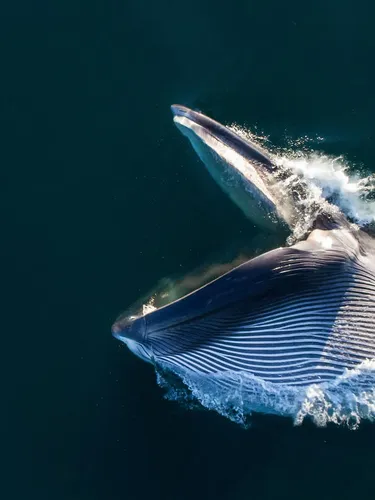
© naturepl.com / Mark Carwardine / WWF
Fin whales
Some scientists have speculated that fin whales circle schools of fish with the white side facing the prey and frightening them into denser schools that are easier for the whale to catch. The fin whale, like other baleen whales, strains its food from the water through baleen plates.
Next to the blue whale, the fin whale is the second largest mammal in the world. They have a distinct ridge along their back behind the dorsal fin, which gives it the nickname "razorback.” Fin whales have a very unusual feature: the lower right jaw is bright white and the lower left jaw is black.
Fin whale facts
- Status Learn more about endangered status categories and explanation
- Endangered
- Population
- 50,000–90,000
- Scientific name
- Balaenoptera physalus
- Weight
- About 80 tons
- Length
- 65–80 ft.
- Habitats
- Oceans
News and stories
Why fin whales matter
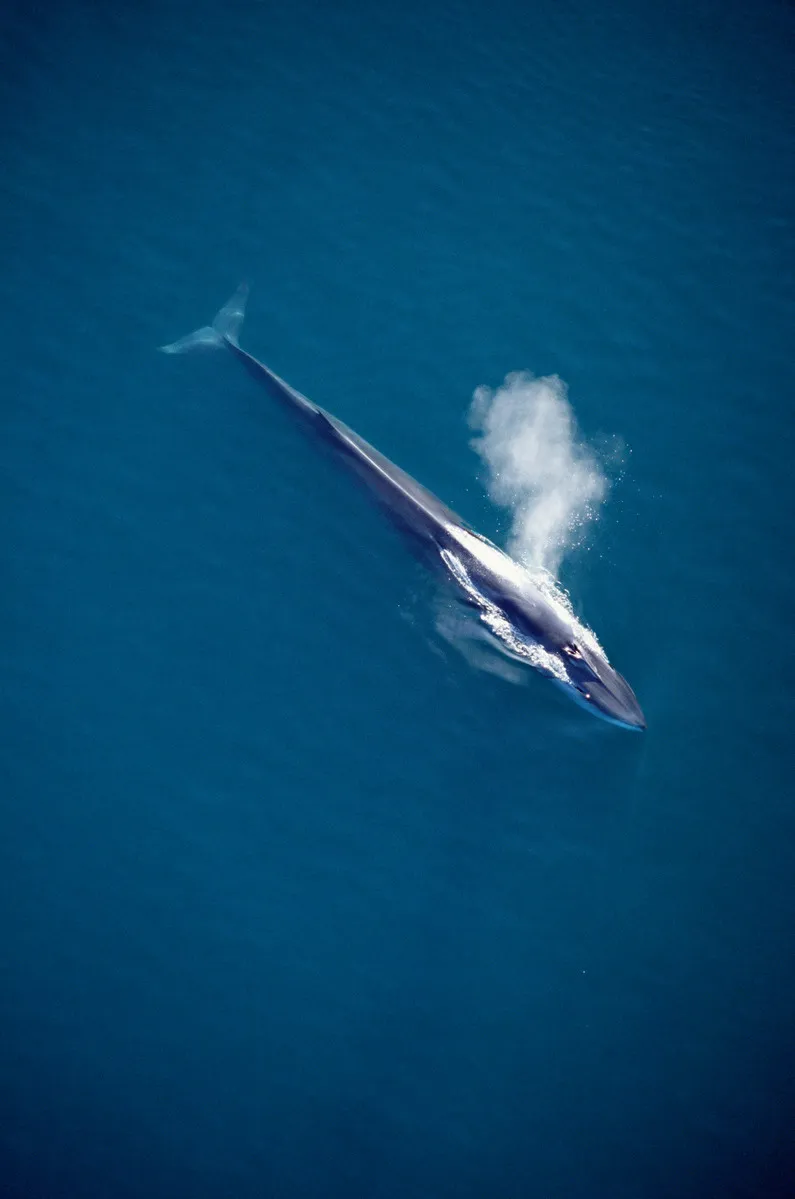
© naturepl.com / Mark Carwardine / WWF
Whales are at the top of the food chain and have an important role in the overall health of the marine environment. The fin whale has been severely impacted worldwide by commercial whaling. Nearly 750,000 animals were killed in areas of the Southern Hemisphere alone between 1904 and 1979, and they are rarely seen there today. Their current status is unknown in most areas outside of the North Atlantic.
Threats to fin whales

© naturepl.com / Luis Quinta / WWF
Hunted by commercial whalers until the last century for oil, meat, and baleen, fin whales in the North Atlantic are listed as endangered. Some populations are faring better as a result. Like other large whales, fin whales are threatened by environmental change including habitat loss, toxics and climate change.
Commercial whaling remains a threat for fin whales. After a two-year hiatus, Iceland resumed commercial fin whaling in 2013 with a quota of 184 whales. The majority of the whale meat ends up in Japanese markets.
How WWf is taking action to protect fin whales

© Gustavo Ybarra / WWF-Canon
The International Whaling Commission (IWC) is the body charged with regulating whaling and addressing the vast number of other threats to whales, dolphins and porpoises in our oceans such as shipping, climate change, and bycatch. WWF works to make the IWC more effective in reducing threats to whales.
The U.S. and other IWC member countries have tried for years to persuade Iceland to end its commercial whaling activities—which includes hunting of the endangered fin whale—as it undermines the effectiveness of IWC’s commercial whaling ban. In 2011, after pressure from WWF and others, the U.S. government officially declared Iceland in defiance of the IWC ban. Although no sanctions were implemented, the President urged Iceland to cease its commercial whaling activities. In 2013, Iceland resumed its fin whale hunt.
Experts

How you can help
© WWF-US / WWFGifts
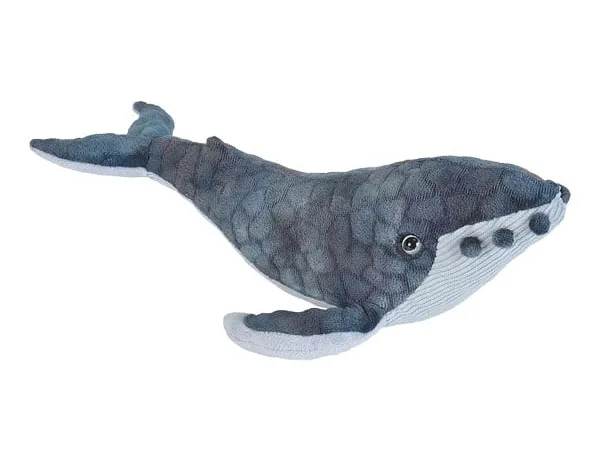
Adopt a humpback whale
Support WWF’s global efforts to protect wild animals and their habitats and choose from kits with plush and more.