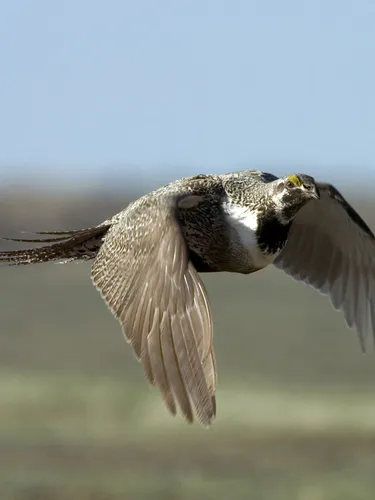
© Daniel J. Cox/NaturalExposures.com / WWF-US
Greater sage-grouses
Greater sage-grouse were once found across 13 western U.S. states and 3 Canadian provinces. Unfortunately, because of oil and gas development, conversion of land for agricultural use, climate change and human development, sage-grouse only inhabit half their historic range. Well known for their spectacular mating dances performed on specific mating grounds called "leks," these large birds are icons in the western U.S. and Canada.
Sage-grouse are indicators of healthy, intact sagebrush habitat. The protection of sage-grouse impacts the other species that share the same habitat, such as pronghorn and songbirds.
Oil and gas development disrupts the landscape and the sage-grouse's ability to reproduce. Predators often perch on the energy towers which is intimidating for the birds. Loud sounds from the towers also disrupt the grouse's ability to call for mates.
Greater sage-grouse facts
- Status Learn more about endangered status categories and explanation
- Near threatened
- Population
- 100,000–500,000
- Scientific name
- Centrocercus urophasianus
- Weight
- 2–7 pounds
- Height
- 2 feet
- Length
- 21–30 inches
- Habitats
- Grasslands
How WWF is taking action to protect greater sage-grouse

© WWF-US/Sarah Mosquera
WWF conducts research to understand how climate change conditions will affect the greater sage-grouse and its habitat in the future. The information will help to identify ways to conserve sage-grouse populations in the Northern Great Plains.
How you can help
© George Walsh
Strengthen the Endangered Species Act
More than 99% of the species listed under the Endangered Species Act have avoided extinction due to the law’s protections. Today, those protections are under threat — at the exact moment wildlife needs them most.