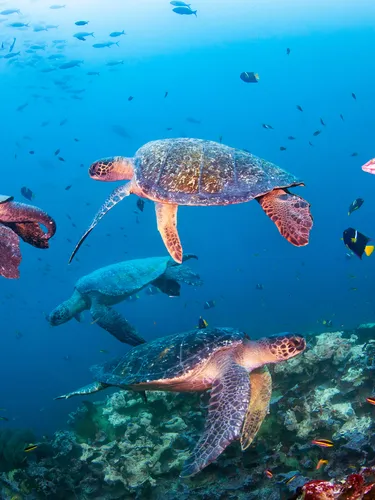
© Antonio Busiello/WWF-US
Green turtles
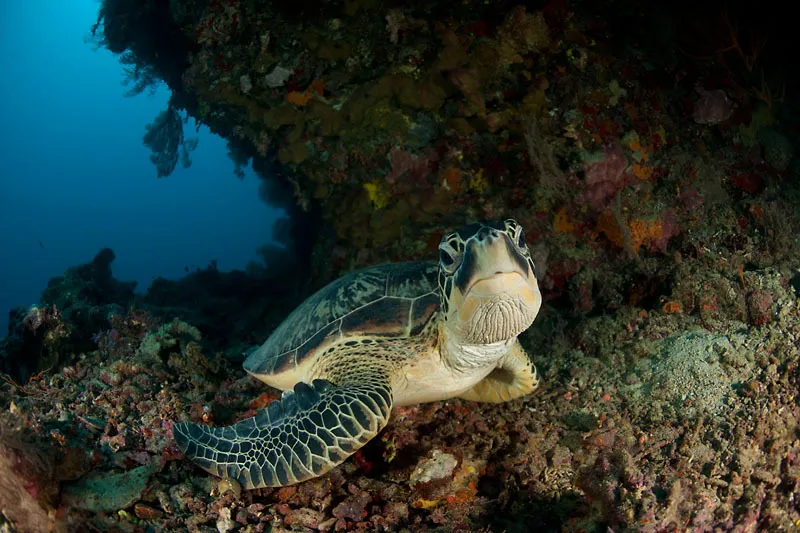
The green turtle is one of the largest sea turtles and the only herbivore among the different species. Green turtles are in fact named for the greenish color of their cartilage and fat, not their shells. In the Eastern Pacific, a group of green turtles that have darker shells are called black turtles by the local community. Green turtles are found mainly in tropical and subtropical waters. Like other sea turtles, they migrate long distances between feeding grounds and the beaches from where they hatched. Classified as Least Concern, green turtles are still threatened by overharvesting of their eggs, hunting of adults, being caught in fishing gear and loss of nesting beach sites.
Green turtle facts
- Status Learn more about endangered status categories and explanation
- Least concern
- Scientific name
- Chelonia mydas
- Weight
- 150–400 pounds
- Length
- 31–47 inches
- Habitats
- Oceans
News and stories
Why green turtles matter
© Jürgen Freund / WWF-Canon
Green turtles graze on seagrasses and algae, which maintains the seagrass beds and makes them more productive (much like mowing the lawn to keep it healthy). Seagrass consumed by green turtles is quickly digested and becomes available as recycled nutrients to the many species of plants and animals that live in the sea grass ecosystem. Seagrass beds also function as nurseries for several species of invertebrates and fish, many of which are of considerable value to commercial fisheries and therefore important to human food security.
Threats to green turtles

© Roger Hooper / WWF-Canon
Fisheries bycatch
Worldwide, hundreds of thousands of sea turtles a year are accidentally caught in shrimp trawl nets, on longline hooks and in fishing gillnets. Sea turtles need to reach the surface to breathe, and therefore many drown once caught. Known as bycatch, it is a serious hazard for green turtles. As fishing activity expands, this threat is more of a problem.
Habitat loss
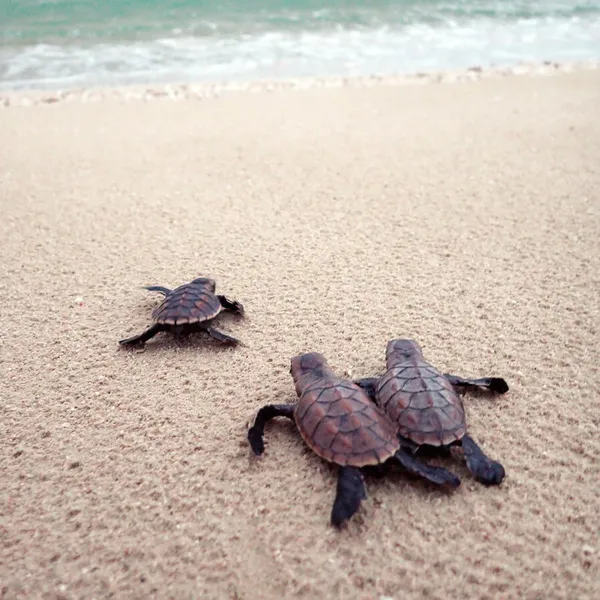
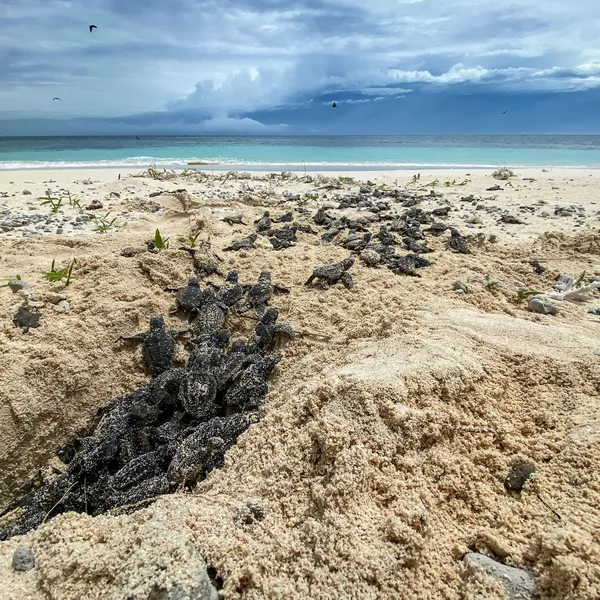
Sea turtles are dependent on beaches for nesting. Uncontrolled coastal development, vehicle traffic on beaches, and other human activities have directly destroyed or disturbed sea turtle nesting beaches around the world. Green turtle feeding grounds such as seagrass beds are also at risk from coastal development onshore, which leads to pollution and sedimentation in the nearby waters.
Overharvesting and illegal trade
Worldwide, the green turtle continues to be hunted and its eggs harvested. Much of that is for human consumption, but trade of turtle parts remains a profitable business. Tens of thousands of green turtles are harvested every year, particularly in parts of Asia and the Western Pacific. Along the Eastern Pacific coast of Mexico, despite complete protection, green turtles are still at risk from exploitation. In West Africa, sea turtles are killed for use in medicine and some traditional ceremonies.
How WWF is taking action to protect green turtles

© Jürgen Freund / WWF-Canon
Eliminating bycatch
WWF aims to reduce turtle bycatch by working with fisheries to switch to more turtle-friendly fishing hooks (“circle” hooks) and advocates for the use of devices that exclude turtles from nets. We run an international competition called Smart Gear to attract creative new ways to solve bycatch problems and to advance those ideas. Winning devices have been designed to minimize the bycatch of turtles on tuna longlines and help turtles avoid gillnets. We work with fishermen to help them save turtles caught in fishing gear. We also use satellite devices to track turtle movements to help prevent future interactions between fisheries and turtles.

© _
Protecting sea turtle habitat
WWF works around the world to establish marine protected areas (MPA) to ensure sea turtles have a safe place to nest, feed and migrate freely. We encourage governments to strengthen legislation and provide funding for sea turtle protection. WWF also supports the monitoring and patrolling of turtle nests in many parts of the world to equip local turtle conservationists. This often leads to ecotourism opportunities and offers alternative livelihoods.
Satellite tracking
Satellite telemetry allows researchers to track sea turtles as they swim from place to place. These satellite tags do not harm the turtles in any way and are designed to eventually fall off. The data will tell us where important feeding areas are, help us understand migration patterns, and anticipate where turtles may come in contact with fisheries and their gear.
Addressing overharvesting and illegal trade
WWF works with local communities to reduce turtle harvesting and egg collection. Exploitation of turtles is often driven by a lack of economic choices. WWF works to develop alternative livelihoods so that local people are no longer dependent on turtle products for income. WWF also supports programs that promote the value of sea turtles.
WWF works to stop the illegal trade of turtle meat and eggs, through TRAFFIC, the world’s largest wildlife trade monitoring network. We also train and equip local rangers to protect turtles from poaching and patrol nesting beaches.
How you can help
© WWF-US / WWFGifts
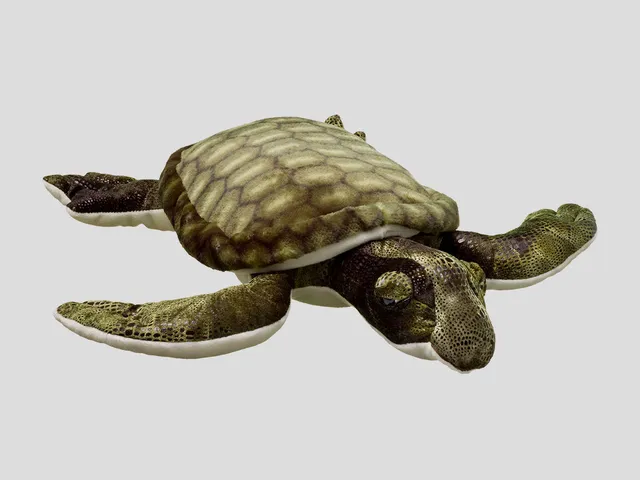
Adopt a green turtle
Support WWF’s global efforts to protect wild animals and their habitats and choose from kits with plush and more.