© Stephen Belcher Photography All Rights Reserved
Javan rhinos
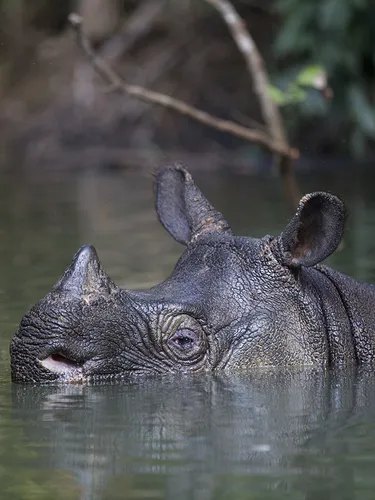
Javan rhinos are the most threatened of the five rhino species, with only around 76 individuals that live only in Ujung Kulon National Park in Java, Indonesia. Javan rhinos once lived throughout northeast India and Southeast Asia. Vietnam’s last Javan rhino was poached in 2010.
This species is a dusky grey color and has a single horn of up to about 10 inches. Its skin has a number of loose folds, giving the appearance of armor plating. The Javan rhino is very similar in appearance to the closely-related greater one-horned rhinoceros, but has a much smaller head and less apparent skin folds.
Javan rhino facts
- Status Learn more about endangered status categories and explanation
- Critically endangered
- Population
- About 76
- Scientific name
- Rhinoceros sondaicus
- Weight
- 1,984–5,071 pounds
- Height
- 4.6–5.8 feet
- Length
- 10–10.5 feet
- Habitats
- Tropical forests
Why Javan rhinos matter
© Stephen Belcher Photography All Rights Reserved
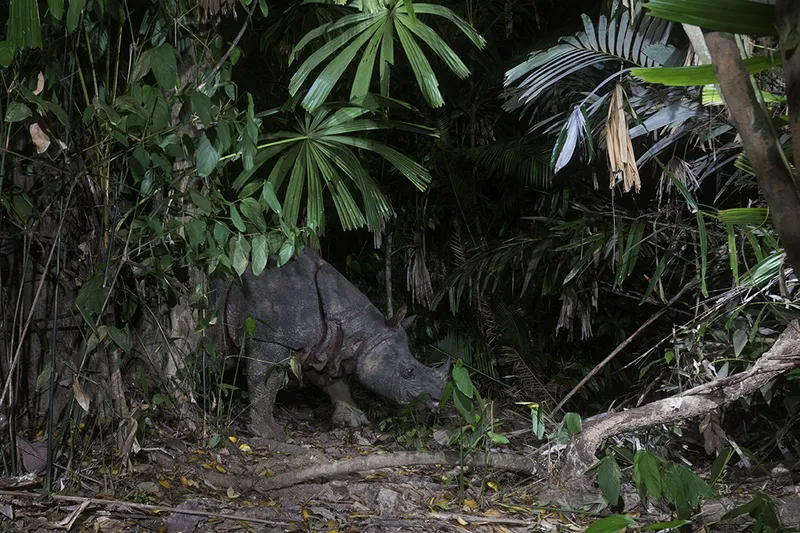
The population in Ujung Kulon National Park represents the only hope for the survival of a species that is on the brink of extinction. Until the late 19th century and early 20th century, Javan rhinos existed from northeast India and the Sunderbans , throughout mainland Southeast Asia, and on the island of Sumatra. If we lose the population in Java, the entire species will disappear.
Threats to Javan rhinos
Javan rhinos are found in only one protected area in the world. The biology of the species is poorly understood, but we are starting to learn more about the species ecology and behavior thanks to very intensive monitoring of the population. They are extremely vulnerable to extinction due to catastrophes, habitat loss, diseases, poaching, and potential inbreeding.
Illegal wildlife trade
Javan rhinos were killed by trophy hunters during colonial times. They were also killed as agricultural pests and for their horn, a highly prized commodity in traditional Asian medicine. Poaching remains an ever-present threat.
Reduced genetic diversity
The small size of the Javan rhino population is a cause for concern. Low genetic diversity and inbreeding could make it difficult for the long-term survival of the species.
Disasters
The coastal Ujung Kulon National Park is highly vulnerable to tsunamis, and a major explosion of the nearby Anak Krakatau volcano could easily wipe out most life in the protected area. Rising sea levels because of climate change also threaten the park.
Arenga palm
The Arenga palm has overtaken parts of the park, reducing natural forage and habitat quality.
Disease
In recent years four rhinos, including one young adult female, are thought to have died from disease, probably transmitted to wild cattle in the park and subsequently to the rhinos.
Habitat degradation
People living near the park are encroaching on and degrading crucial rhino habitat. Important economic development near the park, including from (eco)tourism, risks further encroachment into the park.
Experts

How you can help
© WWF-US / WWFGifts
Adopt a Sumatran rhino
Support WWF’s global efforts to protect wild animals and their habitats and choose from kits with plush and more.