© Antonio Busiello / WWF-US
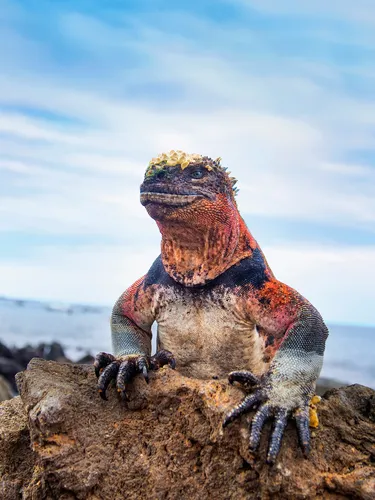
Marine iguanas
One of the main nesting zones for iguanas is located on a central tourist beach in the waterfront area of Puerto Villamil on Isabela Island. For several years, the Galápagos National Park protected only the central part of the nesting zone. In 2012, WWF, the Municipality of Isabela and the Charles Darwin Foundation extended the protected area to include the entire nesting zone. As part of this effort, additional signs for both tourists and local communities inform them about the importance of this nesting zone. A temporary fence was also built to protect the area and allow iguanas to pass through.
Marine iguana facts
- Status Learn more about endangered status categories and explanation
- Vulnerable
- Scientific name
- Amblyrhynchus cristatus
- Length
- 2–5.6 feet long
- Habitats
- Oceans
Why marine iguanas matter
© Antonio Busiello / WWF-US
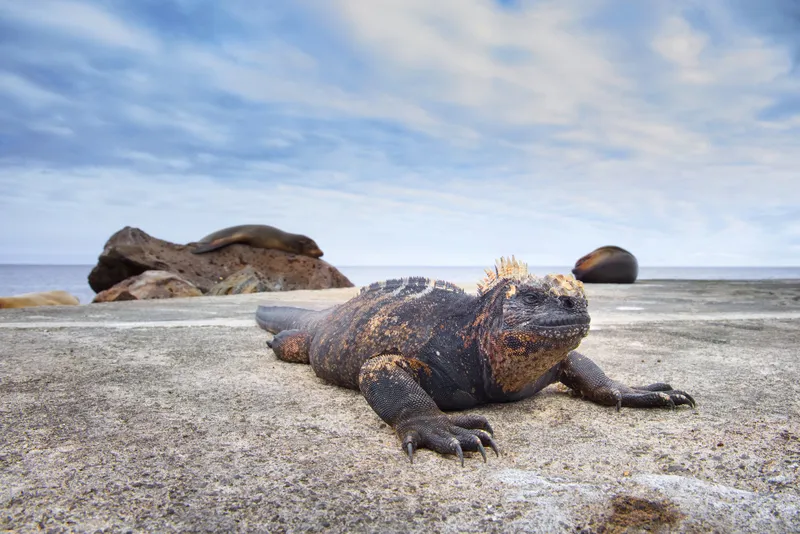
Marine iguanas are the world’s only oceangoing lizard. They are also only found in the Galápagos, where they can be seen resting on the rocky shores.
Threats to marine iguanas
© WWF-US / Steve Morello
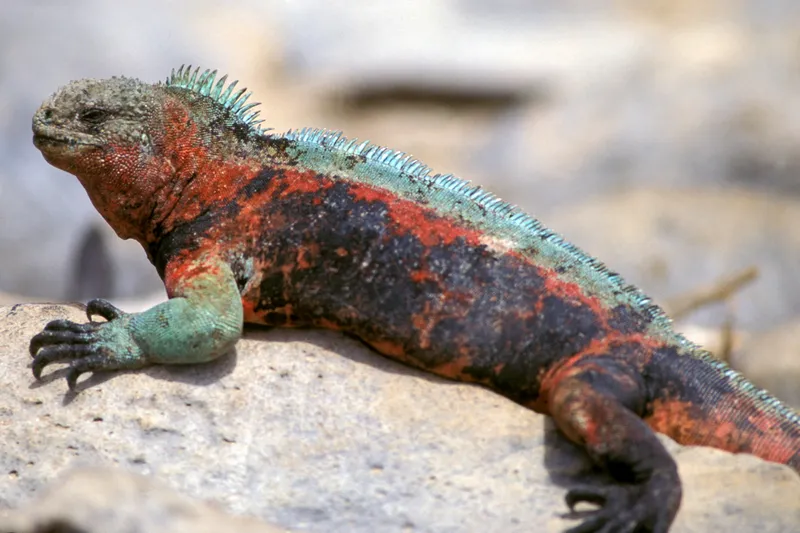
Introduced species such as cats, rats, dogs and pigs prey on marine iguanas. They are also threatened by the impacts of climate change. Sea level and air temperature rise can affect their beach nesting habitat and the iguanas’ ability to regulate its body temperature while on land, as well as interfere with egg development.
How you can help
© George Walsh
Strengthen the Endangered Species Act
More than 99% of the species listed under the Endangered Species Act have avoided extinction due to the law’s protections. Today, those protections are under threat — at the exact moment wildlife needs them most.