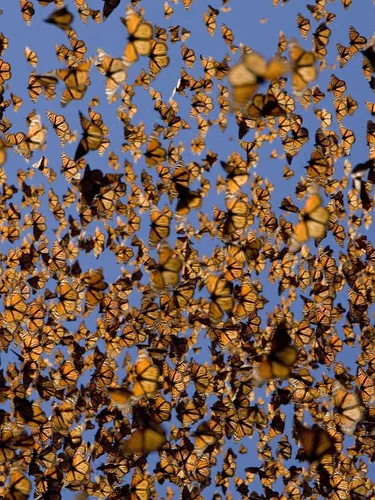
© naturepl.com / Ingo Arndt / WWF
Monarch butterflies
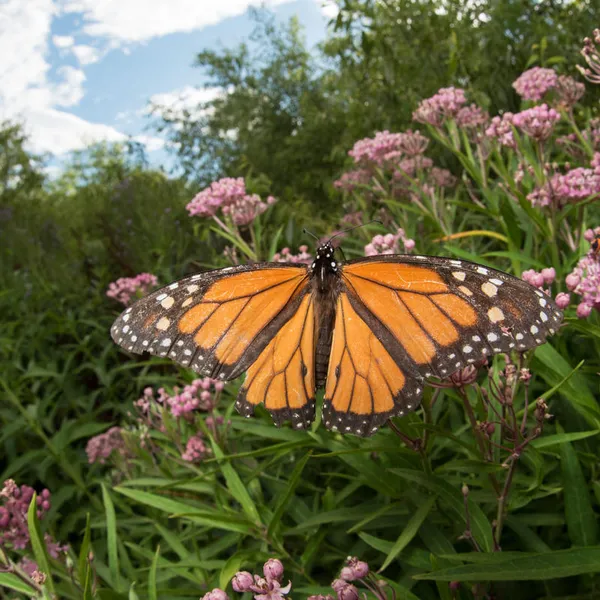
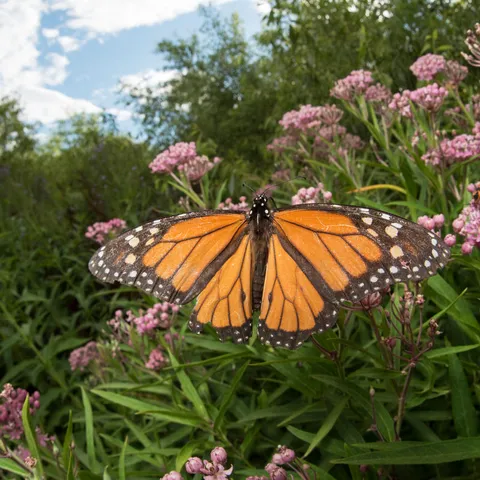
Help monarchs by planting milkweed.
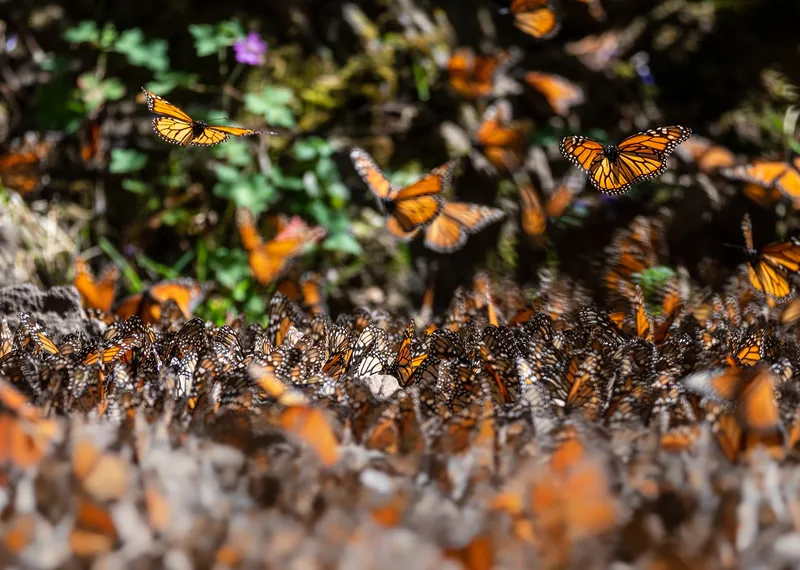
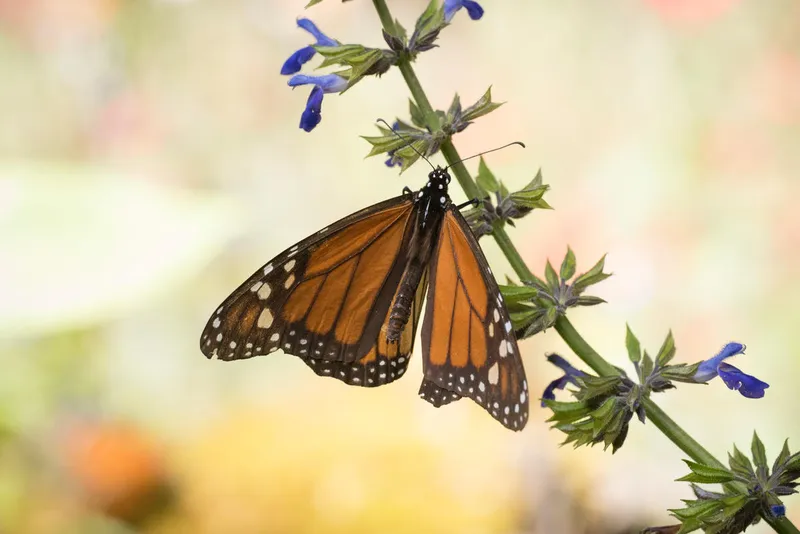
Monarch butterflies embark on a marvelous migratory phenomenon. They travel between 1,200 and 2,800 miles or more from the northeast United States, and southeast Canada to the mountain forests in central Mexico, where they find the right climate conditions to hibernate from the beginning of November to mid-March. The monarch butterfly is known by scientists as Danaus plexippus, which in Greek literally means "sleepy transformation." The name evokes the species' ability to hibernate and metamorphize. Adult monarch butterflies possess two pairs of brilliant orange-red wings, featuring black veins and white spots along the edges. Males, who possess distinguishing black dots along the veins of their wings, are slightly bigger than females. Each adult butterfly lives only about four to five weeks.
Milkweed is the only plant on which monarchs will lay their eggs and the only source of food for baby caterpillars. But urban planning and agricultural expansion have paved and plowed over millions of acres of milkweed. Planting the right species of milkweed in a given area can help these amazing butterflies and other pollinators thrive.
Monarch butterfly facts
- Status Learn more about endangered status categories and explanation
- Endangered
- Scientific name
- Danaus plexippus
- Weight
- less than half a gram
- Length
- Wingspan 4 IN.
- Habitats
- Forests, mountains
News and stories
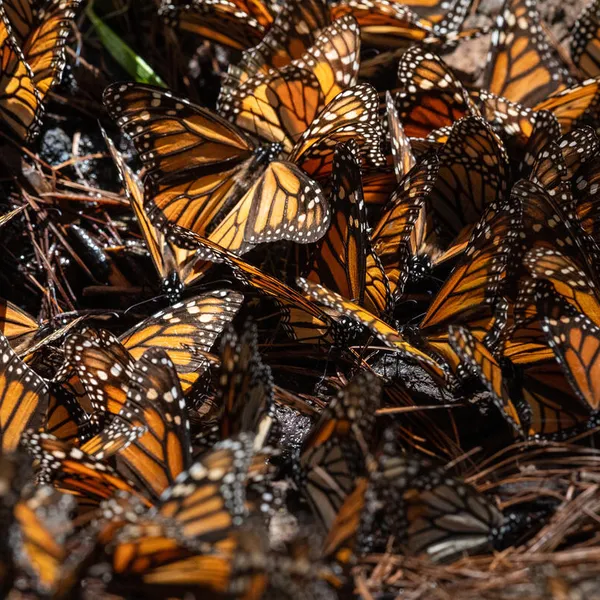

Why monarch butterflies matter
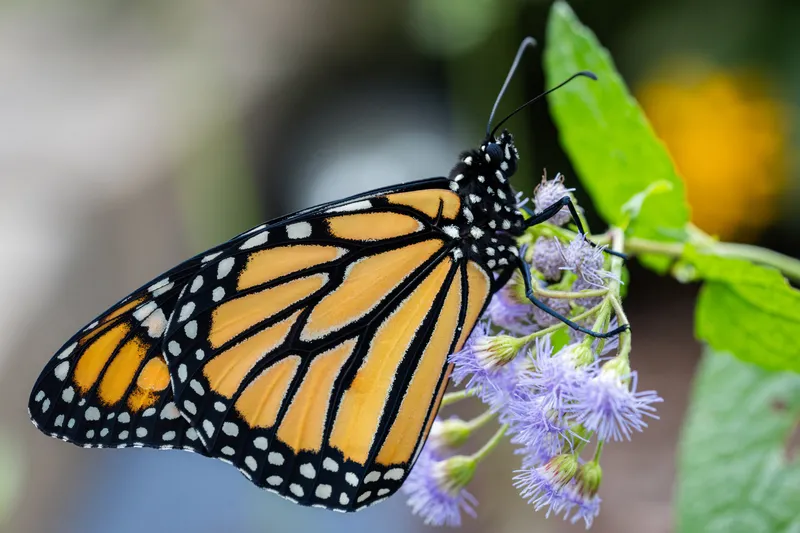
© Danielle Brigida
The monarch butterfly exhibits the most highly evolved migration pattern of any known species of butterfly or moth and perhaps any known insect.
Threats to monarch butterflies
© McDonald Mirabile / WWF-US
Habitat loss
Milkweed is the only plant on which monarchs will lay their eggs and the only source of food for baby caterpillars. But urban planning and agricultural expansion in the United States and Canada have paved and plowed over millions of acres of milkweed. The development of genetically modified (GMO) Roundup Ready crops has played a major role in the loss of milkweed in agricultural areas. These GMO crops don’t directly harm the butterfly. Rather, it is their ability to resist Glyphosate, a weed killer and the primary active ingredient in Roundup, that has eliminated 99% of the milkweed that once grew in corn and soybean fields. A second factor that has harmed monarch butterflies is neonicotinoids (neonics), a class of neurotoxic insecticide. Although marketed as a safer option for selectively killing pests, neonics have instead made US agriculture 48 times more toxic to most insects, including pollinators. These pesticides are affecting entire food chains as they are persistent in the environment, infiltrate groundwater (highly water soluble), and have cumulative and largely irreversible effects on invertebrate populations.
Migratory monarch populations need large, healthy forests to protect them from winds, rain, and low temperatures common at night in the forests where they overwinter in Mexico and California. While logging of the monarch butterfly’s overwintering habitat in central Mexico has harmed the species, the impacts of habitat destruction, insecticides, and herbicides within the species breeding grounds in the US and Canada, along with the effects of climate change, are the major drivers of its decline today.
Climate change
Climate change threatens to disrupt the monarch butterfly’s annual migration pattern by affecting weather conditions in both wintering grounds and summer breeding grounds. Colder, wetted winters could be lethal to these creatures and hotter, drier summers could shift suitable habitats north.
Podcast: Hope for monarch butterflies
Eduardo Rendón‑Salinas of WWF‑Mexico and Court Whelan of Natural Habitat Adventures explain why the rebound in the monarch butterfly population matters, how monarch populations are measured, and what challenges still lie ahead. From the butterfly’s amazing multi‑generational migration that spans thousands of miles to the threats posed by habitat loss, pesticides, and climate change, this episode dives into one of the most extraordinary natural phenomena on Earth.
How WWF is taking action to protect monarch butterflies
© Clay Bolt / WWF-US
WWF works to preserve vital butterfly habitat in Mexico’s Monarch Butterfly Reserve by working with the Mexican government, local communities, and other partners to promote good forest management and sustainable tourism. WWF also supports tree nurseries that help restore the forest in the Reserve which creates new sources of income for the local communities that live in the region.
In the United States, WWF is dedicated to reducing neonicotinoid pesticides, one of the leading drivers of monarch decline. Beginning in 2025, we are launching multiyear field trials comparing non-neonic treated seeds with treated seeds to demonstrate to farmers the effectiveness of planting non-treated seeds when pest species aren’t present. These trials will include training events and technical assistance for farmers who are interested in reducing pesticide applications on their farms. Additionally, WWF-US is restoring formerly plowed grasslands back to pollinator habitat in the Great Plains.
Help monarchs by planting milkweed
By planting milkweed, you can protect this iconic species.
© WWF-US/Clay Bolt
How you can help
© George Walsh
Strengthen the Endangered Species Act
More than 99% of the species listed under the Endangered Species Act have avoided extinction due to the law’s protections. Today, those protections are under threat — at the exact moment wildlife needs them most.