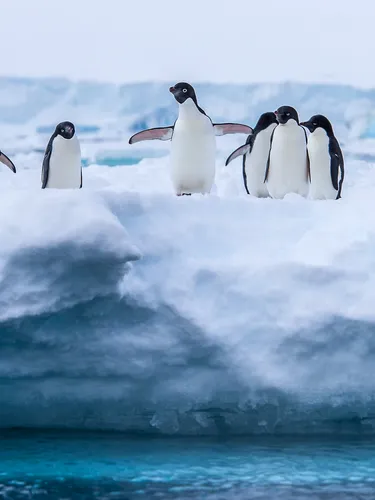
© Brian Myers
Penguins
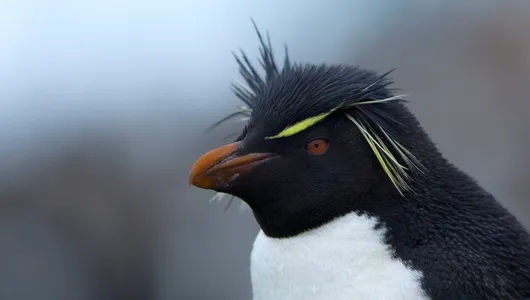
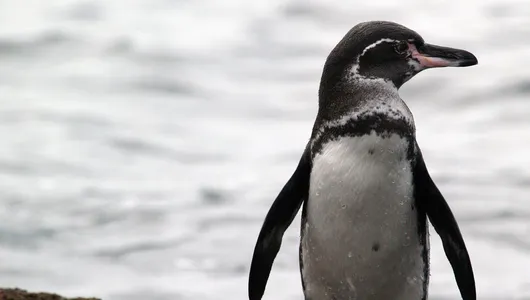
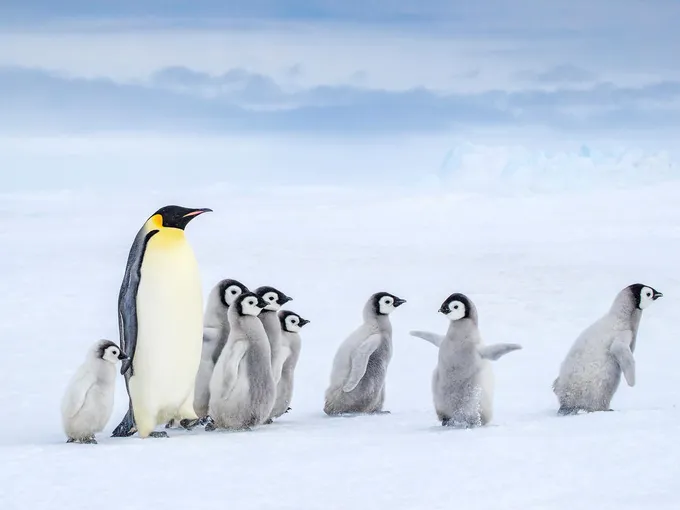
Penguins are a family of 17 to 19 species of birds that live primarily in the Southern Hemisphere. They include the tiny blue penguins of Australia and New Zealand, the majestic emperor penguins of Antarctica, and king penguins found on many sub-Antarctic islands, the endangered African penguin, and the Galápagos penguin—the only penguin to be found north of the equator.
Though they are birds, penguins have flippers instead of wings. They cannot fly, and on land they waddle, walking upright—though when snow conditions are right, they will slide on their bellies. In the water, they are expert swimmers and divers, and some species can reach speeds of up to 15 miles per hour. The penguin’s distinctive coloring—black body with white belly—helps camouflage the bird in the water as it searches for meals of small shrimp, fish, crabs, and squid.
Penguin facts
- Scientific name
- Spheniscidae
- Weight
- 2–80 lbs.
- Height
- 1.25–3.5 ft.
- Habitats
- Oceans, coasts
The penguin family
News and stories
-
Without urgent action, their population could collapse by half within 50 years, with functional extinction possible by the end of this century
Why penguins matter
© Paul Souders
The birds that swim
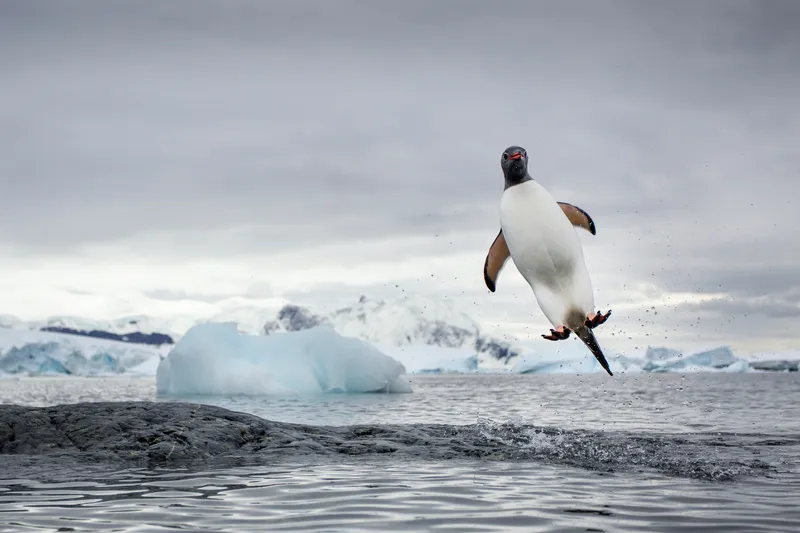
Penguins may not be able to fly across the sky, but they can fly underwater as well as any fish. Instead of wings, these birds have flippers that can propel their streamlined bodies up to 15 miles per hour through the sea in pursuit of a meal.
Threats to penguins

© Fritz Pölking / WWF
Bycatch
Commercial fishing in the Southern Ocean region can force many penguin species to compete for the fish they eat. The practice can also lead to accidental capture and drowning in fishing nets.
Effects of climate change
Climate change is a growing concern for penguins that live in Antarctica—the emperor penguin and the Adelie penguin. These species depend on sea ice for access to food and for places to breed. But the sea ice has been disappearing, and penguin populations along with it. A 2008 WWF study estimated that 50% of the emperor penguins and 75% of the Adelie penguins will likely decline or disappear if global average temperatures rise above pre-industrial levels by just 2 degrees Celsius—a scenario that could be reached in less than 40 years.

© Maud Guye-Vuillème / WWF-Chile
How you can help

© WWF-US / WWFGifts
Adopt an emperor penguin
Support WWF’s global efforts to protect wild animals and their habitats and choose from kits with plush and more.