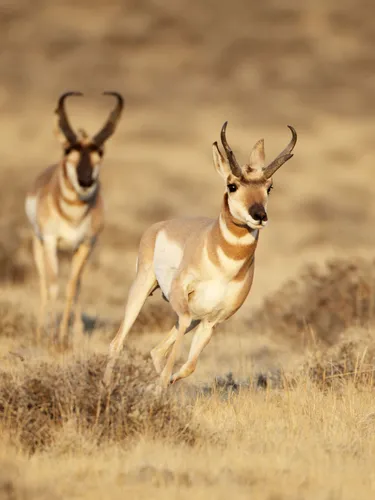
© Shutterstock / Dennis W. Donohue
Pronghorn
The pronghorn antelope is the fastest hoofed animal in North America and is capable of reaching speeds up to 60 mph. During the winter of 2011, WWF monitored a pronghorn herd that made the longest terrestrial migration in the US's lower 48 states. Most pronghorn populations remain stable, but have experienced a historic decline. Pronghorn follow the same migration corridors year after year, generation after generation. Today, the thoroughfares that link the summer breeding grounds and winter grazing areas are being fragmented by roads, cities, fences, and energy development. These fragmentations threaten the migratory routes and survival of pronghorn.
Pronghorn facts
- Status Learn more about endangered status categories and explanation
- Least concern
- Population
- About 1 million
- Scientific name
- Antilocarpa americana
- Weight
- 110–125 lbs.
- Height
- About 3 ft. at the shoulder
- Length
- 39–59 in.
- Habitats
- Grasslands, deserts
Why pronghorn matter
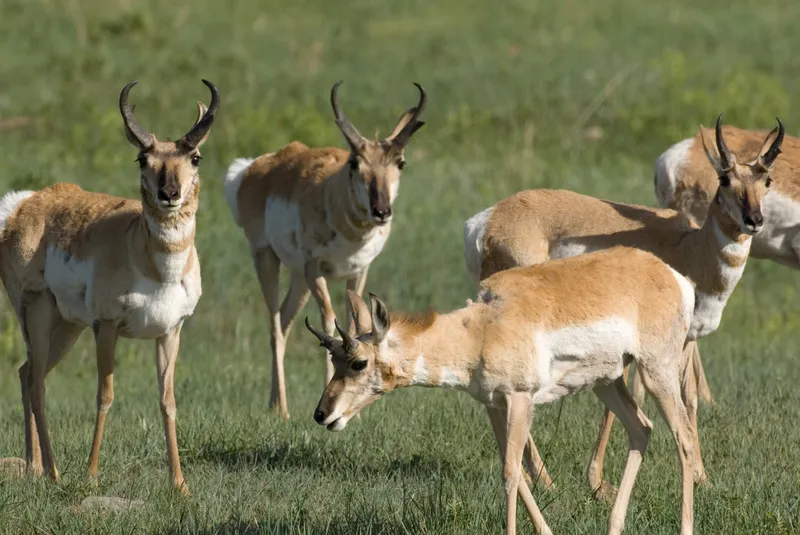
© Steve Morello / WWF-US
Pronghorn are an indicator of healthy sagebrush systems, which can suffer from fragmentation and degradation. They are North America’s fastest land mammal and embark on the longest land migration of any hoofed animal in America’s lower 48 states.
Threats to pronghorn

© Becca Skinner / WWF-US
Every year, pronghorn herds follow the same migration pathways as their ancestors. Habitat fragmentation from fences, roads, and energy development creates barriers and threatens the animal’s ability to safely return to seasonal breeding and wintering grounds. Energy development can also degrade vital grounds, displace herds, and fragment seasonal migration routes.
How WWF is taking action to protect pronghorn

© Clay Bolt
WWF works to understand pronghorn migrations and ensure migration routes are unobstructed in the future. In 2011, WWF monitored one of the longest pronghorn migrations on record. The herd battled record snowfalls and pushed further south than ever before to find nourishment. This work helped conservation organizations across the US better understand where and how these annual migrations take place, and what conservation priorities will be necessary in the future.
Experts

How you can help
© George Walsh
Strengthen the Endangered Species Act
More than 99% of the species listed under the Endangered Species Act have avoided extinction due to the law’s protections. Today, those protections are under threat — at the exact moment wildlife needs them most.