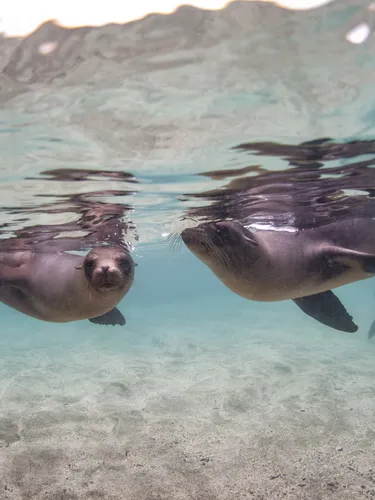
© Antonio Busiello / WWF-US
Sea lions
Sea lions haul out in large colonies on rocks and sandy shores on the Islands. They move into the water to feed and cool off as needed.
Sea lion facts
- Status View status categories and descriptions
- Endangered
- Scientific name
- Zalophus wollebaeki
- Weight
- About 400 lbs.
- Length
- 6 ft.
- Habitats
- Oceans
Why sea lions matter
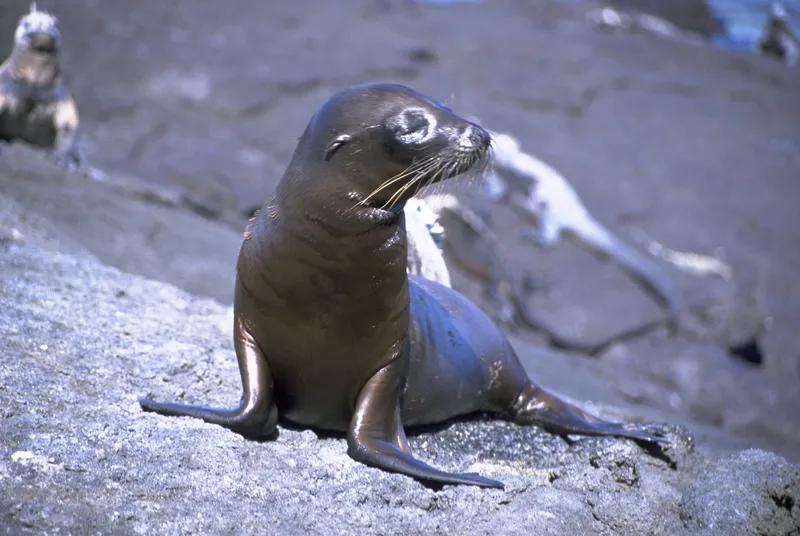
© WWF-Japan/Ozaki Haruko / WWF-Canon
The sea lion is the most common mammal in the Galápagos.
Threats to sea lions

© Angela Carpinacci Francesco Lupi / WWF-Italy
Introduced species, such as dogs, carry diseases that can spread to sea lions. They are vulnerable to the effects of climate change on ocean currents, which impacts their fish prey abundance. They are also victims of bycatch in fisheries.
How WWF is working to protect sea lions

© Martin Harvey / WWF-Canon
Sea lions often rest aboard fishing boats, sometimes causing the boats to sink. Fishers try to prevent them from coming aboard by putting up barbed wire as a barrier, but this causes severe injuries to the sea lions. WWF helped support a project on San Cristóbal Island that built and installed two floating bases for sea lions to rest on and a “primary care nursery” for sea lions and other species. Environmental education and communication awareness sessions were offered about the importance of sea lions and the problems with their interaction with the local community. Currently, sea lions are using the floating bases more often, and we expect fewer sea lion injuries and fewer troubles for the boat owners on the island.
How you can help
© George Walsh
Strengthen the Endangered Species Act
More than 99% of the species listed under the Endangered Species Act have avoided extinction due to the law’s protections. Today, those protections are under threat — at the exact moment wildlife needs them most.