© Joost van Uffelen / WWF
Sharks
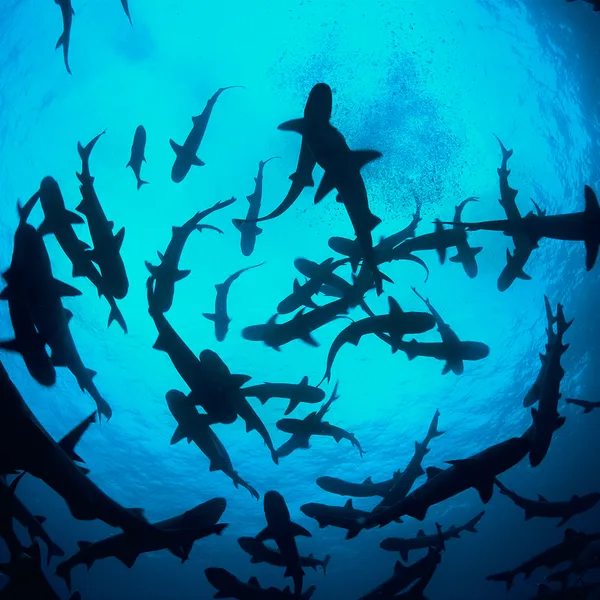
Sharks and rays have been around for more than 400 million years—long before the dinosaurs—and have survived multiple mass extinctions. Today, there are over 1,000 species of sharks and rays, with scientists continuing to discover new ones each year. Although sharks are often portrayed as dangerous apex predators—and some are—the group is incredibly diverse. Species range from tiny to enormous, occupy different levels of the food chain, and inhabit nearly every corner of the ocean.
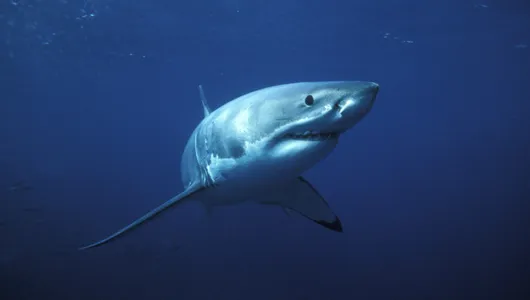
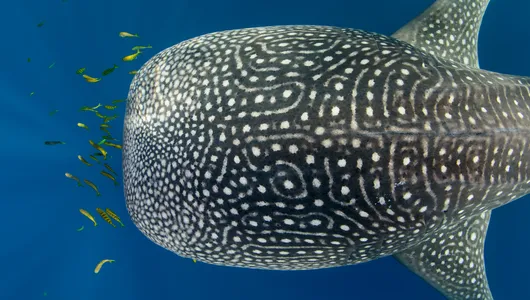
For example, the dwarf lanternshark measures just 6 to 8 inches long and lives deep in Caribbean waters, feeding primarily on small fish and invertebrates. At the other extreme, the whale shark can grow up to 40 feet and is a gentle giant, filter-feeding on plankton, krill, and larvae in the open ocean. Meanwhile, the well-known great white shark exemplifies a true apex predator, roaming coastal and pelagic waters in search of larger prey such as sea turtles, dolphins, and even whale carcasses as adults.
Shark facts
- Weight
- Up to 11 tons
- Length
- 8 in.–40 ft.
- Habitats
- Oceans
The shark family
News and stories
Why sharks matter
© naturepl.com / Doug Perrine / WWF-Canon
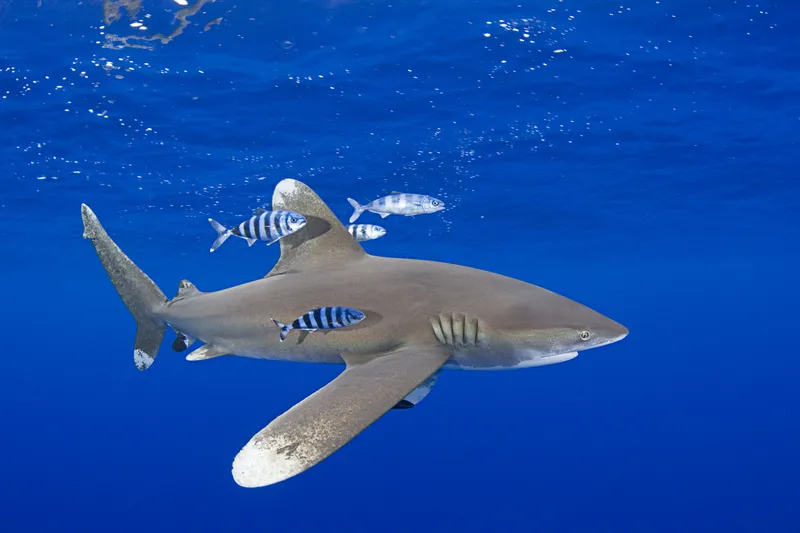
Because sharks occupy many roles across the food web, they are vital to maintaining the natural structure of marine ecosystems. By regulating prey populations, they help keep these systems in balance and prevent any single species from dominating. Their presence also supports healthier coral reefs, seagrass habitats, and overall food webs by shaping the behavior and abundance of other marine life. At a time when ocean ecosystems are increasingly degraded, restoring shark populations is critical to strengthening the resilience of these environments in the face of climate change.
Threats to sharks

© naturepl.com / Jeff Rotman / WWF
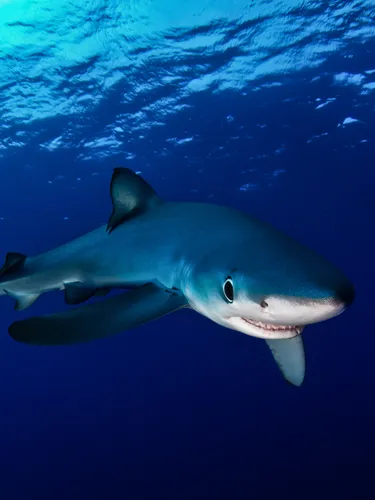
Sharks face a range of anthropogenic threats, and shark populations around the world are in rapid decline. Many species are threatened with extinction, with some families of rays, such as sawfishes, being critically endangered. Sharks grow relatively slowly, take many years to mature, and produce relatively few young. These characteristics make sharks, like this porbeagle, particularly vulnerable to over-exploitation.
The biggest threats to sharks are illegal fishing and overfishing. While sharks and rays have been an irreplaceable resource for coastal communities in the developing world for centuries, this unique balance is in danger of being lost forever. Up to 100 million sharks and rays are caught each year across the globe, whether on purpose in targeted fisheries or by accident, as bycatch, in fisheries targeting other species. Most fisheries where sharks and rays are caught are unmanaged and, for example, lack catch limits. As a consequence, these animals often end up being fished faster than they can reproduce.
How WWF is taking action to protect sharks

© Doug Perrine / naturepl.com / WWF
Partnering with communities
Protecting shark nurseries
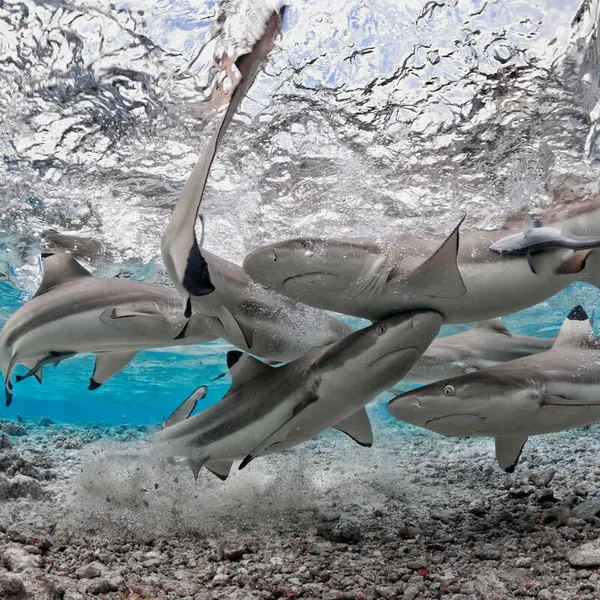
Strong governance structures, rooted in local leadership and cultural systems, are essential for long-term shark conservation success. Customary Fishing Ground owners of Fiji’s Dreketi River and Estuary successfully established the Dreketi Shark and Ray Sanctuary in 2023—in part thanks to recommendations from WWF’s shark and ray survey completed in 2020—to protect critical shark and ray habitat, support biodiversity conservation, and enhance local fisheries management. The Sanctuary helps protect four species of shark: the scalloped hammerhead shark (Critically Endangered), great hammerhead shark (Critically Endangered), blacktip shark (Near Threatened), and bull shark (Near Threatened).
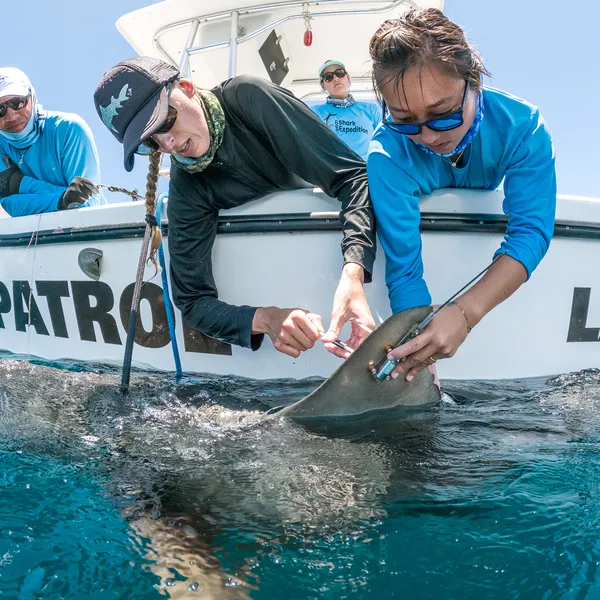
A follow-up survey led by WWF in 2025 indicates that the river estuary continues to be used by baby and juvenile sharks, highlighting the importance of the estuary as a key nursery area. However, scalloped hammerhead sharks were recorded at substantially lower numbers compared to 2020, indicating that continued work is needed to protect the river and reduce human-caused threats, such as harmful fishing activities, to the species. WWF and communities are working with Dreketi district stakeholders to strengthen community co-management, reduce mortality through improved fisheries practices and policy, and expand protections to additional breeding and nursery areas in the river/estuary. Expanding our knowledge of shark habitat, population size, and changes over time helps WWF and our local community partners make effective conservation decisions.
Sustainable tourism
Long-term protection of whale sharks—and the livelihoods they support—depends on strengthening local stewardship, safeguarding ecotourism practices, and securing sustainable financing. Mafia Island, off the southern coast of Tanzania, hosts one of the largest aggregations of whale sharks in the Western Indian Ocean. Whale shark tourism has become a cornerstone of Mafia’s development, attracting thousands of visitors annually and providing a source of livelihood for fishers, boat operators, tour guides, local business owners, and their families.
For more than 10 years, WWF and local partners have supported whale shark conservation in Mafia Island through research, community engagement, and the development of sustainable tourism models. In 2020, WWF partnered with Mafia residents to establish the Whale Shark Tour Operators Network of Tanzania (WATONET): a community-led organization dedicated to ethical and sustainable whale shark tourism and conservation. Since its establishment, WATONET has focused on education in schools, communities, and around local events; enacted a code of conduct and bylaws for ethical whale shark tourism; and built partnerships with local government and private sector actors to integrate conservation and livelihoods.
Alternative blue foods
In many parts of the world, sharks are fished and consumed as sources of livelihoods and food. However, these long-lived, slow-growing, and slow-reproducing animals cannot sustain continued high fishing pressure. Finding an alternative that can feed and employ coastal communities is critical. WWF works to identify those alternatives, usually smaller, faster-growing, and faster-reproducing local fish species under effective management.
In Ecuador, for example, WWF and partners identified the “hojita” fish (Spanish for ‘little leaf’ because of their shape) that would be widely available, affordable, and provide 3-8 times the nutritional value of commonly consumed shark species. However, few resources went into managing hojita and similar species, with most management efforts focused on other, highly valuable export species. WWF collaborated with the Ecuadorian fisheries agency to deliver convincing science on the nutritional importance of species like hojita and work with other levels of the Ecuadorian government to allocate greater resources to local fisheries management. In parallel, WWF also began trialing tasty fish “gummies” with a local university to turn sustainable, underutilized species into nutritious snacks to supplement the diets of children with micronutrient deficiencies. This kind of win-win approach can support small-scale fishing, improve nutritional outcomes, and keep more sharks in the water, instead of on the plate.

© Wildlife Pictures/Jêrome Mallefet / WWF-Canon
Responsible management
WWF works closely with seafood buyers to strengthen responsible sourcing policies that protect marine ecosystems while ensuring abundant marine life. This includes helping companies eliminate sourcing of shark species and shark-derived products, improve transparency and traceability throughout their supply chains to better identify impacts on sharks and other species, and adopt procurement policies aligned with science-based sustainability standards that require the mitigation of shark impacts.
At the same time, WWF advocates for effective fisheries management that maintains healthy fish populations, reduces bycatch of threatened species, and supports the communities that depend on fisheries. In the high seas, where shark and ray fishing takes place beyond the territorial waters of specific countries, we advocate for improved management and conservation measures by the regional fisheries management organizations (RFMOs). These organizations bring fishing nations together to manage and monitor fish stocks and govern fishing in specific regions of the ocean.
By harnessing the influence of global seafood markets, WWF helps create incentives for better fisheries management and stronger ocean stewardship, driving conservation outcomes that support sharks as well as the long-term viability of seafood supply chains.
Publications
How you can help
© WWF-US / WWFGifts
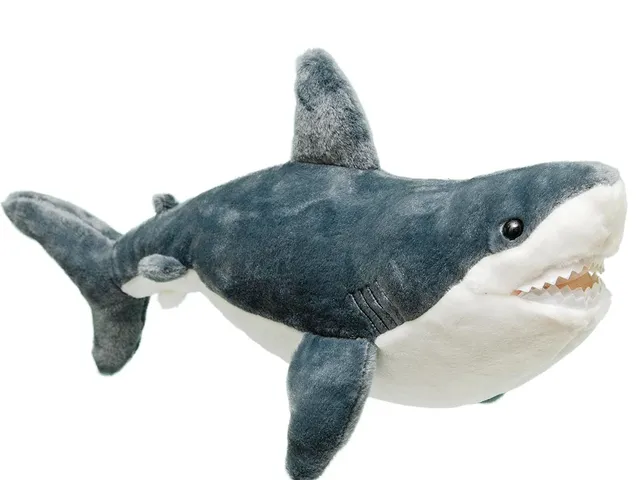
Adopt a great white shark
Support WWF’s global efforts to protect wild animals and their habitats and choose from kits with plush and more.