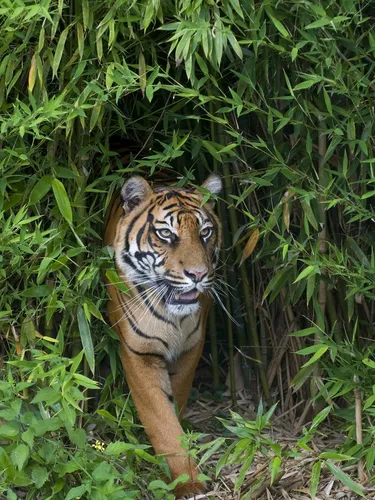
© naturepl.com / Edwin Giesbers / WWF
Sunda tigers
This subspecies was once found across several parts of the Sunda Islands in Indonesia. Today, all remaining Sunda tigers are found only in Sumatra, now that tigers in Java and Bali are extinct.
Sunda tigers are distinguished by heavy black stripes on their orange coats. The last of the Sunda Island tigers are holding on for survival in the remaining patches of forest on the island of Sumatra. Accelerating deforestation and rampant poaching mean this noble creature could end up extinct like its Javan and Balinese counterparts.
In Indonesia, anyone caught hunting tigers could face jail time and steep fines. But despite increased efforts in tiger conservation—including strengthening law enforcement and antipoaching capacity—a substantial market remains in Sumatra and other parts of Asia for tiger parts and products. Sunda tigers are losing their habitat and prey fast, and poaching is an ever-present threat.
Sunda tiger facts
- Status Learn more about endangered status categories and explanation
- Critically endangered
- Scientific name
- Panthera tigris sondaica
- Weight
- 165–308 lbs.
- Habitats
- Tropical broadleaf evergreen forests, freshwater swamp forests and peat swamps
News and stories

Why Sunda tigers matter
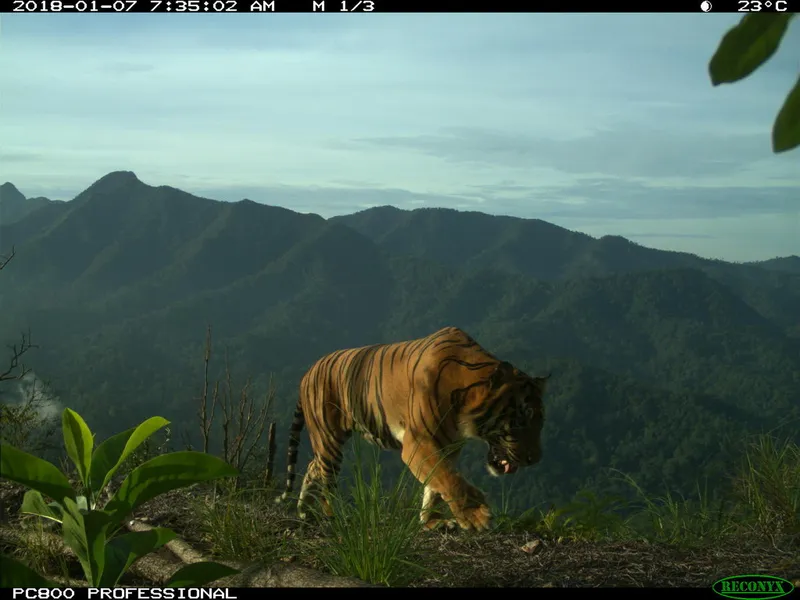
© Ministry of Environment and Forestry / WWF-Indonesia
The island of Sumatra is the only place where tigers, rhinos, orangutans, and elephants live together in the wild. The presence of the Sunda tiger is an important indicator of a forest's health and biodiversity. Protecting tigers and their habitat means many other species benefit—including people.
Threats to Sunda tigers
Illegal wildlife trade
Most tigers in Sumatra are killed deliberately for commercial gain. According to a survey from TRAFFIC, the global wildlife trade monitoring network, poaching for trade is responsible for almost 80% of estimated Sunda tiger deaths, amounting to at least 40 animals per year.
Despite intensified conservation and protection measures in parts of Sumatra and some success in curtailing markets for tiger bone, there is little evidence that tiger poaching has declined significantly on the island since the early 1990s.
Habitat loss
Habitat for the Sunda tiger has been drastically reduced by clearing for agriculture (particularly oil palm), plantations, and settlement. In many parts of the island, illegal timber harvesting and forest conversion are out of control. Between 1985 and 2014, the island’s forest cover plunged from 58% to 26%. Even protected areas face problems. In addition, forest conversion has isolated national parks from one another, along with populations of species like tigers that need large areas for breeding, feeding, and dispersing.
Human-wildlife conflict
Dispersal of tigers in search of their territory and habitat destruction forces tigers out of protected areas and into human-occupied spaces— where they are more likely to come into conflict with people. Like other parts of the tiger’s range, human-tiger conflict is a serious problem in Sumatra. People have been killed or wounded, and livestock falls prey to tigers. Retaliatory action by villagers can result in the killing of tigers.
How WWF is taking action to protect Sunda tigers

© WWF-Indonesia / Tiger Survey Team
© Neil Ever Osborne / WWF-US
Protecting tiger habitat
Protecting the places where tigers live and breed is the backbone of TX2, an effort to double the number of wild tigers by 2022. WWF works to protect these important sites that are—or have the potential to become—breeding grounds, allowing tigers to disperse across larger landscapes, which we call “heartlands.” Sumatra is home to five of those heartlands, both in Central and South Sumatra. It is only through the successful protection of these heartlands that Asia will be able to double its tiger population.
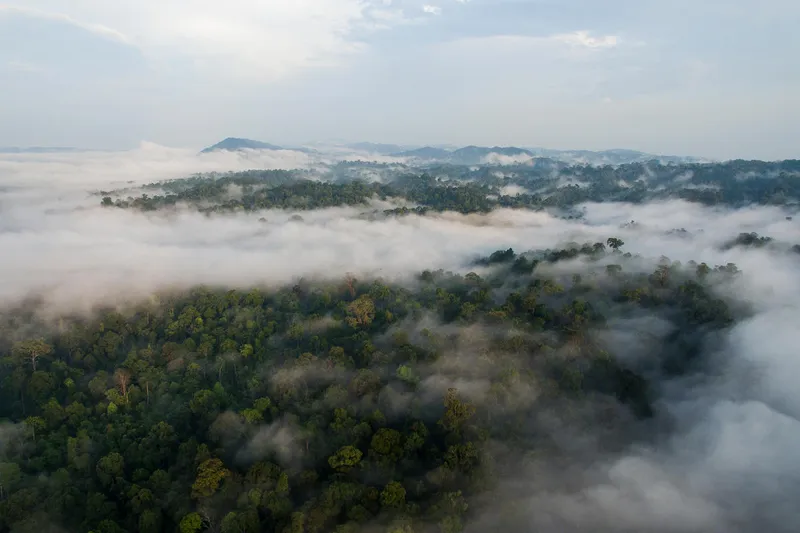
WWF is also working to save one of the last great stands of rainforest in Thirty Hills, or Bukit Tigapuluh, in Central Sumatra. In August 2015, WWF-Indonesia received licenses to manage about 100,000 acres of forests bordering Bukit Tigapuluh National Park that had been originally earmarked for logging concessions. Together with Frankfurt Zoological Society and The Orangutan Project, WWF is working through a newly formed concession company that will focus on restoring parts of the concession that have been deforested, setting aside some parts for income generation to benefit local and indigenous communities and support the forestry operations—all while protecting the majority of forest that is home to tigers, orangutans, and Asian elephants.
Influencing land-use planning
WWF helps design land-use plans that incorporate critical wildlife habitat. Sumatra’s district and provincial governments are integrating this information into their plans, including zoning decisions and concessions for economic activities. Along with WWF’s efforts to mitigate the palm, pulp and paper, and timber industries’ impact on the island’s biodiversity, this work helps Sumatra balance environmental realities with people’s social and economic needs.
Monitoring tigers
WWF is undertaking groundbreaking research on tigers in central Sumatra. Using camera traps to estimate population size and distribution, as well as habitat use, we identify wildlife corridors that require protection across the central Sunda tiger landscape.
Featured projects
© Neil Ever Osborne / WWF-US
Thirty Hills
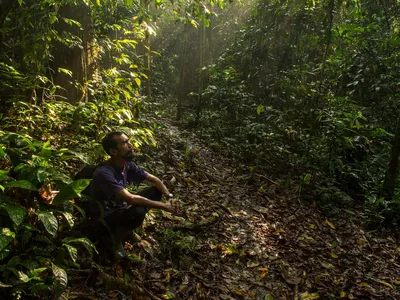
WWF and partners are securing protection for a critical rain forest in Sumatra. Thirty Hills is one of the last places on Earth where elephants, tigers, and orangutans coexist in the wild.
© Justin Mott / WWF-US
Phasing out tiger farms
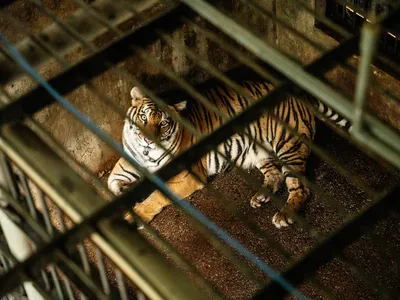
Tiger ‘farms’ are captive facilities that breed tigers to supply or directly engage in the commercial trade of tiger parts or products. WWF is calling for greater oversight and protection of all captive tigers.
You can help protect Sunda tigers and other wildlife
© WWF-US / WWFGifts
Adopt a tiger
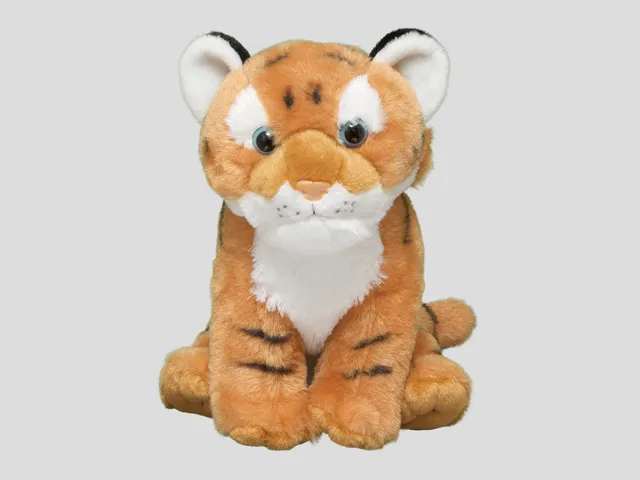
Support WWF’s global efforts to protect wild animals and their habitats and choose from kits with plush and more.