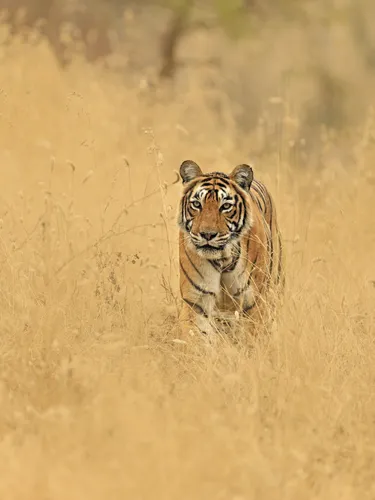
© naturepl.com / Andy Rouse / WWF
Tigers
After a century of decline, overall wild tiger numbers are starting to tick upward. Based on the best available information, tiger populations are stable or increasing in India, Nepal, Bhutan, Russia, and China. About 5,700 tigers remain in the wild, according to the Global Tiger Forum, but much more work is needed to protect this species if we are to secure its future in the wild. In some areas, including much of Southeast Asia, tigers are still in crisis and declining in number.
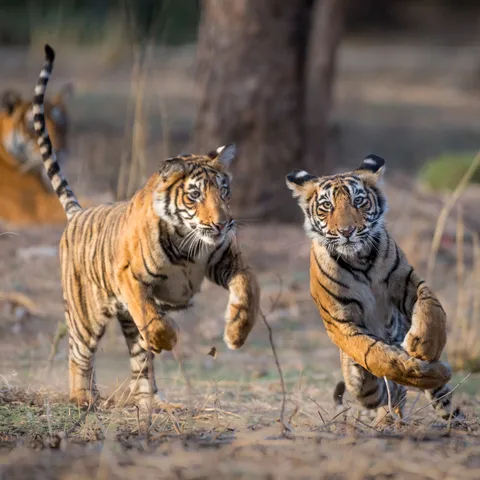
There are two recognized subspecies of tiger: the continental (Panthera tigris tigris) and the Sunda (Panthera tigris sondaica). The largest big cat in the world, tigers rely primarily on sight and sound rather than smell for hunting. They typically hunt alone and stalk prey. A tiger can consume more than 80 pounds of meat at one time. On average, tigers give birth to two to four cubs every two years. If all the cubs in one litter die, a second litter may be produced within five months.
Tigers generally gain independence at around two years of age and attain sexual maturity at age three or four for females and four or five years for males. Juvenile mortality is high; however, about half of all cubs do not survive more than two years. Tigers have been known to reach up to 20 years of age in the wild.
Males of the larger subspecies, the continental tiger, may weigh up to 660 pounds. For males of the smaller subspecies—the Sunda tiger—the upper range is around 310 pounds. Within both subspecies, males are heavier than females.
Tigers are mostly solitary, apart from associations between mother and offspring. Individual tigers have a large territory, and the size is determined mostly by the availability of prey. Individuals mark their domain with urine, feces, rakes, scrapes, and vocalizing.
Across their range, tigers face unrelenting pressures from poaching, retaliatory killings, and habitat loss. They are forced to compete for space with dense, often growing human populations.
Explore more tiger facts.
Tiger facts
- Status Learn more about endangered status categories and explanation
- Endangered
- Population
- About 5,700
- Scientific name
- Panthera tigris
- Weight
- 220–660 lbs.
- Length
- 6–10 ft.
- Habitats
- Tropical rainforests, evergreen forests, temperate forests, mangrove swamps, grasslands, and savannas
The tiger family
News and stories
Why tigers matter
© Archna Singh / iStock / WWF-Australia
As large predators, tigers play a key role in maintaining healthy ecosystems. These ecosystems supply both nature and people with fresh water, food, and health. Securing tiger landscapes could help protect at least nine major watersheds, which regulate and provide freshwater for over 800 million people in Asia.
© WWF-US / Stacy Wells
Tigers can directly help some of the world’s poorest communities. Tourists go to some places where tigers exist, creating opportunities for communities with few alternatives to earn money. Tiger conservation projects also help provide diversified livelihoods for rural communities, helping to bring in income and generating employment opportunities.
© Sunny Shah/WWF-India
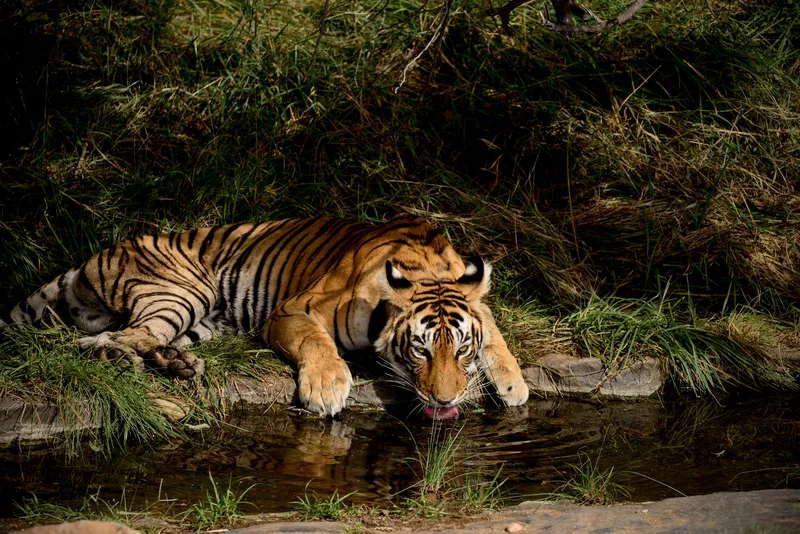
Currently, tigers are being poached, their parts trafficked for various purposes, and they're being pushed out of their homes. Many that are left in the wild cling to survival in isolated patches of forest scattered across Asia.
© Shutterstock / Ondrej Prosicky / WWF-Sweden
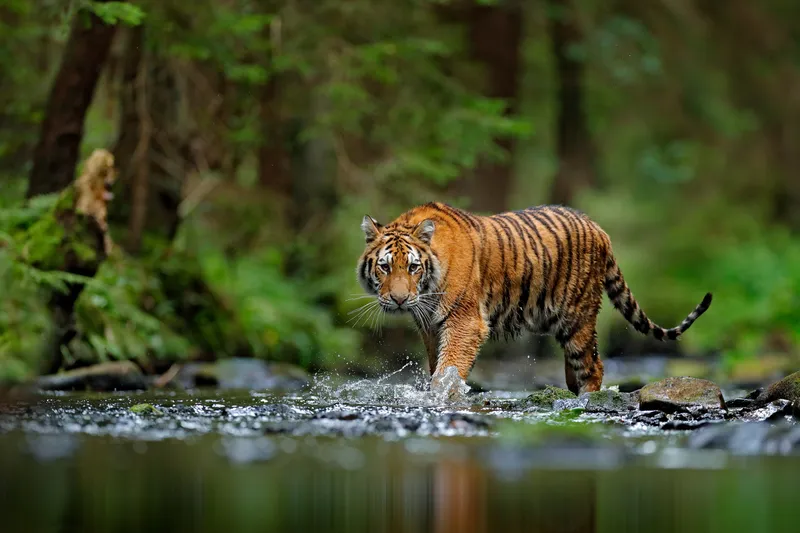
To save tigers, we need to secure forest and grassland habitats across Asia where they live. By protecting large, biologically diverse landscapes, we allow tigers to roam and preserve the many other threatened species that live there. To protect just one tiger, we have to conserve an estimated 24,710 acres of forest.
Threats to tigers

© WWF / James Morgan
Poaching and illegal wildlife trade
Poaching is the most immediate threat to wild tigers. Every part of the tiger—from whisker to tail—has been found in illegal wildlife markets. As a result of persistent demand, their bones and other body parts are used for modern health tonics and folk remedies, and their skins are sought after as status symbols among some Asian cultures.
There are often limited resources for guarding protected areas in the countries where tigers live. Even countries with strong enforcement of tiger protection laws continue to fight a never-ending battle against poaching, which is now often orchestrated by transnational crime syndicates that rake in significant profits from wildlife crime and undermine the security of local communities.
The impact of the death of a single tiger at the hands of poachers reaches beyond one single loss. If a female tiger with cubs is killed, her cubs will most likely die without their mother, and the female's potential for future breeding is lost. If a male is killed, his death can result in intense competition for his territory among surviving males in the population, leading to potential injury and death.
Habitat loss
Tigers have lost an estimated 95% of their historical range. Their habitat has been destroyed, degraded, and fragmented by human activities. The clearing of forests for agriculture and timber, as well as the building of road networks and other development activities, pose serious threats to tiger habitats. Tigers need wide swaths of habitat for their survival since they have large home ranges and are very territorial. Fewer tigers can survive in small, scattered islands of habitat, which leads to a higher risk of inbreeding and makes tigers more vulnerable to poaching as they venture beyond protected areas to establish their territories. This underscores the need to ensure habitat connectivity between the protected areas where tigers live.

© Minzayar Oo / WWF-US
Human-wildlife conflict
People and tigers increasingly compete for space. As forests shrink and prey becomes scarce, tigers are forced to leave protected areas in search of food and to establish territories. This takes them into human-dominated areas that lie between habitat fragments, where they hunt domestic livestock that many local communities depend on for their livelihood. In retaliation, tigers are sometimes killed or captured. “Conflict” tigers can end up for sale in black markets. Local community dependence on forests for fuel wood, food, and timber heightens the risk of tiger attacks on people.
Tiger "farms" and captive tigers
Current estimates indicate that there are more than 8,000 tigers being held in more than 200 centers in East and Southeast Asia, with roughly three-quarters of these tigers located in China. The current scale of commercial captive breeding efforts within these farms is a significant obstacle to the recovery and protection of wild tiger populations because they perpetuate the demand for tiger products, serve as a cover for illegal trade, and undermine enforcement efforts. WWF is engaging with governments in countries with active tiger farms and advocates ending breeding and phasing out the farms. WWF also advocates for improved regulation of the captive tiger population in the US. It is estimated that approximately 5,000 tigers reside in the US, and we must ensure that these animals are not exploited by, or contributing to, the illegal trade in tigers and their parts.
Effects of climate change
One of the world’s largest and most uniquely adapted tiger populations is found in the Sundarbans—a large mangrove forest area shared by India and Bangladesh on the coast of the Indian Ocean. It is also the only coastal mangrove tiger habitat in the world. These mangrove forests harbor a variety of species, including tigers, and protect coastal regions from storm surges and wind damage. However, rising sea levels caused by climate change threaten to wipe out these forests and the last remaining habitat of this tiger population. According to a WWF study, without mitigation efforts, projected sea-level rise—about a foot by 2070—could destroy nearly the entire Sundarbans tiger habitat.

© Banu R / iStock / WWF-Australia
How WWF is taking action to protect tigers

© Simon Rawles / WWF-UK
In 2010, the 13 tiger range countries pledged to the TX2 initiative—aiming to double wild tiger populations by 2022, the subsequent Year of the Tiger. In pursuit of this goal, WWF adopted a holistic approach to tiger conservation. By 2023, this effort proved a great success as the Global Tiger Forum reported approximately 5,574 wild tigers, reflecting a remarkable 74% increase since the initiative's inception. This growth highlights significant improvements in investing in and monitoring tiger populations.
Preserving and connecting tiger habitat
Tigers need secure areas to thrive, and our work to protect and connect their fragile habitat is based on rigorous scientific analysis. WWF has chosen places to focus its resources based on the best available science and where tigers have the best chance of recovery and long-term persistence. The locations encompass tiger corridors that link tiger sites within landscapes. Our work includes building local capacity to manage protected areas, coordinating with partners to manage core tiger areas and corridors, and addressing human-wildlife conflict and the impacts of infrastructure development in tiger landscapes. To ensure effective conservation management of tiger sites, the Conservation Assured Tiger Standards (CA|TS) provide a minimum set of standards to encourage the long-term success of tiger conservation and best practices in these areas. Nine of the 13 tiger range countries are currently implementing CA|TS or are in discussions on registering, and two sites have achieved CA|TS approval by meeting all the required standards.
Protecting tigers
WWF works to enforce zero tolerance for tiger poaching across Asia. We help build the capacity of government enforcement units in each landscape and install the best new technologies to assist local agencies in achieving conservation results. We help improve the effectiveness of wildlife rangers by training personnel from enforcement agencies on tools such as SMART (Spatial Monitoring and Reporting Tool). We also work to ensure that communities have a stake in conservation, as they are typically the best stewards and managers of their natural resources.
Monitoring tigers and their prey
Monitoring tigers and their prey is essential to achieving our goal of doubling wild tiger populations. By employing camera traps, tracking technologies, and DNA collected from scat (droppings), we analyze the progress of tiger populations to adapt our strategies and make conservation decisions based on strong science and field experience

© DNPWC/WWF Nepal
Building political will
WWF works with governments across the 13 tiger range countries with wild tiger populations to build and maintain momentum around the conservation of tigers, which is an asset that can enhance their development agendas. By linking tiger conservation with forest preservation and carbon sequestration efforts, tiger range nations and their partners can demonstrate their commitment to promoting a healthy environmental and economic future.
Eliminating the tiger trade
Trade in tiger parts and products, along with live cubs, is a major threat to wild tiger survival. WWF works through long-standing cooperative partnerships with governments, enforcement agencies, local communities, and conservation organizations to implement strategies to help governments stop wildlife criminal networks, shut down black markets, and change consumer behavior. WWF conducts investigations to document the tiger trade, catalyze action against it, and help train enforcement agencies. We continue to build strategies to reduce demand for tiger parts and products and shut down tiger “farms”.
WWF also works with e-commerce, social media, and technology companies through the Coalition to End Wildlife Trafficking Online to address the trade of tigers and their parts and other wildlife crimes on web-based platforms. Launched in 2018, the Coalition includes 47 member companies operating across Africa, Asia, Europe, and the Americas.
Featured projects to help tigers
Wildlife Cafe
10 most asked tiger questions—answered by a wildlife expert
Nature Needs Us Now
Nature gives us everything we need to survive, but it's under threat like never before. The crisis demands immediate action from all of us. Sign the pledge to protect nature.
© Richard Barrett / WWF-UK
Experts




How you can help

© WWF-US / WWFGifts
Adopt a tiger
Support WWF’s global efforts to protect wild animals and their habitats and choose from kits with plush and more.