
© WWF-Pacific / Tom Vierus | Shutterstock/Elen Marlen
Tree kangaroos
In 1990, a new species of tree kangaroo, the golden-mantled tree kangaroo, was discovered in the Torricelli Mountains of Papua New Guinea. It had a chestnut-brown coat, pale belly, and a double stripe of gold down its back. A second population of the marsupial was discovered on the Indonesian side of the New Guinea island in 2005, but there are few of these animals, and their population is thought to be decreasing. Scientists estimate that the golden-mantled tree kangaroo has been extirpated from 99% of its historical range, its numbers driven low by habitat destruction and hunting.
The same factors that threaten the golden-mantled tree kangaroo also put many of the 13 other tree kangaroo species at risk. Many tree kangaroo species are incredibly rare, and most are decreasing in number. These animals represent an interesting divergence in the evolution of Macropods—the family of marsupials that includes kangaroos and wallabies. Macropods were once all tree dwellers, but millions of years ago, they descended from the trees to live on the ground. The ancestors of tree kangaroos eventually headed back up into the foliage, and they are now the largest tree-dwelling mammals in Australia.
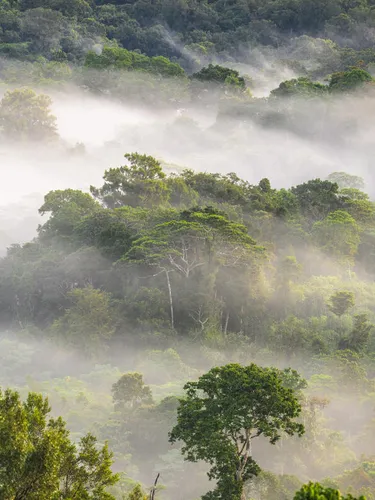
Tree kangaroos live in lowland and mountainous rainforests in Papua New Guinea, Indonesia, and the far north of Queensland, Australia. They have adapted to life in the trees, with shorter legs and stronger forelimbs for climbing, giving them somewhat of the appearance of a cross between a kangaroo and a lemur.
Tree kangaroo facts
- Status Learn more about endangered status categories and explanation
- Least concern
- Scientific name
- Dendrolagus sp.
- Weight
- About 32 lbs.
- Length
- 16–30 in., tail length additional 16–34 in.
- Habitats
- Rainforests
Why tree kangaroos matter
© Terry Domico / WWF-Canon
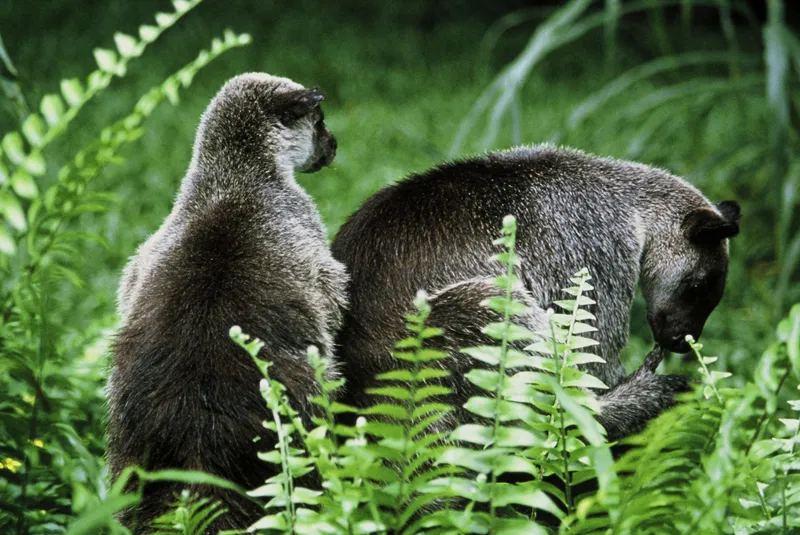
Australia’s largest tree-dwelling mammals
Millions of years ago, the ancestors of Macropods—the family of marsupials that includes kangaroos and wallabies—descended from the trees. But one group of Macropods, known as tree kangaroos, eventually returned to that arboreal life.
Threats to tree kangaroos

© Paul Chatterton / WWF-Canon
Indigenous peoples throughout the tree kangaroo's range hunt the animals for food, sometimes using dogs to track them down. For several species, hunting alone has driven these marsupials close to extinction.
How WWF is taking action to protect tree kangaroos

© N.C. Turner / WWF-Canon
Reducing habitat loss
To reduce habitat loss through deforestation, WWF works to decrease illegal logging and supports Forest Stewardship Council certification for wood and wood products. The organization also promotes and manages protected areas for the tree kangaroo.
Combating illegal hunting
WWF collaborates with programs such as TRAFFIC, the wildlife trade monitoring network, to reduce illegal hunting and works to raise awareness about the effects of hunting tree kangaroos and other species
How you can help

© Jackyenjoyphotography
The WWFGifts Catalog is here
Make a gift to WWF's global conservation efforts and choose from symbolic adoptions, apparel, and more!