© naturepl.com / Tony Wu / WWF
Whales
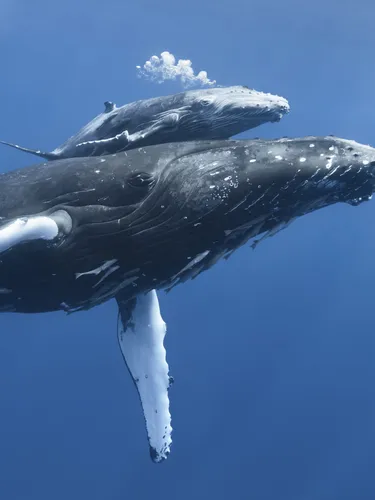
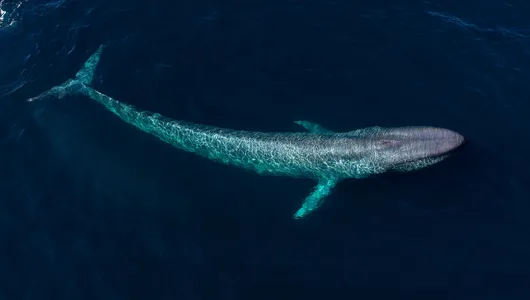
Whales roam throughout all of the world's oceans, communicating with complex and mysterious sounds. Their sheer size amazes us: the blue whale can reach lengths of more than 100 feet and weigh up to 200 tons—as much as 33 elephants.
Despite living in the water, whales breathe air. And like humans, they are warm-blooded mammals who nurse their young. A thick layer of fat called blubber insulates them from cold ocean waters.
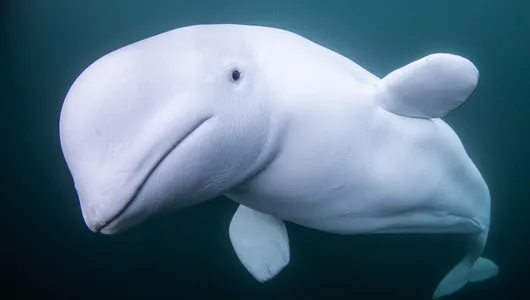
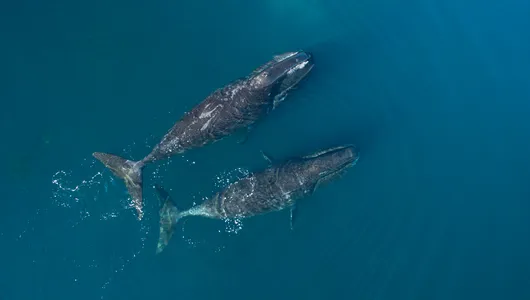
Some whales are known as baleen whales, including blue, right, bowhead, sei, and gray whales. This refers to the fact that they have special bristle-like structures in their mouths (called baleen) that strain food from the water. Other whales, such as beluga or sperm whales, have teeth.
At a glance
- Status Learn more about endangered status categories and explanation
- Endangered
- Population
- 10,000-90,000
- Scientific name
- Balaenoptera, Balaena, Eschrichtius, and Eubalaen
- Weight
- 20–200 tons
- Length
- 45–100 ft.
- Habitats
- Oceans
The whale family
© WWF-Netherlands / Vincent Kneefel
Belugas
© Shutterstock / Chase Dekker
Blue whales
© VDOS Global / WWF-Canada
Bowhead whales
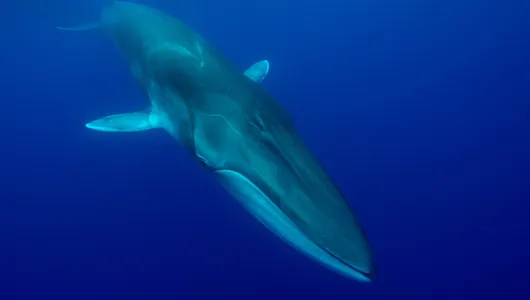
© naturepl.com / Luis Quinta / WWF
Fin whales
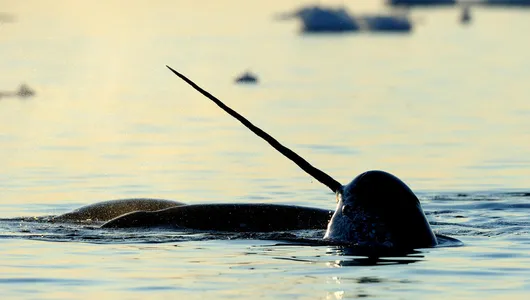
© Eric Baccega / naturepl.com / WWF
Narwhals
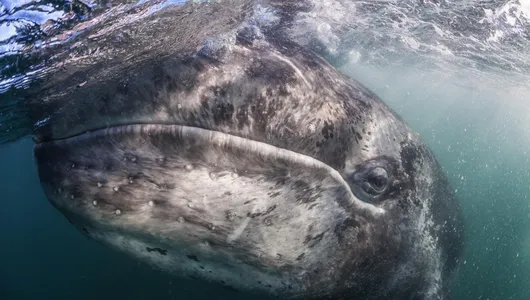
© naturepl.com / Claudio Contreras / WWF
Gray whales
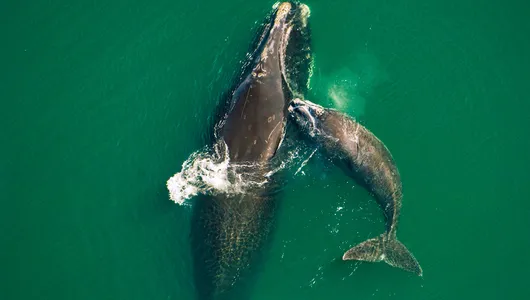
© Brian J. Skerry / National Geographic Stock / WWF
North Atlantic right whales
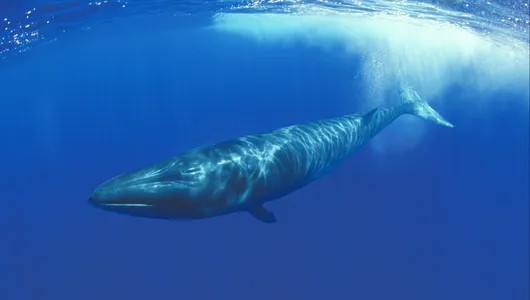
© naturepl.com /Doug Perrine / WWF
Sei whales
News and stories
Why they matter
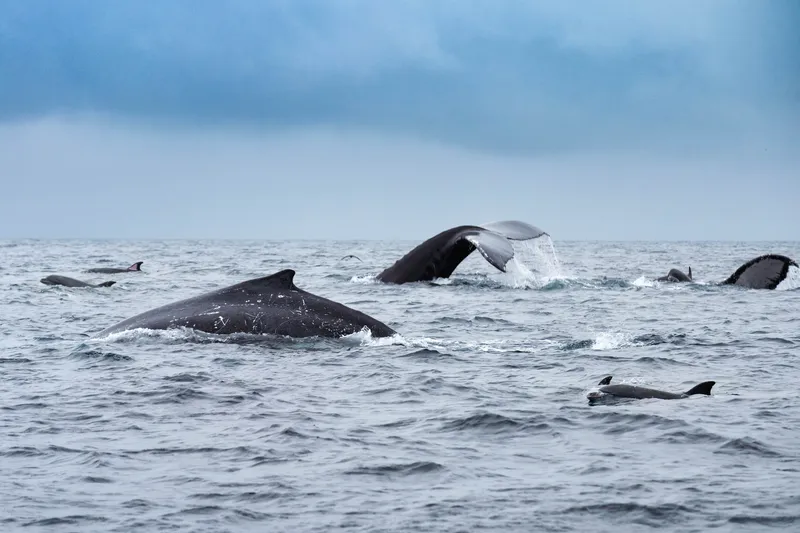
© Antonio Busiello / WWF-US
Whales are at the top of the food chain and have an important role in the overall health of the marine environment. Whales play a significant role in capturing carbon from the atmosphere; each great whale sequesters an estimated 33 tons of CO2 on average, thus playing their part in the fight against climate change.
Unfortunately, their large size and mythical aura does not protect them; six out of the 13 great whale species are classified as endangered or vulnerable, even after decades of protection. An estimated minimum of 300,000 whales and dolphins are killed each year as a result of fisheries bycatch, while others succumb to a myriad of threats including shipping and habitat loss.
Threats

© Michel Gunther / WWF
Industry
Many of the world's busiest shipping and ferry lanes overlap directly with areas where whales feed, give birth, nurse their young, or travel between feeding and breeding grounds. Collisions with ships, entanglement in fishing gear (known as bycatch), and pollution injure and kill whales. In many countries, there's often a lack of political will to prioritize and address these problems, and inaction is largely due to lack of awareness of the scale of the problem and mitigation tools, particularly where bycatch is concerned.
Shipping activity and oil and gas development cause noise that can disrupt whale communication or even damage whales' hearing. Such disturbance can exclude whales from critical feeding and breeding grounds and disrupt their migratory paths.
Commercial whaling
Despite a moratorium on commercial whaling and a ban on international trade of whale products, three countries—Iceland, Japan, and Norway—continue their commercial whale hunts. Over 1,000 whales a year are killed for such commercial purposes. The blue whale, the largest animal ever known to have existed, was almost exterminated in the 20th century due to commercial whaling.
The United States and other International Whaling Commission (IWC) member countries have tried for years to persuade Iceland, Japan, and Norway to end their whaling as it undermines the effectiveness of the commission's commercial whaling ban. However, in 2019, Japan chose to walk away from the IWC and now conducts commercial whaling in its own territorial waters, outside of any international controls.
Climate change
Warming oceans and loss of sea ice in the Arctic and Antarctic can affect the habitats and food of whales. Large patches of tiny plants and animals that they feed on will likely move or change in abundance as climate change alters seawater temperature, winds, and ocean currents. These changes can mean whales such as humpbacks and blues may have to migrate much further to reach feeding grounds, leaving them with less time to forage for food. The shift in food availability due to climate fluctuations has already hurt the reproductive rates of the endangered North Atlantic right whale.
How WWF is taking action

© WWF / Francisco VIDDI
WWF has been actively working to protect whales for 50 years. In 1984, we helped to convince the world to ban commercial whaling. WWF and our partners want to reduce the number of whales lost each year by demonstrating to shipping companies, fishing fleets, and governments that new tools and best practices can significantly reduce whale deaths and injury. WWF documents and works to protect critical feeding and breeding areas and migration routes of whales. We work to establish whale sanctuaries, help shift shipping lanes, and curtail seismic surveys that disrupt feeding grounds. For example, WWF played a vital role in the creation of the Ross Sea Sanctuary in the Southern Ocean. We strive to increase awareness of the need for whale conservation at national, regional, and international levels. We also create opportunities for local communities to be involved with and profit from whale conservation initiatives.
International Whaling Commission
WWF lobbies to bring all whaling under the strict control of the International Whaling Commission (IWC). The IWC is the body charged with regulating whaling and addressing the vast number of other threats to whales, dolphins, and porpoises in our oceans such as shipping, climate change, and bycatch. WWF is working to make the IWC more effective in reducing all threats to whales.
The Protecting Whales and Dolphins Initiative
WWF is working on an exciting new initiative to promote the conservation of whales and dolphins around the world. The Protecting Whales and Dolphins Initiative focuses on whales and dolphins in marine environments and centers around three main pillars of activities: 1) improved monitoring and mitigation of bycatch in fishing gear; 2) reduction of underwater noise and collision risks from shipping; and 3) improved protection of critical cetacean habitats used for feeding, breeding, resting, or migration. We're collaborating with other international organizations, providing evidence and tools for other conservation partners to tackle threats and harmful practices, and advocacy that includes targeted awareness raising and communication campaigns with governments and industries.
Experts
How you can help
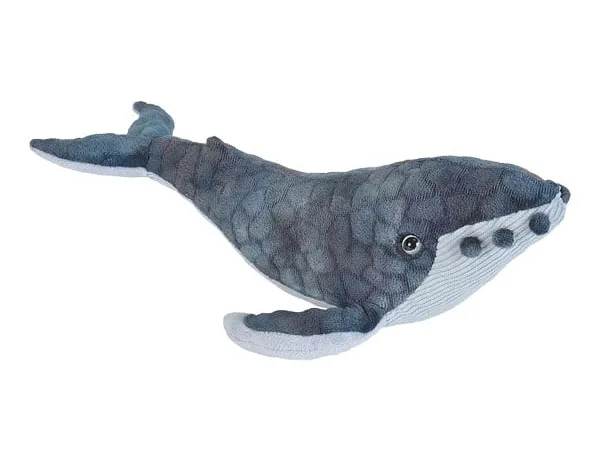
© WWF-US / WWFGifts
Adopt a humpback whale
Support WWF’s global efforts to protect wild animals and their habitats and choose from kits with plush and more.