© WWF-US / Tom Dillon
Namibia
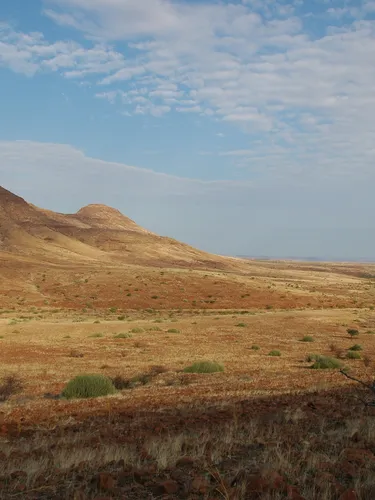
Located in southern Africa on the Atlantic Ocean, Namibia is comprised of 200 million acres of ocean shores, woodland savannas, lush floodplains, and picturesque deserts.
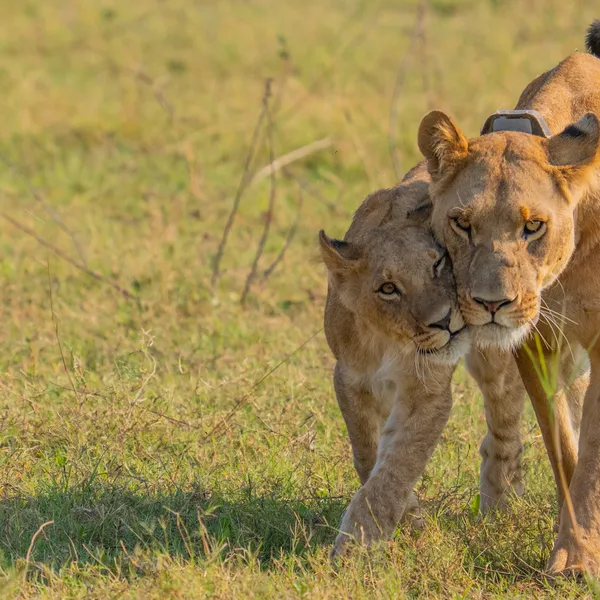
Approximately 45% of Namibia is under different types of conservation management, including national parks and other protected areas, freehold or private farms, and communal conservancies. A relatively young country, Namibia achieved its independence from South Africa in 1990 and was the first African country to incorporate environmental protection into its constitution. In an effort to address the past injustices under apartheid law, the Namibian government gave people living in communal areas the rights and responsibilities to manage and benefit from their natural resources through the creation of communal conservancies. These conservancies – supported by government, nonprofit organizations, and other entities – have restored populations of lions, cheetahs, black rhinos, zebras and other native wildlife to the world’s richest dry land. Through initiatives such as ecotourism, wildlife has generated income for their communities and helping incentivize communities to protect and conserve wildlife.
In line with their constitutional values, Namibia is also part of three transboundary initiatives, Iona Skeleton Coast, the /Ai-/Ais Richtersveld, and the Kavango Zambezi Transfrontier Conservation Area (KAZA), the world’s largest terrestrial transboundary conservation area. Spanning parts of five southern African countries, KAZA was officially created in 2011 by Angola, Botswana, Namibia, Zambia, and Zimbabwe due to its valuable, connected ecosystems and high biodiversity. Much like Namibia’s pledge to conservation in its constitution, the heart of KAZA’s vision is that conservation can be the economic driver of the region, creating a landscape where people and wildlife coexist.
Wildlife of Namibia

© WWF-US / Tom Dillon
Namibia is home to biodiversity hot spots and a rich variety of life, including almost 4,000 endemic species, those found in Namibia and nowhere else. Across plains and savannas and into the desert habitat, springbok, gemsbok and black-faced impala have all seen increases in populations. However years of drought are impacting these numbers and WWF and our partners are working to understand the dynamics causing the recent decline in certain species.
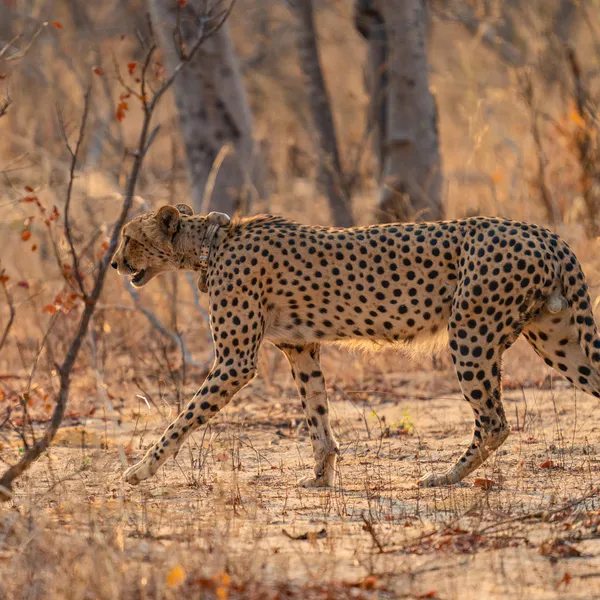
Across vast home ranges, Namibia boasts the largest population of black rhino on the continent and has the largest cheetah population in the world, as well as a strong lion population. The world’s most trafficked mammal, the pangolin, is also found here. Furthermore, Namibia’s plankton-rich coastal waters support an extraordinary array of marine life, including an increasing number of southern right whales.
Namibia is also home to a large population of elephants. In the northwest part of the country, a small population of elephants have uniquely adapted to the arid climate. These "desert-adapted" elephants can go for days without drinking water by surviving on moisture obtained from the vegetation they eat. Although not a different subspecies of savannah elephants, they have several adaptations to their desert environment, including larger feet, which make it easier to walk through sand, and smaller herd sizes, which puts less pressure on their food and water sources.
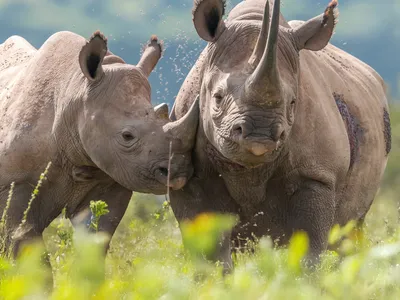
Black rhinos
Among black and white rhinos, black rhinos are the smaller of the two African rhino species
© naturepl.com / Tui De Roy / WWF
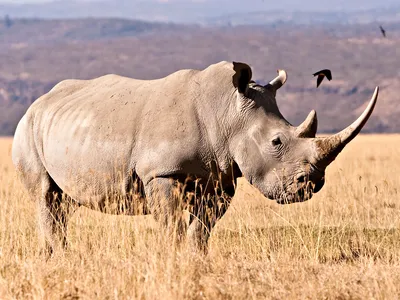
White rhinos
White rhinos are the second-largest land mammal and their name comes from the Afrikaan’s, a West Germanic language, word “weit” which means wide and refers to the animal’s mouth.
© Martin Harvey / WWF-Canon
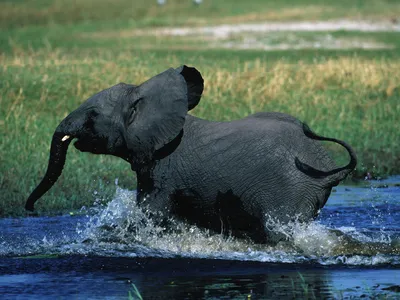
African savanna elephants
African savanna elephants are the largest species of elephant and the biggest terrestrial animal on Earth.
© Martin Harvey / WWF-Canon
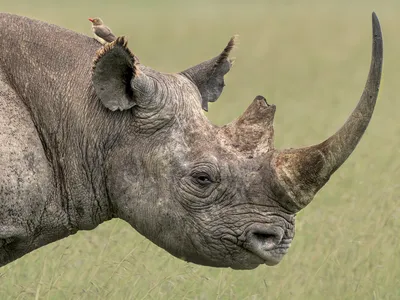
Rhinos
Very few rhinos survive outside national parks and reserves due to persistent poaching and habitat loss over many decades.
© ANDY ROUSE/NATUREPL.COM
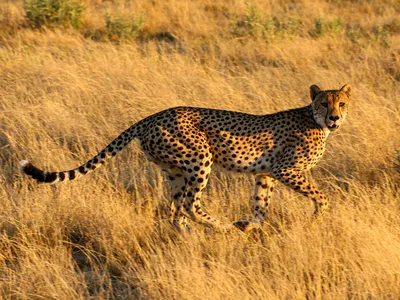
Cheetahs
Cheetahs are big cats known for being the world’s fastest land mammal, reaching speeds of up to 60-70 miles per hour.
© WWF-US / Jeff Muller
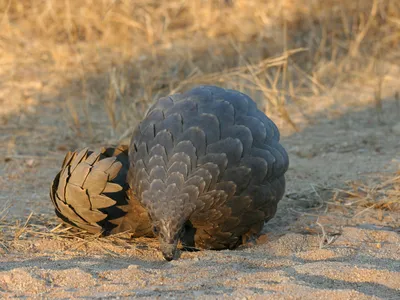
Pangolin
There are currently eight species of pangolin recognized by the International Union for Conservation of Nature (IUCN), ranging from vulnerable to critically endangered.
© Shutterstock
People and communities of Namibia
More than two million people, the majority of Namibia’s population, live in the northern part of the country. Among Namibia’s 14 ethnic groups, 26 different languages are spoken. The communal conservancy movement, which links conservation to poverty alleviation through sustainable use of natural resources, is a key development strategy for rural Namibia. Approximately one in four rural Namibians now belongs to a registered conservancy.
Namibian women have traditionally been excluded from natural resource management. WWF works with our Namibian partners to change this. Women now make up 35% of conservancy committee members, including three committee chairs and the majority of conservancy treasurers. As a result, a Women in Conservation movement has been established and women are receiving a larger share of benefits and exerting a growing influence over resource management and community development.
Namibia under threat

© WWF-Canon / Folke Wulf
Conflict between people and wildlife
Human-wildlife conflict is a growing concern largely due to increased competition for limited resources such as water and growing human and domestic animal (cattle, sheep, goats) populations that encroach on existing wildlife habitats. Namibia’s conservation efforts have helped increase wildlife populations—particularly large animals such as elephants and predators like lions, leopards, and cheetahs. Farmers see significant losses when elephants raid crops, damage fences and water tanks, or when large carnivores kill livestock. Wildlife faces threats from people whose livelihoods and lives are threatened by these conflicts, including retaliatory killings.
Climate change
Ninety-two percent of Namibia is very arid, arid or semi-arid, and therefore especially vulnerable to the effects of climate change. Increasing temperatures and inconsistent rainfall are two impacts that place further pressure on natural resources and results in increased human-wildlife conflict. A lack of water resources will also exacerbate pressure on subterranean water sources, causing people to drill more and deeper boreholes. Drought and water shortages will make agriculture and raising livestock difficult, reducing productivity and negatively impacting food security and livelihoods for communities.
Wildlife crime
Namibia is home to the world’s largest population of black rhinos, as well as large populations of elephants, pangolin, and many unique plants that are found nowhere else on earth. Unfortunately, these natural assets are targeted by transnational criminal organizations as high profit and low risk commodities for their parts and products. As a result, the number of rhinos poached within the country’s borders reached a record high in 2022. And most of the poaching took place in Etosha National Park, Namibia’s flagship park, home to about a third of Namibia’s black rhinos.
Namibia has also reported more pangolin-related criminal cases in the past few years than for rhinos and elephants combined. Pangolins are the most trafficked mammal in the world and are becoming some of Namibia’ most trafficked species for their meat and scales.
Competition for land and water use
Development in Namibia is linked to its natural resources: land, water, minerals, wildlife, and nature-based tourism. However, wildlife and people compete for the right to use limited water and land resources. In this dry landscape, water is vitally important and sustainable water use is a big challenge. Namibia continues to see decreases in annual rainfall, and in 2024, it experienced the worst drought that the country has experienced in a century.
WWF is taking action to protect Namibia
WWF’s work in Namibia focuses on supporting national parks and protected areas, transboundary conservation areas, and communal conservancies. We partner with government agencies and other conservation and private sector entities to maintain biodiversity across the variety of landscape and management models throughout the country.

© WWF-Canon / Folke Wulf
For more than three decades, we have worked with partners and local communities to support rural communities’ rights to manage and benefit from their natural resources and ensure a future that includes healthy wildlife populations and sustainable economic growth.
Improving livelihoods
To reconnect local people with wildlife, local Namibian leaders and the Namibian government, along with WWF, established Namibia’s communal conservancy program shortly after the country’s independence in 1990. This program creates conservancies—bordered areas where communities manage and benefit from their own wildlife—that aim to improve the livelihoods of rural people through the sustainable use of natural resources.
Renowned as a global conservation success story, WWF remains involved with Namibian partners to help foster the knowledge, skills, and capacity for local communities to benefit from their wildlife resources. Currently, there are 86 conservancies, established and run by local communities, that encompass more than 20% of the country’s land. These areas help protect wildlife outside of designated protected spaces and generate over $10 million USD yearly that directly supports communities and continued wildlife management.
Financing conservancies
Namibia for Life is a developing Project Finance for Permanence (PFP) initiative that aims to secure long-term support to Namibia’s 86 communal conservancies, focusing on ensuring sustainable social, economic and wildlife benefits for communities. Namibia for Life is intended to bolster the financial security of the conservancies by expanding community tourism and other nature-based opportunities, and by fostering peaceful coexistence between people and wildlife. It will also support new conservancies, as they are created and where appropriate, and vastly increase the resources available to support this people-forward, locally driven approach.
Namibia for Life is part of Enduring Earth, an ambitious collaboration between The Nature Conservancy, The Pew Charitable Trusts, WWF, and ZOMALAB that works with all stewards of the environment to accelerate conservation and community development worldwide through the PFP approach.

© WWF-NAMIBIA/GINGER MAUNEY
Growing ecotourism
Lions, elephants, black rhinos, and cheetahs roam Namibia’s conservancy lands. To foster a growing ecotourism economy within conservancies, WWF helps find investors and offers business training to conservancy members. Joint venture lodges and campsites provide the largest overall source of benefits to conservancies. Tourism also creates training, employment, and fosters other revenue sources, such as craft markets. Although still recovering from the impacts of COVID-19, Namibia’s tourism industry is slowly increasing.
Protecting species
WWF works closely with the Namibian government and other partners to monitor, research, and protect its wildlife. For example, WWF is helping parks and conservancies to install and use the area management software EarthRanger, which combines historical data with current field reports to provide a unified, holistic view of an area under conservation management. This technology allows protected area managers to better monitor and protect wildlife. Currently, WWF has helped install EarthRanger at Nyae Nyae Conservancy, Waterberg National Park, and Khaudum National Park.
WWF also works with local communities like the San people, who use their Indigenous knowledge and tracking skills combined with new technology to monitor and collect data on Namibia’s pangolins. The information will help inform conservation management plans and reduce the poaching of pangolins and trafficking of their scales, while also providing direct benefits to the San including jobs, training, community education, and increased tourism.
Connecting ecosystems
Protecting large, connected landscapes is essential for wildlife to safely move, find food and water, and adapt to changing conditions. In northwest Namibia, we’re helping conserve the Skeleton Coast Etosha Conservation Bridge Legacy Landscape, an over 12,000 square mile habitat that links national parks, concession areas, and community conservancies.
Across Namibia and the broader Kavango Zambezi Transfrontier Conservation Area (KAZA), we collaborate with governments, communities, and partners to protect key wildlife corridors that support species like elephants, zebra, cheetahs, and lions. Satellite collars and science-based studies improve our understanding of wildlife movement—helping reduce human-wildlife conflict and guiding smarter land decisions across the region.

© Kate Newman / WWF-US
Fighting wildlife crime
WWF works with the Namibian government, local communities, and international partners to disrupt illegal wildlife trade, dismantle criminal networks, and reduce demand for illegal wildlife products.
- Strengthening enforcement: Over the years, WWF has collaborated with the government of Namibia to implement a successful ‘whole-of-government’ approach to tackle wildlife crime. With WWF’s support and financial support from the US Bureau of International Narcotics and Law Enforcement Affairs and other sources, the country opened its first Environmental Crimes Court in 2024—one of the few of its kind globally—to increase capacity to try complex, transnational wildlife crimes. WWF also helped restore horse patrols in Etosha National Park to boost on-the-ground protection.
- Using technology to fight poaching: WWF is helping Namibia develop advanced rhino tracking transmitters, run an SMS rhino hotline for quick tip-offs, and train officials to use the Rhino DNA Index System (RhODIS), a tool that helps identify individual animals and support legal cases against poachers.
Managing human-wildlife conflict
In order to protect conflict species like elephants, lions, and spotted hyena, it is critical to manage and reduce human-wildlife conflict. Reducing conflict can help increase community acceptance to live alongside dangerous wildlife as an important natural resource worth conserving.
While WWF helps communities implement approaches like predator-proof livestock enclosures and elephant-proof water sources to minimize human-wildlife conflict, we also work to prevent conflict from occurring in the first place. Satellite collars allow us to track wildlife movement and identify conflict hotspots, helping communities make informed decisions about grazing, farming, and land use. In the Zambezi region, early warning systems alert communities when a collared predator approaches, giving them time to protect livestock and use deterrents to scare the animal away.
Monitoring incidents of human-wildlife conflict helps communities better understand and manage conflict. WWF helped develop a system of monitoring and recording damage inflicted by human-wildlife conflict. The Event Book System is owned and managed by each community and records vital information on the time, place, species, and magnitude of damage from each conflict. This data can be used to better understand the surrounding wildlife and inform conservancy management.
Adapting to climate change
Namibia faces growing threats from climate change, especially prolonged droughts affecting both people and wildlife. WWF is working with partners to build resilience by diversifying livelihoods, supporting conservation finance, and providing emergency water access.
Through WWF’s Climate Crowd initiative, we work with communities that are being impacted by changes in weather and climate to develop and implement climate adaptation solutions, such as rainwater harvesting systems, solar-powered boreholes, and diversified livelihoods.
As climate change threatens water availability, WWF collaborates with local and regional partners to help protect and manage vital water sources. For example, we monitor the health of the Cuando River Basin through an annual report card to help guide sustainable, cross-border water governance across Angola, Zambia, Namibia, and Botswana, the four countries through which the river passes.
Featured projects in Namibia
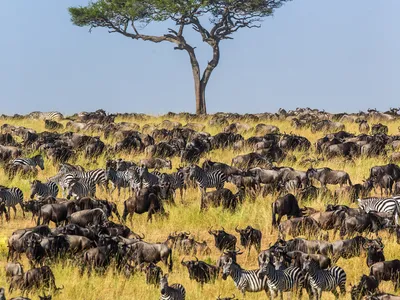
© Shutterstock
Collaborative platform for African nature-based tourism, conservation areas and local communities
The Covid-19 crisis has harmed economies and industries all over the world, and nature-based tourism has been one of the leading economic casualties. In response, an African Nature-Based Tourism Collaborative Platform is being developed to connect funders to communities in need of funding support.
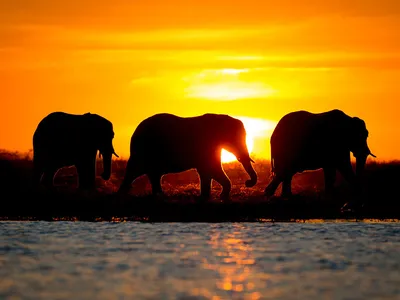
© Will Burrard-Lucas / WWF-US
Cuando River Basin Report Card
The Cuando River Basin report card aims to strengthen transboundary water governance and inclusive decision-making mechanisms across the four countries that the basin traverses.
Experts
-

Nikhil Advani
Senior Director, Wildlife and Climate Resilience
-

Evan Freund
Senior Director, Sustainable Infrastructure, Forests
-
Bas Huijbregts
African Species Director, Wildlife Conservation Program
-
Robin Naidoo
Senior Conservation Scientist and Lead Wildlife Scientist
-

Pete Pearson
Vice President Food, Food Loss and Waste
-

Michele Thieme
Vice President and Deputy Director, Freshwater
-
Chris Weaver
WWF Senior Advisor, Inclusive Conservation, Enduring Earth